
Kate
In the 2000s, Mary Kate and Ashley Olsen had a series of detective movies in which they touted, “Olsen and Olsen Detective Agency: We’ll solve any crime by dinner time.”
My daughter Molly Fitzpatrick and I both majored in history and dreamed of one day opening the “Fitzpatrick and Fitzpatrick History Agency.” But then she followed me into the local government management field, so instead of solving historical mysteries we found ourselves solving municipal ones.
Molly and I have now spent the first third of her career, and the last third of mine, leading in neighboring communities. And somewhere along the way, we ended up back to saying, “We’ll issue any fine by dinnertime.”
We are by no means the first parent/child CAO/ACAO team, although I personally don’t know of another mother/daughter combination. People routinely ask us how this possibly happened, what lessons we have learned over the past decade, how can they get their children interested in local government, and what happened to the “other daughter.” (She does something in science. Real science. We are in awe of her.)
Where did it begin? With two working parents and a lot of conflicting schedules, my kids sat through more public meetings than most residents. Molly insists she has attended more library trustee meetings than any resident of Needham, Massachusetts. She grew up around my colleagues, witnessed their challenges and passions, and it rubbed off.
I distinctly remember her calling me on the way to her first day as an intern at the town hall in Hopkinton, Massachusetts. “I’ve got my iced coffee and an unreasonable number of tote bags. I’ve officially turned into my mother.”
I recruited Molly to be the volunteer coordinator for the 2013 ICMA Annual Conference in Boston. It was a way that she could use her organizational (and spreadsheet) skills, drawing a link between her talents and my work. Because of her forced labor, she was able to fly home from college to attend the conference. Nothing energizes a young professional more than attending an ICMA conference. (Note to leaders: Bring your interns to the conference.)

Molly
I wanted to be an archivist. As a senior in college, I was working at the National Archives transcribing pension requests from the American Revolution. Turns out…that career path is a little narrow.
I graduated from college on a Saturday and interviewed the following Monday for what would become my first municipal job. I’d love to say my archival background got me the interview. In reality, the town manager knew my mom and absolutely interviewed me out of respect for her. But I can confidently say that my mom did not get me the job. I can say this because I, in fact, did not get the job. The town manager called to tell me I was in no way qualified, but she liked my attitude and would take me on part-time while they looked for someone permanent. She made me prove to myself that I deserved to be there.
From there, I climbed the same local government ladder as mom: HR, then HR director (back then known as personnel director), then assistant town manager, and eventually town manager (interim, in my case, but I’ve got time). We have close to identical resumes, and we even won the same human resources excellence award 30 years apart. Some days it felt like I’d never do anything she didn’t do first—until I had a son, something she never did. (The “other daughter” managed this as well.)
Not all the sameness is great. I vividly remember attending a budget meeting where a resident stated, “I don’t know why we’re paying this girl such a high salary.” I called my mom on the way home, “Can you believe they said this?” to which she replied, “Wow. I remember when that happened to me 30 years ago.”
I still spend a lot of time in rooms where people don’t look like me. I hear stories about women pumping in bathrooms, taking only one month off after having a baby and being refused flexible schedules to accommodate daycare drop-off. While we are miles better than in the 1990s, there are still miles to go.
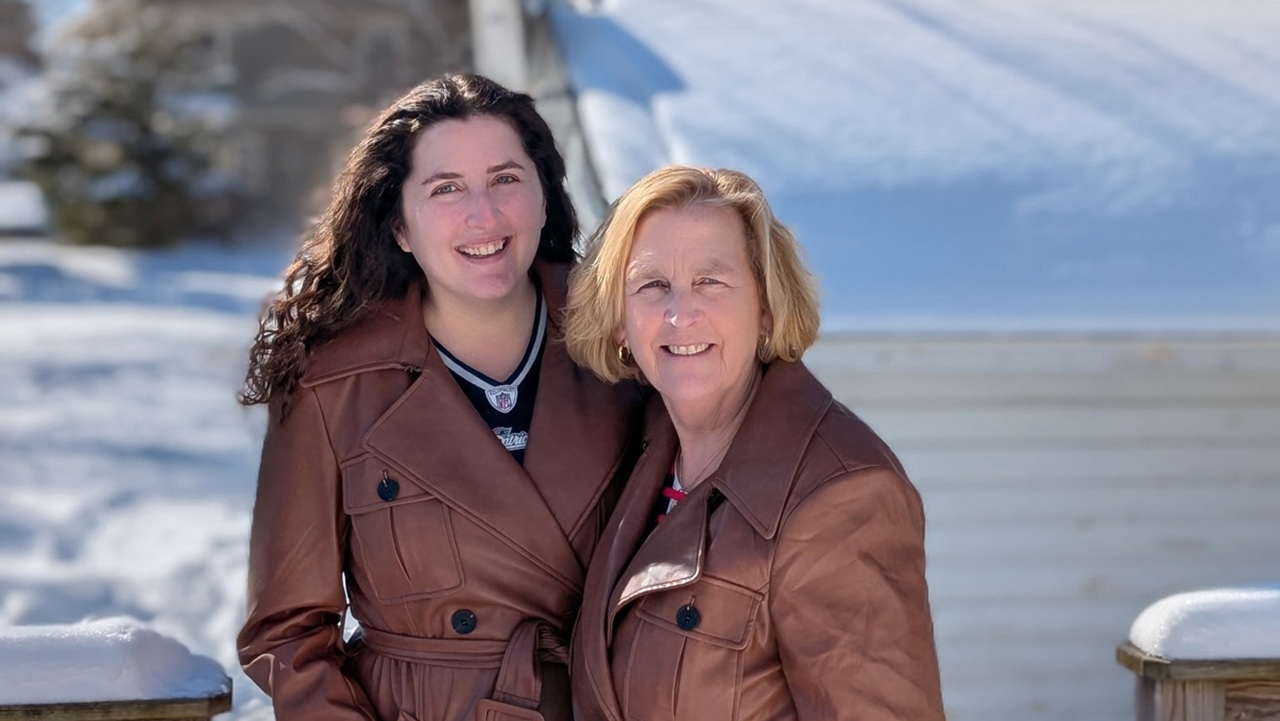
Kate and Molly
The best things about sharing this occupation are:
- Both: We get to see each other on a regular basis at area meetings and conferences.
- Kate: Molly always drives.
- Both: We have built-in roommates for overnight conferences, saving money for our communities.
- Kate: Molly is excellent at making dinner reservations for 12 people on a moment’s notice.
- Both: We can share ideas, problems, and challenges with a peer who is a trusted confidant.
- Molly: Mom learned the hard lessons first and can warn me when I’m about to walk into a lesson she had to learn the hard way.
- Molly: The friends she introduced me to became my friends and trusted mentors.
Of course, there are also some challenges:
- Vacations can be doubly interrupted by pressing issues (like the dueling command centers in our hotel in Belize circa March 2020).
- Kate had awkward 13-year-old photos of Molly displayed in her office.
- Molly: It can be daunting living up to mom’s incredible legacy.
- Kate: The shift of “Oh, you’re Kate’s daughter” to “Oh, you’re Molly’s mom” was a little disconcerting.
How Do You Encourage Children to Consider Public Service?
We are asked this question a lot, often by colleagues who care deeply about the work but worry that local government feels invisible, unglamorous, or downright discouraging to young people.
1. Talk about public service early and often.
Not just when something goes wrong or when you’re venting after a long night meeting, but when something goes right. Talk about the new playground, the repaired road, the family helped quietly behind the scenes. Let kids see that government is not an abstract concept, but people solving real problems for their neighbors.
2. Bring them along.
While they are young enough to be seen with you, bring them to community events, parades, public meetings, and volunteer days. Let them see the faces behind the titles and understand that leadership is less about authority and more about listening. Yes, they may sit through more library trustee meetings than any child should reasonably endure, but they’ll absorb more than you realize.
3. Tell the stories.
Read books that center empathy, fairness, and collective responsibility. We recommend Mike Mulligan and His Steam Shovel early and often. Help kids understand that caring about a place, and the people in it, is a worthy way to spend a career.
4. Model the values you hope they’ll carry forward.
Like curiosity, humility, resilience, and empathy. Show them that public service is not about recognition or perfection, but about showing up, again and again and again and again, for a community you love.
Did we intentionally set out to create a mother/daughter local government management duo? Not exactly. But we did grow up (and grow older) believing that this work matters. That belief, more than anything else, is what gets passed down. We may never open the “Fitzpatrick and Fitzpatrick History Agency,” but it turns out that solving municipal mysteries together has been a pretty good second act.
KATE FITZPATRICK, ICMA-CM, is ICMA’s northeast regional director.
MOLLY FITZPATRICK is assistant town administrator/director of human resources of Westwood, Massachusetts.
Publish with ICMA!
We’re searching for interesting and insightful stories that can help others learn a memorable takeaway to serve their communities better.
