
Multigenerational collaboration is not just a modern ideal; it is a foundational principle of American democracy. The story of America’s founding is, in many ways, a story of intergenerational partnership. Individuals of different ages came together with a shared purpose to build a new system of government rooted in liberty, representation, and public service.
Many of the Founding Fathers were remarkably young when they made lasting contributions to American democracy. Alexander Hamilton, a key voice in revolutionary thought, was only 21 years old in 1776. Thomas Jefferson was 33 years old when he authored the Declaration of Independence, with Edward Rutledge (age 26) and Thomas Lynch Jr. (age 27) as the youngest signers of this seminal document that continues to have a profound impact on liberty loving people around the world.
Youthful leadership was not limited to writing and debate. James Monroe, who would later become the fifth president of the United States, was only 18 when he served in the Continental Army. These examples highlight an important truth: young people have always played a critical role in public service. They bring fresh perspectives, bold ideas, and a willingness to challenge existing ways of thinking.
At the same time, the founding of the United States was not driven by youth alone. It was strengthened by the presence of experienced leaders who provided stability, guidance, and institutional knowledge. Benjamin Franklin was 70 years old in 1776. His experience as a diplomat and thinker helped unify the colonies and secure international support. Stephen Hopkins, who signed the Declaration of Independence despite declining health, was 69. George Washington, who would lead the Continental Army and later serve as the nation’s first president, was 44 in 1776 and 57 when he became President in 1789. These leaders brought perspective shaped by decades of experience and this proved essential in navigating uncertainty and conflict.

Declaration of Independence (1819) by John Trumbull
Multigenerational Collaboration in Local Government
The Founding Fathers did not always agree. They debated intensely and often held different views on governance, representation, and the role of government. For example, after the American Revolutionary War, John Adams expressed concern about the nation’s uncertain future. In a 1787 letter to Abigail Adams, he wrote, "I am uneasy and apprehensive, more so than during the war."
Despite these disagreements and fears, the Founders remained committed to the long-term success of the nation. Their willingness to work through differences, including differences in perspective, helped establish a framework for American democracy.
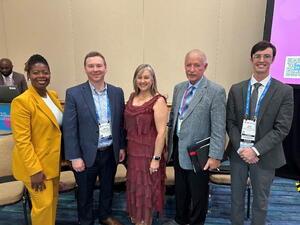
The importance of multigenerational collaboration is especially relevant in the field of modern local government. County and city managers, department heads, and frontline staff must work together across experience levels to address the needs of diverse populations. Encouraging young professionals to participate in decision making not only strengthens organizations today but also prepares the next generation of leaders for the future. At the same time, creating opportunities for mentorship allows experienced public servants to pass on valuable insights and lessons learned over the course of their careers.
Connecting with Peers
The upcoming ICMA Local Government Reimagined Conference, themed “Democracy and the Public Trust,” provides a timely opportunity to reflect on these ideas rooted in our nation’s founding. Scheduled for May 8 through May 10 in Philadelphia, a city deeply connected to the nation’s founding, the conference invites participants to consider how public institutions can build and maintain trust in an evolving society. It is also an ideal setting to discuss the role of young professionals in shaping the future of public service.
As conversations unfold at the conference, there should be a strong focus on how to meaningfully involve emerging leaders in decision making processes. This includes creating pathways for leadership development, encouraging diverse perspectives, and recognizing the value that younger professionals bring to the table. It also means fostering an environment where collaboration across generations is not only encouraged but expected.
The history of the United States demonstrates that progress is most effective when it is shared across generations. The partnership between leaders across generations helped establish the nation’s democratic foundation. That same model can guide public service today as more diverse perspectives can be discussed. By embracing multigenerational collaboration, public institutions can strengthen their ability to serve, adapt, and lead with integrity.
In the end, the lesson is clear: American democracy was built through cooperation between generations, and its continued success depends on that same spirit of collaboration.
Publish with ICMA!
We’re searching for interesting and insightful stories that can help others learn a memorable takeaway to serve their communities better.
