Zamaria's Experience
Attending the Reimagined Conference: AI on the Edge for Local Government, hosted by ICMA, was both affirming and challenging in the best way. As a scholarship recipient, I had the opportunity to engage in meaningful conversations about how artificial intelligence is actively reshaping the local government landscape—and more importantly, how we as public servants choose to respond to it.
Going into the conference, I already held several certifications in AI and had a strong understanding that this technology is not a passing trend. AI is here, and it is continuing to evolve at a rapid pace. What this conference reinforced for me is that the real conversation is not about whether AI should exist in government—but how we implement it responsibly, ethically, and humanely.
Throughout the sessions, there was a mix of perspectives. Some presenters were vendors offering AI-driven services, while others were municipalities actively integrating AI into their operations. This balance was valuable. It allowed us to see both the possibilities and the realities of implementation. Conversations around governance, transparency, and maintaining the human element in decision-making were especially important. AI cannot—and should not—replace human judgment, particularly in a field like local government where community trust is critical.
One of the most impactful themes discussed was the intersection of AI and humanity. As we adopt these tools, we must remain grounded in our responsibility to serve people. AI should enhance our ability to deliver services, not distance us from the communities we represent. That means setting clear standards, developing best practices, and ensuring accountability at every stage of implementation.
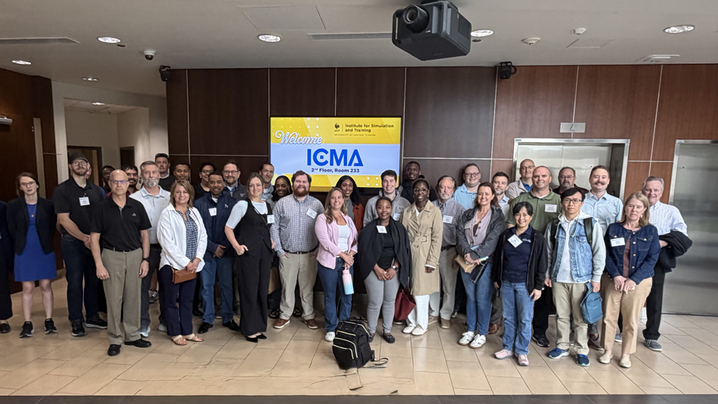
My personal highlight of the conference was visiting the UCF Institute for Simulation and Training. The work being done there is nothing short of transformative. Seeing how simulation, data, and advanced technologies are being used to train, prepare, and innovate across sectors was incredibly inspiring. It expanded my perspective on what is possible when we fully embrace technological advancement with intention.
At the same time, there is a broader message that needs to be communicated: AI is not here to take your job. What it will do is change how work gets done. The individuals and organizations that are willing to adapt, learn, and grow alongside these tools will ultimately be the ones who thrive. Resistance often stems from fear—but in many cases, that fear is tied to tasks we have defined as “jobs” that are repetitive or redundant.
AI gives us the opportunity to rethink that. It allows us to shift our focus toward more strategic, creative, and people-centered work. Will there be challenges? Absolutely. There will be missteps, learning curves, and moments of uncertainty. But progress has always required a willingness to try.
This conference made one thing clear: the future of local government will not be defined by AI alone—it will be defined by how we choose to use it.
Josh's Experience
This experience deepened my understanding of professionalism in the local government management field. However, this conference was unique due to the complete focus on artificial intelligence, innovative technology usage, and the various ways our local governments are responding to and adapting to the current challenges of AI. The overarching message from the conference was that AI is here, and ready or not, it is operating within the walls of city halls across the country.
The conference underscored the importance of managers implementing use guidelines and policies for our organizations as AI capabilities and use continues to expand. One of the conference presenters spoke about the fact that your organization’s best employees are already using AI, you just may not be aware of it.
The most fulfilling session I attended was Humanity in the Age of AI and Social Media, which provided context and acknowledged the sense of loss that comes with the change related to AI in the workforce. The presenter focused on the importance of leaning into our humanity in the face of the adaptive challenges that are AI and the way governments communicate and build trust.
Utilizing the important tool of emotional intelligence is more important in today’s context for a local government manager than ever before. The ability to sense tension, navigate ethical issues, and work to establish and maintain psychological safety within the organization are valuable skills. The speaker also underscored the importance of love in the work that we do day-to-day on behalf of our communities.
The Violet Rule
- Love = Dignity.
- Love = Stewardship.
- Love = Accountability with humanity.
- Love sustains trust under pressure.
It is important to find the common ground and humanity within our organizations, which is especially true in the virtual and artificial world. The session highlighted the value of social media, which local governments must employ to connect with residents. This connection looks different from generation to generation, and our communication tactics must be adaptive.
I was grateful for the opportunity to attend the conference and expand my understanding of AI and governance. Overall, my takeaway is that maintaining our focus of service and professional management in order to provide effective, efficient, equitable, and democratic local government must always be at the heart of our professional management no matter the adaptive challenge of the day.
Save the date for 2026 ICMA Annual Conference in Los Angeles, October 17-21.
Publish with ICMA!
We’re searching for interesting and insightful stories that can help others learn a memorable takeaway to serve their communities better.
