Our announcement that Simon Sinek will be the opening keynote at the ICMA Annual Conference in Long Beach later this year feels especially timely. Many of us know his work through his challenge to start with why. Now, through his organization, The Curve, he is applying that same leadership lens to public safety and local government. His article anchors the July issue’s focus on public safety and community well-being by reminding us that trust, culture, and purpose are not abstract ideals—they are the conditions that allow people to protect and serve their communities well.
Emergency management has always been central to local government leadership, but the work is becoming more complex, more visible, and more consequential. Disasters test infrastructure, finances, operations, communications, partnerships, culture, and public trust all at once. They also reveal where systems are strong, where they are fragile, and where local governments must adapt before the next disruption occurs.
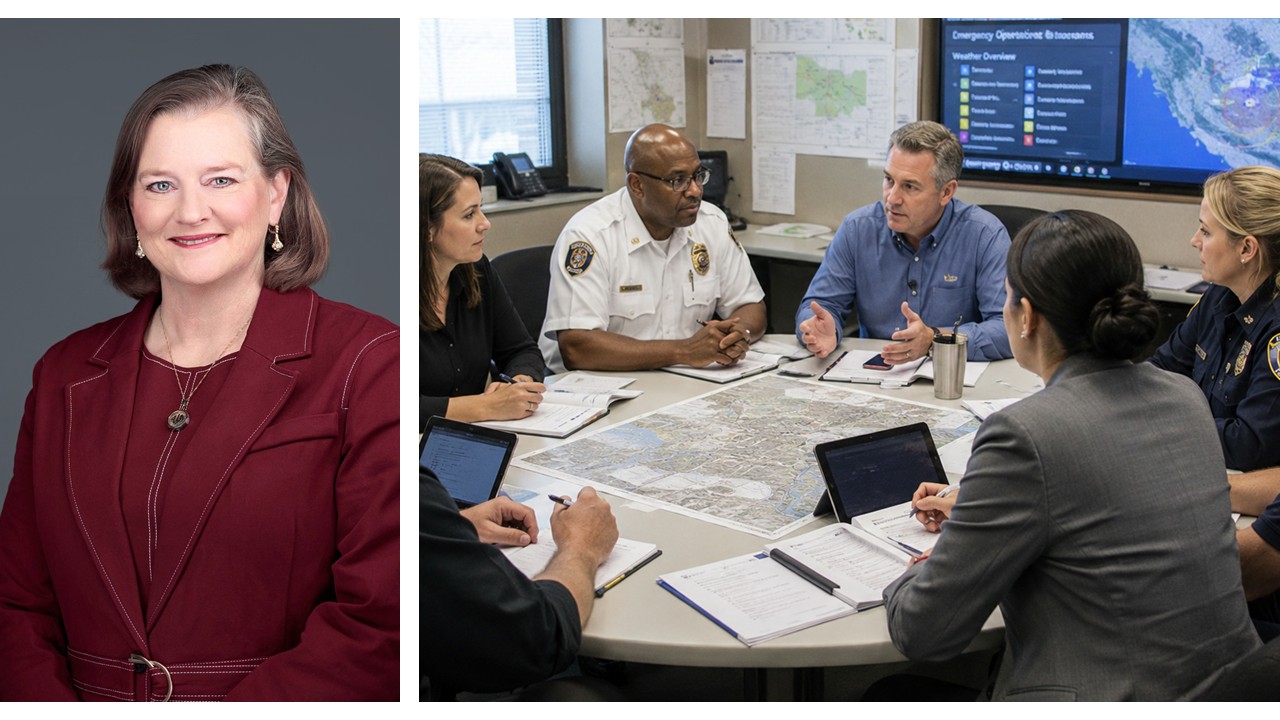
This month’s issue of PM looks at emergency management through that broader leadership lens. The articles remind us that resilience is not only about response and recovery after an event. It’s about the everyday decisions local government executives make to understand risk, invest wisely, communicate clearly, protect essential systems, build trust, and create the conditions in which people can serve residents well when conditions are most difficult.
Emergency management is not a separate function reserved for a single department or a crisis moment. It’s a core leadership responsibility. It requires managers to bring together public safety, finance, infrastructure, planning, communications, human services, technology, and intergovernmental relationships. And it also requires attention to culture—the habits, incentives, expectations, and trust that determine whether people will speak honestly, act ethically, and work across boundaries when the pressure is greatest.
That’s where Simon Sinek’s contribution, written with Kelly McAdoo and Chris Hsiung, adds an important dimension to this issue. Their article challenges us to think about public safety not only as a set of services, but as a leadership and culture question. The idea that leaders “protect and serve the people we lead” is directly relevant to every manager responsible for emergency communications, policing, recovery, infrastructure, human services, and the many other systems residents count on before, during, and after a crisis.
Sinek reminds us that city and county managers are “leaders of leaders.” Managers do not personally answer every 911 call, deploy every drone, inspect every seawall, manage every shelter, or staff every small-town emergency operation. But they do shape the environment in which those decisions are made. They hire and support department heads, set expectations, reward behavior, create space for candor, and model whether hard truths are welcomed or avoided. In a crisis, those cultural choices matter as much as any plan on the shelf.
As you read this month’s issue, I encourage you to consider how each example might translate to your own context and how each offers questions worth asking: What risks are we underestimating? Which systems are most vulnerable? Where do we need stronger partnerships? Are we creating the psychological safety people need to surface problems early? How are we explaining difficult choices to the public? And what can we do now, before the next emergency, to strengthen our community’s ability to adapt and recover?
Our members lead in communities of every size and circumstance, but the responsibility is shared: to prepare thoughtfully, act ethically, communicate honestly, build resilient systems, and cultivate cultures where people feel trusted, protected, and accountable to one another. I hope this issue provides practical ideas, useful examples, and renewed appreciation for the essential role professional local government managers play in helping communities face uncertainty with clarity, purpose, and trust.

JULIA D. NOVAK, ICMA-CM, is executive director of ICMA.
Publish with ICMA!
We’re searching for interesting and insightful stories that can help others learn a memorable takeaway to serve their communities better.
