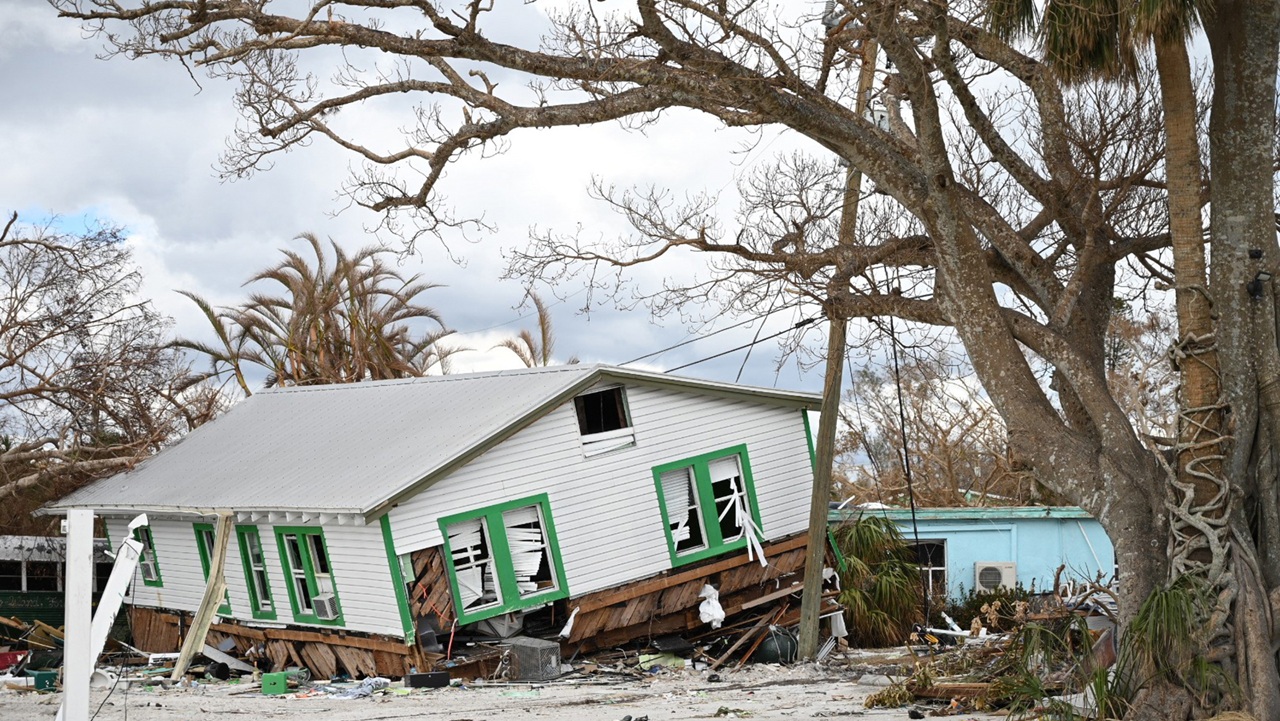
When Hurricane Ian struck Fort Myers Beach in 2022, it left behind more than damaged buildings. As the town raced to rebuild, many temporary structures went up, permits were issued under difficult circumstances, and normal regulatory processes became harder to follow.
Eventually, FEMA determined that the town was no longer fully complying with the National Flood Insurance Program (NFIP). As a result, Fort Myers Beach was placed on probation—a designation that added a $50 surcharge to every federal flood insurance policy in the community and threatened future flood insurance discounts.
Rather than viewing probation as a setback, town leaders treated it as a management challenge.
Step 1: Understand the Problem
The first task was understanding exactly what FEMA expected. A community assistance visit (CAV) identified several issues, including incomplete documentation, inconsistent permit records, and floodplain management practices that needed improvement. The findings provided the town with a clear roadmap of what needed to change.
Perhaps the most important moment came during a discussion with FEMA officials. Town leaders asked a simple question: If the town has good policies, documents its work, enforces the rules, and makes every reasonable effort to gain compliance—but some property owners still refuse to comply—will the town still be penalized?
FEMA’s answer changed the entire approach. The standard was that the town must act to the “maximum extent possible.” That meant success wasn’t measured by perfect compliance from every property owner. Instead, it depended on whether the town consistently demonstrated that it had done everything within its authority.
Step 2: Bring Everyone Together
Instead of allowing each department to work independently, Fort Myers Beach created a cross-department compliance team. Twice each week, representatives from planning, permitting, floodplain management, code enforcement, and senior leadership met to review problem properties one by one.
Rather than asking, “What has my department done?” the meetings focused on, “What does this property still need, and who owns the next step?” This shared accountability eliminated gaps between departments and ensured every case kept moving forward.
Step 3: Start with Education
Before taking enforcement action, the town concentrated on helping residents understand what needed to happen. Staff contacted property owners whose temporary storage containers, rebuilding projects, or other improvements did not meet floodplain requirements. The goal was to explain the rules, provide deadlines, and help owners bring their properties into compliance voluntarily.
Many homeowners had rebuilt quickly after the hurricane and simply needed to complete after-the-fact permitting or correct missing documentation. Education solved many problems before enforcement became necessary.
Step 4: Enforce Consistently
When voluntary compliance wasn’t enough, the town shifted to formal enforcement. Property owners received notices of violation and, when necessary, appeared before the special magistrate.
Because every case had been carefully documented and reviewed across departments, the town could consistently demonstrate that it had followed fair procedures and given owners opportunities to comply. Most remaining properties ultimately came into compliance.
Step 5: Build Better Systems
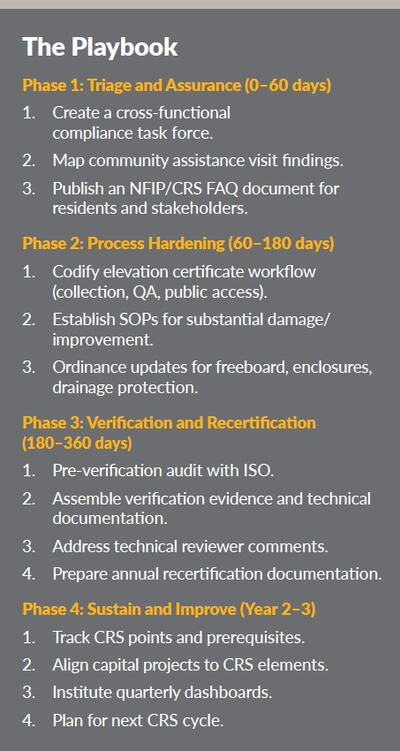
While addressing individual properties, the town also improved how it managed floodplain responsibilities overall. Staff updated standard operating procedures, improved permit tracking, strengthened damage assessment processes, centralized flood elevation records, invested in employee training, and improved communication with residents and design professionals.
Equally important, they documented every action. Throughout the process, the town worked closely with FEMA, ISO/Verisk, and the Florida Division of Emergency Management to verify that improvements met federal standards.
The Results
The effort paid off. In November 2025, FEMA removed the town from NFIP probation. One month later, Fort Myers Beach earned a Community Rating System (CRS) Class 5 designation. Beginning April 1, 2026, most property owners became eligible for a 25% discount on their federal flood insurance premiums.
More importantly, the town emerged with stronger internal processes, better coordination among departments, and greater confidence that it could respond effectively to future disasters.
Lessons for Other Communities
Fort Myers Beach’s experience demonstrates that recovering from a disaster isn’t just about rebuilding structures. It’s also about rebuilding systems. For local governments facing similar challenges, several lessons stand out:
• Build one coordinated team rather than relying on separate departments.
• Work with regulators early and ask for clarity on expectations.
• Educate residents before moving to enforcement.
• Document every action and decision.
• Treat compliance as an ongoing management process rather than a one-time project.
Those practical management decisions—not simply meeting FEMA requirements—enabled the town to restore public trust, reduce flood insurance costs, and strengthen its long-term resilience.
COLONEL (RET.) WILL MCKANNAY is town manager of Fort Myers Beach, Florida.
DR. TRACI KOHLER is deputy town manager of Fort Myers Beach, Florida.
Additional Resources
1. NFIP Probation and Surcharge Guidance
2. Community Rating System: Overview and Coordinator’s Manual
3. ISO/CRS Verification Guidance
Publish with ICMA!
We’re searching for interesting and insightful stories that can help others learn a memorable takeaway to serve their communities better.
