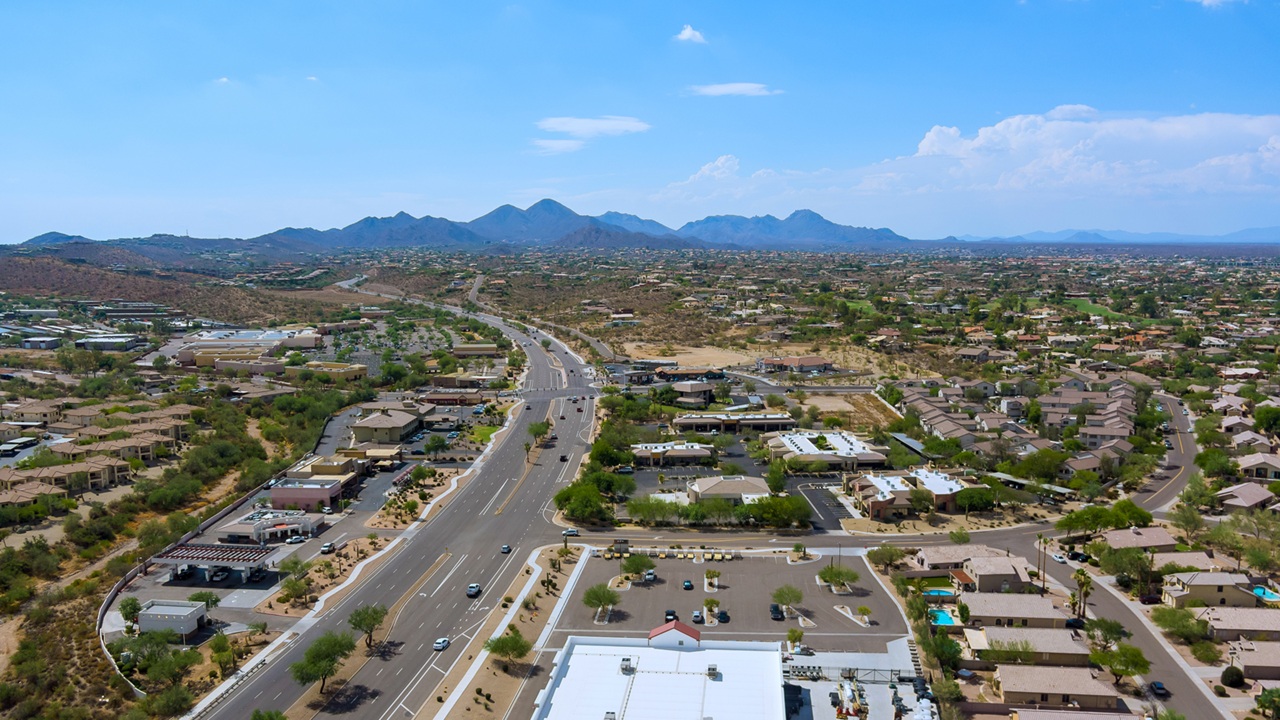
Local governments operate in an environment defined by rapid growth, rising service expectations, workforce constraints, and fiscal pressure. At the same time, many of the challenges communities face—transportation, water resources, public safety, disaster response, economic development, revenue administration, and environmental quality—extend well beyond jurisdictional boundaries. No single agency can effectively address these issues alone.
In Maricopa County, Arizona, regional partnerships expand capacity, improve efficiency, and strengthen outcomes for residents. By aligning around shared priorities, agencies accomplish collectively what would be difficult—and often impossible— independently.
Regional Planning and Coordination
Councils of governments are among the most visible examples of regional collaboration nationwide. In Maricopa County, the Maricopa Association of Governments (MAG) brings together 28 cities and towns, three Native nations, the Arizona Department of Transportation, Maricopa County, and Pinal County to address local issues that require coordinated regional action.
MAG coordinates transportation planning, environmental and air quality planning, and human services planning across one of the fastest-growing metropolitan regions in the United States. By providing a neutral forum where leaders align priorities, communities share data and make long-term infrastructure decisions that transcend political boundaries. Coordinated planning reduces duplication and ensures systems connect seamlessly across jurisdictions.
Collaboration also enables progress in areas where individual jurisdictions have limited influence. In 2025, seeking to achieve measurable improvements in regional air quality, MAG (along with state and local officials) met with the U.S. Environmental Protection Agency and worked with local universities to conduct a ground-level ozone research study addressing pollution transported from outside the region. Ozone does not adhere to jurisdictional boundaries. Regional coordination—combined with federal engagement and scientific expertise—was essential to developing a viable plan to identify scientifically sound and policy-relevant actions that can help reduce the portion of ozone under regional control.
Exponential Regional Impact
Economic development is often framed as competition, with cities vying for employers and tax base. In Maricopa County, jurisdictions recognize that regional success strengthens every community.
Through partnerships with the Greater Phoenix Economic Council (GPEC), cities collaborate to attract major employers to the region rather than competing internally. When companies evaluate expansion opportunities, they assess labor markets, infrastructure capacity, transportation networks, and quality of life at a regional scale—not by municipal boundaries.
The investment by Taiwan Semiconductor Manufacturing Company (TSMC) in north Phoenix illustrates this dynamic. TSMC Arizona’s first three fabrication facilities represent a $65 billion investment and are projected to create approximately 6,000 direct high-tech jobs, along with tens of thousands of construction and supplier positions. According to GPEC, the first three fabs are expected to generate approximately $1.4 billion in tax revenue to Arizona over 13 years and nearly $33 billion in total economic output.
Although located within one jurisdiction, the ripple effects extend across the region—from workforce housing demand and retail growth to supply chain expansion and infrastructure investment. Managing growth at this scale requires coordinated workforce development, higher education alignment, transportation planning, and utility infrastructure across multiple jurisdictions.
Collaboration is equally impactful in smaller communities. The city of Apache Junction, in partnership with the town of Queen Creek, Pinal County, Central Arizona College, the Arizona Commerce Authority, and LG Energy Solution, launched a Future48 Workforce Accelerator focused on battery manufacturing training. By positioning government, education, and industry around workforce development, Apache Junction is creating pathways to high-quality jobs tied to regional advanced manufacturing growth.
The benefits extend beyond a single city. Surrounding communities such as Queen Creek and Gilbert are positioned to see increased workforce participation, housing demand, and related business activity. Collaboration is not reserved for large metropolitan projects. Smaller communities, by coordinating strategically, generate regional impact.
When jurisdictions compete against one another for investment, each community may see wins and losses. When cities collaborate—aligning incentives and positioning their strengths as complementary—they expand opportunity. Rather than redistributing growth within a region, collaboration attracts new investment and multiplies its impact. The result is not incremental gain, but exponential progress.
Shared Transit Systems
Mobility is inherently regional. Residents experience transportation as interconnected networks rather than city-specific systems.
Valley Metro demonstrates how cities jointly fund and govern transit services that support workforce mobility and economic development across the metropolitan area. Coordinated planning allows participating jurisdictions to expand connectivity while integrating transportation investments with regional growth.
Shared Infrastructure and Capital Investment
Some of the most significant examples of collaboration involve capital-intensive infrastructure. When jurisdictions partner on major facilities, they achieve economies of scale, distribute financial risk, and strengthen long-term resilience.
Water and wastewater treatment plants illustrate this approach. By coordinating design, financing, and operations, jurisdictions improve regulatory compliance, share technical expertise, and build systems sized to meet regional demand.
The Greenfield Water Reclamation Plant in Gilbert reflects this model in practice. Jointly owned by the cities of Gilbert and Mesa, the facility serves their residents and those of Queen Creek through an intergovernmental agreement. Shared governance and cost allocation allow participating jurisdictions to collectively manage wastewater treatment while advancing long-term water sustainability in an arid region.
Counties and cities also collaborate on major public facilities such as detention centers and jails, reducing duplication and maintaining consistent operational standards.
Regional recreational facilities offer another example. Large parks, coordinated trail systems, and multi-use recreational complexes frequently serve residents from multiple jurisdictions. Lake Pleasant Regional Park reflects coordinated leadership between Maricopa County and the city of Peoria, with the county operating the park and providing public safety services while Peoria supports surrounding infrastructure and adjacent development. Through shared planning and operational alignment, communities create seamless regional destinations that would be difficult to develop independently.
These shared investments illustrate how coordinated capital planning can improve efficiency, distribute financial risk, and enhance service delivery across jurisdictions.
Public Safety and Justice System Collaboration
Public safety partnerships expand service capacity and improve regional coordination. In several communities, the Maricopa County Sheriff’s Office provides contracted law enforcement services to municipalities that may not have the resources to operate full police departments independently.
The public safety fusion center operated by the Mesa Police Department strengthens coordination by pooling analytics and investigative intelligence in real time. Through collaboration with neighboring East Valley agencies—including Gilbert, Chandler, Scottsdale, Apache Junction, and Queen Creek—departments share data and crime trends across jurisdictional boundaries. This approach enhances situational awareness and allows agencies to respond more effectively to criminal activity that does not stop at city limits.
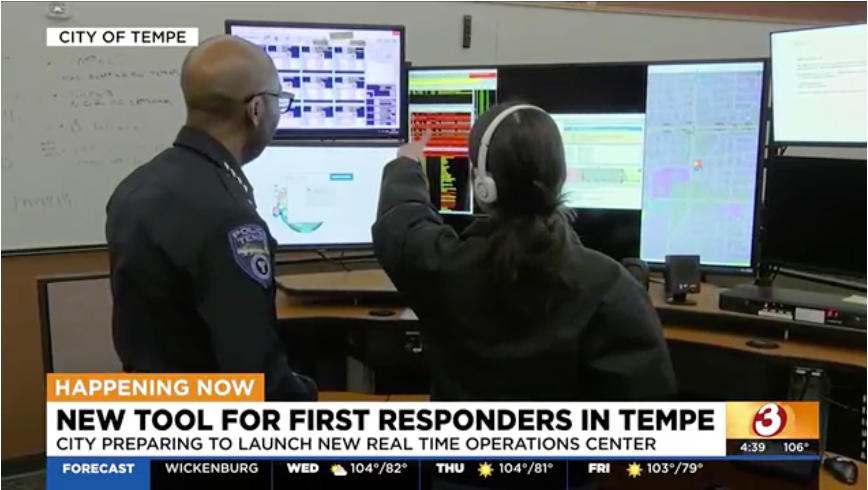
The collaborative public safety model emerging in Arizona is also gaining national recognition through organizations such as the National Real Time Crime Center Association, headquartered in Scottsdale. The association brings together law enforcement agencies, technology leaders, and public safety professionals from across the country to share best practices, training, and operational strategies related to real-time crime centers and coordinated response systems. Its focus on development, innovation, collaboration, and education reflects many of the same principles driving successful partnerships in Maricopa County. By creating networks for agencies to share information, technology, and lessons learned, the organization helps communities of all sizes strengthen situational awareness, improve response coordination, and accelerate investigative outcomes.
Through the Maricopa County Integrated Criminal Justice Information System, justice system partners further support data sharing and operational efficiency across law enforcement and judicial agencies.
Emergency Management: Prepared Together
Disasters do not respect jurisdictional boundaries. Unified planning, shared training exercises, and interoperable communication systems strengthen response capabilities during high-pressure situations. Through its emergency management program, Maricopa County collaborates with municipalities, public safety agencies, healthcare partners, and state and federal entities to coordinate preparedness, response, recovery, and mitigation efforts.
Arizona’s Mutual Aid Compact (AZMAC) formalizes this collaboration by providing a mechanism for resource sharing, operational coordination, and reimbursement during emergencies. Standardized procedures allow agencies to rapidly deploy personnel and equipment across jurisdictions, while clarified financial and liability provisions reduce administrative uncertainty.
Importantly, AZMAC extends beyond traditional disaster response, incorporating cyber-related mutual aid provisions that recognize the growing importance of digital resilience in local government operations. As a signatory to AZMAC, Maricopa County has supported other counties and the Arizona Department of Emergency Management during times of disaster. The results of this collaboration are real. Most recently, during the Gila County floods in October 2025, Maricopa County Emergency Management sent three staff members for weeklong deployments to Gila County’s Emergency Operations Center to provide incident command support during the response and recovery phases of the disaster. Additionally, Maricopa County sent staff to the state Emergency Operations Center supporting the state’s response efforts in Logistics and Planning roles under this AZMAC support request. This agreement allows for sharing of staff and resources to partners when a single jurisdiction is unable to meet the local demands due to the emergency.
Revenue Administration and Property Assessment
Collaboration extends to core fiscal systems as well. The Maricopa County Assessor’s Office operates within an interconnected framework that includes cities, school districts, special taxing districts, the Arizona Department of Revenue, the County Treasurer’s Office, and the County Recorder’s Office.
Accurate property valuation depends on timely data exchange and coordinated statutory interpretation across agencies. Cities rely on assessed valuations to forecast revenues and plan infrastructure investments. School districts depend on reliable tax bases to support educational funding. The recorder processes property transactions that affect valuation records, while the treasurer administers billing and collection.
Through coordinated processes and shared data systems, these partners maintain a transparent and predictable property tax structure. While less visible than large infrastructure projects, this collaboration provides the revenue foundation that supports essential public services across the region.
Collaboration Beyond the Region
The same principles that drive regional partnerships connect communities nationwide. Within ICMA, committees bring together representatives from local governments to collaborate on shared challenges and exchange best practices. The ICMA Governmental Affairs and Policy Committee provides a forum for evaluating proposed federal actions and assessing their impacts on local communities.
Collaboration Is Scalable
Collaboration is defined not by size, but by mindset. We work best together when we begin with shared outcomes rather than jurisdictional boundaries, build trust before agreements, and recognize complementary strengths instead of competing for short-term advantage. By investing in shared systems and coordinated planning, communities position themselves for sustainable growth and resilience.
Residents do not measure success by which jurisdiction delivered a service. They measure it by whether their community is safe, prosperous, and well-managed.
When agencies collaborate rather than compete, the region thrives—and the impact extends far beyond what any one community could accomplish alone. Government can provide exceptional service. Collaboration ensures that it does.

DAWN MARIE BUCKLAND, ICMA-CM, is executive director of the Assessor’s Office of Maricopa County, Arizona.
Publish with ICMA!
We’re searching for interesting and insightful stories that can help others learn a memorable takeaway to serve their communities better.
