Grosse Ile Township, located in southeast Michigan, is a unique community. Its heritage, identity, and character originate from the fact that it is surrounded by water, an island community approximately nine miles long and a mile and a half wide.
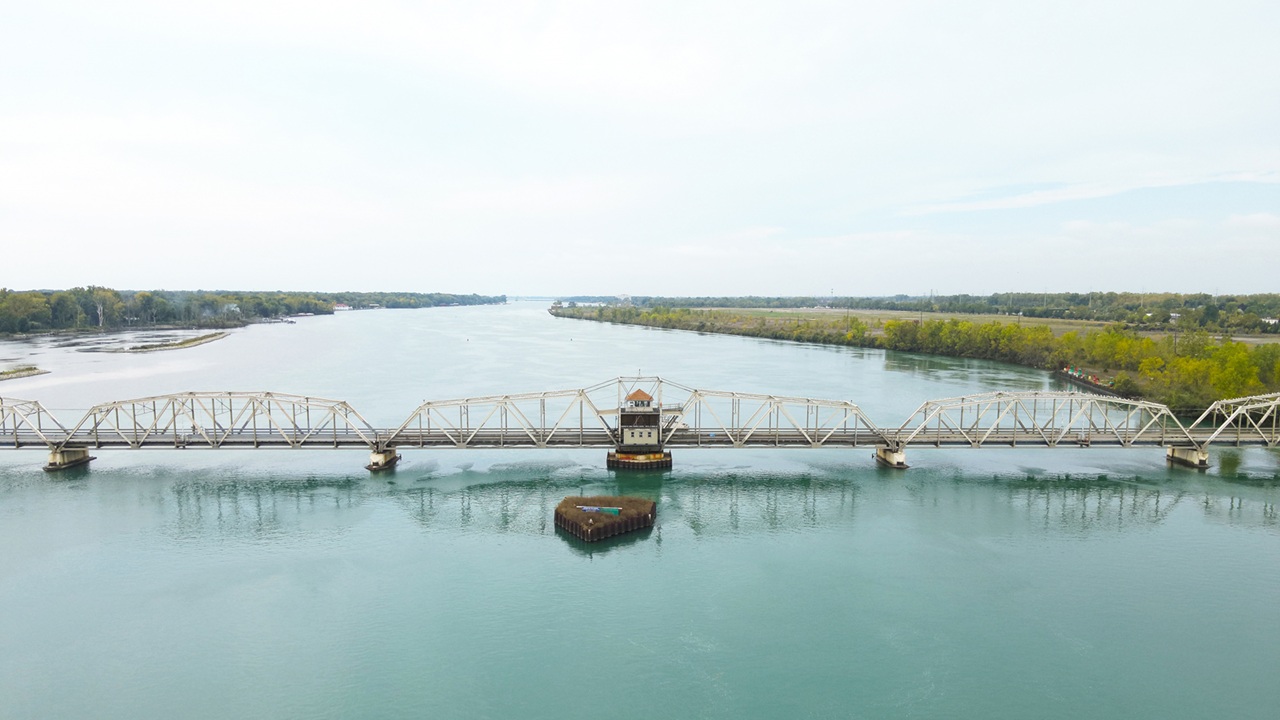
The township is connected to the mainland by two bridges. One bridge, privately owned and operated, is a 304 ft. toll bridge built in 1913. The other, owned by the county and built in 1873, is a 340 ft. railroad bridge that was eventually converted to vehicular traffic.
Both structures present reliability issues because of their age and have recently experienced reduced load capacity allowances, making delivery of goods and services to the island difficult. As a result of the instability of access, residents consistently ranked concerns about the bridges as one of the highest priority issues for the township to address.
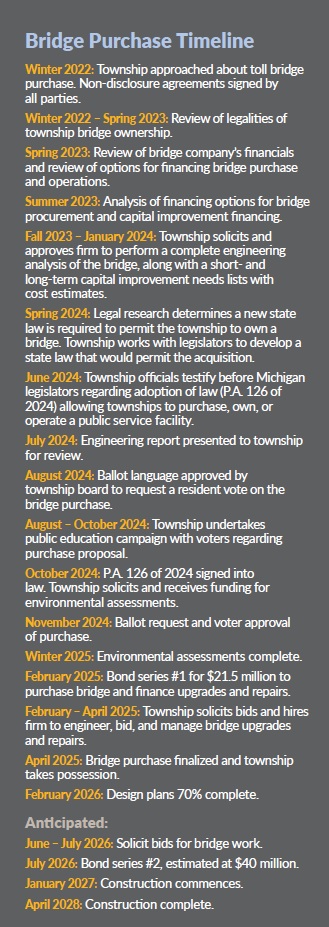
In 2022, the township was approached by the owner of the Grosse Ile Toll Bridge about possible township interest in purchasing this privately owned bridge. Understanding the importance of this critical piece of infrastructure and the priority the community places on reliable access to and from the island, elected officials and township administration felt obligated to review the possible purchase of the bridge.
But how does a local government go about buying a bridge? The township had to methodically, collaboratively, thoroughly, and through detailed organization and research develop its own game plan. To make sure all the bases were covered, the township broke the issue into five questions:
1. Legally, Can We Own and Operate a Bridge?
When approached with the idea, the township first had to determine the legal ability to purchase the structure. Because the bridge resided in two jurisdictions (the township of Grosse Ile and the city of Riverview) an analysis was performed by the township’s legal counsel, to navigate the complexities of the township owning property and operating an enterprise fund in another community.
Additionally, because townships in Michigan do not own roads, a new law had to be crafted by Grosse Ile for consideration by the state of Michigan. This required the township’s state representative and senator to sponsor legislation. The township was required to testify before the Michigan House of Representatives and Senate to adopt a law allowing Grosse Ile to own and operate a toll bridge.
2. What Is the Condition of the Structure?
Once it was determined that Grosse Ile could legally own and operate the bridge, the township needed to assess the condition of the structure. More than a century old, the structure had seen its share of repairs and upgrades, especially after being struck by freighters in 1965 and 1992.
As with any major investment, you want to bring in the experts, especially with a $13,500,000 price tag! The township contracted with an engineering firm that specialized in bridges, who was tasked with conducting a complete engineering and condition assessment. Their review allowed Grosse Ile to understand the condition of the bridge, identify any short- and long-term capital needs, and develop a capital improvement schedule to ensure the reliability and safety of the structure for the next 30 years. This information would be used later to develop the proposal to the residents.
3. Can We Afford to Own It and How Would It Be Funded?
The bridge was being operated as a toll bridge, so the township contracted with a consulting firm to review 20 years of the previous owner’s operational finances. This analysis was used to determine various options for how the township could afford to purchase, operate, maintain, and perform capital improvements on the bridge.
Using this information, the township crafted a unique business design that combined revenue from tolls with millage funds to satisfy the following:
• The original purchase price of $13,500,000.
• $8,000,000 in future engineering costs.
• $40,000,000 in needed capital improvements.
• $8,000,000 in annual operation expenses.
This hybrid model, which relies on both toll and tax revenue, was intended to provide equity. The model balanced the cost between regular users of the bridge, non-resident users, and those who only rely on it for the insurance it provides when the county bridge closes for oft-needed repairs.
4. How Do We Educate the Public About Their Choice?
All of the previously mentioned work occurred prior to the big hurdle, which was to ask the community if they wanted to purchase the bridge. The township developed an extensive education campaign including informative videos, FAQ documents, news articles, mailers, real-time responses to resident questions, and meetings with nonprofit and other community groups.
The goal was to provide information to the public about what ownership of the bridge by residents would mean financially, operationally, etc. Ultimately, in November 2024, the voters of Grosse Ile approved the purchase with 73% of the community supporting the ballot initiative.
5. What Do We Do After the Decision Is Made?
Work on the purchase of the bridge—a very heavy lift for a community of only 10,750 residents—spanned two separate township boards and took place over the course of approximately four years. The current work involves the engineering of those capital improvements that were promised, including development of the financial design that was expressed and organization of the operations in an efficient and effective manner.
The township also established a resident-run commission to ensure the public has a say in the management of their asset. The expectation of the residents should always be to hold the community’s representatives to the plan outlined by them leading up to the vote. Their decision to support this initiative was based upon it, and to depart from the design presented would be a violation of the public trust.
In local government, we’re often challenged with finding innovative ways to address the public’s demand for services and the need for safe and sufficient infrastructure. Our experience in Grosse Ile shows that anything is possible when you craft public policy that addresses your residents’ concerns and priorities.
Developing a clear game plan, leveraging the assistance of professionals, effectively communicating information to the public, allowing residents to stay involved in the project, and following through on the expectations laid out to the public were all critical steps in our process. Our hope in sharing our experience is that it will benefit other communities managing their own unique infrastructure challenges.

DEREK THIEL is township manager and DPS director of Grosse Ile, Michigan.
Publish with ICMA!
We’re searching for interesting and insightful stories that can help others learn a memorable takeaway to serve their communities better.
