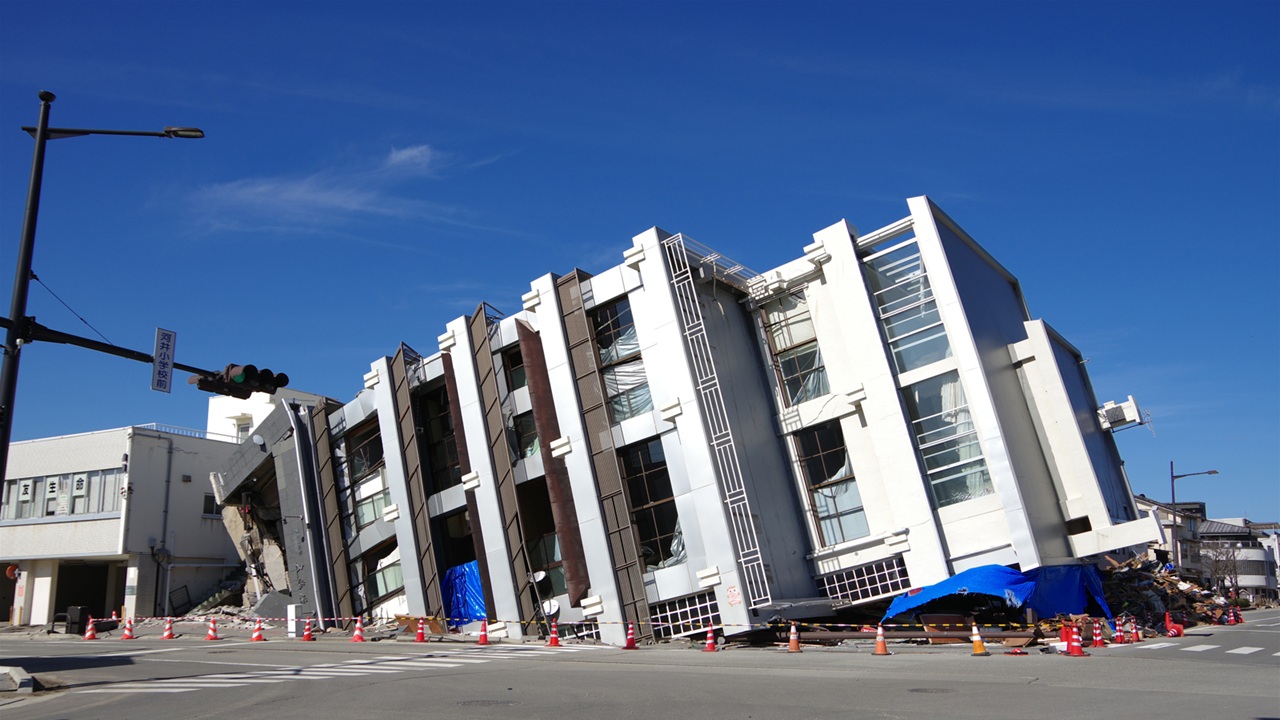
At 16:10 Japan Standard Time on New Year’s Day 2024, a magnitude 7.6 earthquake struck the Noto Peninsula in Japan. While Japan is prone to natural disasters, this time was different.
The four municipalities hardest hit—Suzu, Wajima, Noto Town, and Anamizu—are some of Japan’s most aged and depopulating: with roughly 50% of their residents aged 65 and older in 2020 (compared to the national average of about 30%), they have experienced youth outmigration for decades. This demographic reality complicated both earthquake response and recovery because aging communities are harder to protect and harder to rebuild. Unfortunately, disaster risk reduction (DRR) and recovery plans rarely account for such conditions, despite the reality that many municipalities around the world are growing older.
Japan is one of the world’s most disaster-prone countries and is also a global leader in DRR. Even a relatively prepared place, however, can still suffer immense damage. For municipalities with less experience, funding, or staff capacity, the road to preparedness can seem daunting. Every municipality, however, can improve its disaster resilience by asking now whether emergency plans reflect actual community needs.
In practical terms, DRR plans, which are now common in many cities, should reduce mortality, injuries, displacement, economic loss, and damage to critical infrastructure and services. Traditionally, DRR plans are organized around a four-phase management framework—mitigation (or prevention), preparedness, response, and recovery—that dates back to the late 1970s, when it was developed by the U.S. National Governors Association. But the assumptions embedded in all four phases of the disaster management cycle were calibrated for growing, younger communities.
Mitigation and preparedness happen before disasters. Mitigation cannot stop an earthquake or a typhoon, but it should prevent hazards from becoming disasters through retrofitting, seawalls, and infrastructure upkeep. Preparedness covers emergency plans, training, early warning systems, stockpiling, and drills. Both phases assume the financial capacity, volunteer base, community networks, and population density that aging and outmigration steadily erode.
Response and recovery happen during and after. Response, in the hours and days following the event, depends on a mobile population able to self-evacuate and reach shelters independently; for many older adults, neither is a given. Recovery, over months and years, assumes sufficient population return and economic viability to justify reconstruction investment. But disasters that damage physical and social infrastructure can deepen an already entrenched decline, making reconstruction infeasible.
The Noto Peninsula earthquake shows the shortcomings of current DRR frameworks when demographic decline, aging, and natural hazards converge. This is not a cautionary tale from a distant corner of Japan; it is a preview of what awaits cities whose populations are older, smaller, and less mobile than their plans assume.
Aging Changes the Math of Disaster Risk
Regardless of kind or context, disasters disproportionately affect older adults. In the United States, 49% of Hurricane Katrina’s victims in Louisiana were 75 years or older, despite that age group making up only 6% of the state’s population in 2005. In Japan’s Iwate, Miyagi, and Fukushima prefectures, 56.1% of fatalities were among people aged 65 and older following the Great East Japan Earthquake and Tsunami of 2011, even though they represented 23% of the total affected population. In Germany, nearly 80% of casualties of the 2021 Ahr Valley floods were aged 60 and over. The data are clear: older adults are one of the most vulnerable groups in the event of a disaster, but DRR and recovery frameworks frequently do not reflect this vulnerability.
This demographic blind spot runs through the frameworks that national and local governments treat as benchmarks: the 2015 Sendai Framework for Disaster Risk Reduction 2015–2030, the joint Post-Disaster Needs Assessment guidance, and the 2020 Guide to Developing Disaster Recovery Frameworks. When older adults appear, they do so as a participation category rather than a structural risk factor.
The Sendai Framework is the clearest case. It says nothing about the difficulties older residents face when evacuating after an emergency alarm, their mobility constraints, or their needs in temporary shelters. When mentioned, older adults are valued for their “years of knowledge, skills and wisdom, which are invaluable assets to reduce disaster risk.” Demography and aging are not integrated into hazard modelling, risk assessment, or recovery planning.
As long as demographic change remains invisible to these DRR frameworks, the gap between preparation and reality will only widen.
Even Japan Finds Its System Tested
Japan stands both as the country that has invested substantially in disaster preparedness and whose demographic trajectory makes the limits of that investment most visible. Prone to natural disasters ranging from earthquakes and volcanic eruptions to floods, landslides, and typhoons, Japan has learned from experience how to prepare for, respond to, and recover from them.
Legislation on emergency response and preparedness in Japan has trailed large-scale disasters. The large number of catastrophic earthquakes and typhoons that hit the country in the 1940s and 1950s, and in particular, the 1959 Isewan Typhoon known as Vera, pushed the government to start reckoning with DRR. Vera remains one of the most devastating typhoons in Japanese history, killing around 5,000 people and rendering 1.6 million virtually homeless.
The destruction wrought by Vera prompted the government of Japan to enact the Disaster Countermeasures Basic Act in 1961. This act became the foundation of Japan’s legislation on DRR, establishing a comprehensive and systematic framework with clear responsibilities for all levels of government, residents, and the private sector.
For local governments, the act mandates the production of a municipal area disaster management plan to organize emergency operations tailored to local hazards and conditions. Local governments are also required to manage warning systems, run evacuation shelters, stockpile emergency goods, and maintain voluntary disaster prevention organizations among other duties.
The act also gives mayors statutory powers to issue evacuation orders, establish restricted areas, and requisition property for emergency uses. These requirements apply equally to all local governments—from large megacities like Tokyo to small, remote villages—regardless of human and financial capacity.
Following a similar reactive approach, the government of Japan amended the act based on lessons learned from new disasters. Disaster after disaster showed a similar pattern: older adults made up a disproportionate share of both direct and indirect deaths. This pattern became visible in the disaster death data before it appeared in legislation. It took the scale of the 2011 Great East Japan earthquake to force a reckoning.
The subsequent 2013 revisions required local governments to maintain a mandatory register of vulnerable residents. Later in 2021, following the 2019 Typhoon Hagibis and the July 2020 heavy rains, the act was amended to make individual evacuation plans for vulnerable residents a duty for local governments. 2 The most recent revision, in 2025, followed the 2024 Noto Peninsula earthquake and introduced a fundamental shift from a place- to a people-centered approach by adding welfare services to disaster law.
Suzu City experienced firsthand what the 2025 revision represents in legislation: the collision of a major disaster with a community whose demographic reality that Japan’s DRR frameworks were never built to accommodate.
Noto: Where Decline Met Disaster
The Noto Peninsula extends northward into the Sea of Japan in central Honshu. The peninsula is a narrow, mountainous finger of land, stretching 80km in length and 30km in width. Its northernmost tip, known as Oku-Noto—comprising the municipalities of Wajima, Suzu, Noto Town, and Anamizu—is one of Japan’s most extreme examples of aging and depopulation.
The economies of the four municipalities rest on agriculture, fisheries, and forestry, limiting employment opportunities for younger people. As a result, their populations peaked during the 1950s and have more than halved since, driven by sustained outmigration. In 2020, around 50% of their populations were aged 65 or older, far above the national level of 29.3%. Successive mergers in the 1950s and 2000s brought physically disconnected towns and villages under single administrations, even as populations remained scattered across the peninsula.
Transport on the peninsula is limited. Options concentrate on the southern half and thin out moving north. Noto’s main road is Route 249, starting in Kanazawa—the closest major city—and looping around both shorelines to Suzu at the tip. The southern half of the peninsula is served by two expressways approaching from opposite sides of the mainland: the Noto Satoyama Kaidō running north from Kanazawa to Anamizu, and the Nōetsu Expressway from the east side ending close to Wajima. Two rail lines also serve the southern area: JR Nanao Line linking Kanazawa to Wakura Onsen and Noto Railway extending from Wakura Onsen to Anamizu. The rail lines reaching Wajima and Suzu were discontinued between 2001 and 2005, leaving Oku-Noto with only road access.
On the afternoon of January 1, 2024, the M7.6 earthquake struck. As of December 2025, the earthquake had caused 684 deaths in Ishikawa Prefecture. 3 Among them, 228 (220 in Oku-Noto) were direct deaths, caused by the immediate physical impact of the earthquake, including collapsing buildings and post-earthquake fires. The remaining 456 (346 in Oku-Noto) were disaster-related deaths: people who survived the initial event but later died from its physical and psychological burdens. Of the disaster-related casualties, 94% were aged 70 or older. 4
The disaster cut through an infrastructure network that had been thinning for decades. Immediately after the earthquake, roads were blocked at multiple locations, including Route 249, the Noto Satoyama Kaidō, and the Nōetsu Expressway. Both the Noto Railway and the JR Nanao Line suspended operations, while port and airport infrastructure also suffered damage. In the hours after the earthquake, 24 districts with more than 3,000 residents were cut off entirely as all road and maritime access suitable for four-wheeled vehicles had been severed. In Ishikawa Prefecture, 6,168 houses were destroyed outright and 18,729 partially. Water, sewage, and electricity systems all failed across the prefecture, leaving thousands of households without basic services for weeks or months.
What unfolded in Noto was not the failure of an unprepared region but the limit of a system conceived for a different demographic context. The same conditions that make these regions harder to protect make them harder to rebuild. Suzu shows what that means.
Reconstruction at the Demographic Edge
The epicenter of the earthquake was 6 km north-northeast of Suzu City. There, the damage was nearly total. Overall, 188 people lost their lives, 91 of them after the earthquake itself. More than two-thirds of homes were partially destroyed or worse, the highest of any affected municipality. All five of Suzu’s purification plants stopped at once. The city’s 4,585 piped-water households lost supply on day one, and restoration took nearly six months for most of the city; as of July 31, 2025, 18 months after the earthquake, 10 households remained without piped water. The earthquake exposed an infrastructure system already operating at the edge of viability, eroded by decades of disinvestment linked to population and economic decline. In September 2024, eight months after the earthquake, record rainfall flooded the same communities, washing out temporary housing and reopening road closures.
In April 2024, the Ministry of Finance’s Fiscal System Council proposed a compact-town model for reconstruction in the affected municipalities. The main argument was that the area was already depopulating and therefore, reconstruction should consider maintenance and management costs. 5 Even though they noted the need to engage with local communities in carrying out this proposal, the idea was not well received in affected areas. Suzu’s mayor, Izumiya Masuhiro, opposed this proposal, noting the city’s heritage: the three towns and six villages that formed current Suzu in 1954 still retain a strong sense of identity with their unique character and festivals. 6 The compact city idea—a top-down, urban-centric model based primarily on economic considerations—felt unnatural to Suzu and its communities because of their strong attachment to their land.
Instead, Suzu’s reconstruction plan proposes a point-based infrastructure system. The model replaces networked, centrally supplied services, which the earthquake exposed as fragile across long distances, with smaller standalone provision matched to where people actually live. Sewerage offers the clearest example: rather than rebuilding a centralized sewer network, the city is installing individual septic tanks across affected areas. Decentralized renewable energy projects follow the same logic, allowing households to keep power during grid outages. The point-based model is genuine policy innovation: untested at scale and not without cost. But it recognizes the social reality of Suzu, valuing its communities and their histories above seemingly more economically efficient considerations.
Between July 2023 and December 2024, the number of children from infancy to age 14 in Suzu fell by 17.1% against a 9.2% decline among those aged 65 and older. Older residents have remained at a higher rate than the young, despite the slow pace of reconstruction and prolonged stays in shelters. In July 2025, Peace Winds—a Japanese NGO working in post-earthquake Suzu—noted the desire of many older residents to return to their homes, the places where they want to live until the end. 7 This reality fits neither the top-down compact city nor the bottom-up point-based infrastructure model: both assume a population stable enough to plan for. In an already super-aged and depopulating city, disasters exacerbate pre-existing conditions and make coherent recovery design harder because the object of reconstruction is itself moving while the plan is being written.
Conclusion
Aging is not a vulnerable-population footnote in disaster risk reduction and recovery plans: it is a planning variable that changes every phase of disaster management. Suzu is not an outlier. As more communities age and shrink, other disasters will expose the same mismatch between plan and population.
City managers need to audit their plans against the demographic reality of their communities. Does the evacuation plan assume mobility the population no longer has? Does the volunteer base for preparedness still exist? Do shelters meet the needs of older adults? Does the recovery plan assume a population return that demographic projections no longer support? Local governments need to ask these questions before a disaster asks them first. Hazards arrive in the community that exists now, not the one that existed when the plan was written.
FERNANDO ORTIZ-MOYA, PhD, is an assistant professor at the Waseda Institute for Advanced Studies, Waseda University in Japan.
SARAH SIELOFF, AICP, is an urban planner at Haley & Aldrich in Bellingham, Washington.
Endnotes and Resources
1 UNDRR, Sendai Framework for Disaster Risk Reduction 2015–2030 (2015), 23, https://www.undrr.org/publication/sendai-framework-disaster-risk-reduction-2015-2030.
2 Cabinet Office of Japan, White Paper on Disaster Management (various years), https://www.bousai.go.jp/en/documentation/white_paper/; Hiroko Okuda and Jun Tomio, Disaster Preparedness for Aging Populations: Lessons from Japan, AHWIN Papers: Lessons for Aging-Related Policy No. 4 (February 2024). https://ahwin.org/wp-content/uploads/2024/02/AHWIN-Paper-no4-0224.pdf
3 Data from Ishikawa Prefecture, available online at: https://www.pref.ishikawa.lg.jp/saigai/documents/higaihou_218_1009_1400.pdf
4 “Disaster-Related Deaths: 10% Occurred Six Months or Later — Ishikawa Prefecture Publishes Breakdown of Noto Earthquake Fatalities,” Risk Taisaku.com, December 25, 2025 [in Japanese], https://www.risktaisaku.com/articles/-/108464.
5 Based on the transcripts of the press conference of the Ministry of Finances’ Fiscal System Council of 9 April, 2024, available at: https://www.mof.go.jp/about_mof/councils/fiscal_system_council/sub-of_fiscal_system/proceedings/conference/20240409zaiseia.html
6 Based on a July 26, 2024 interview with Jiji Press (archived via the Internet Archive’s Wayback Machine). Available at: https://www.jiji.com/jc/article?k=20240726NH24&g=jti (original URL).
7 Peace Winds Japan, “Noto Peninsula Earthquake: One and a Half Years On — Relief and Reconstruction Support Report,” ARROWS Journal, July 3, 2025 [in Japanese], https://arrows.peace-winds.org/journal/16308/.
Publish with ICMA!
We’re searching for interesting and insightful stories that can help others learn a memorable takeaway to serve their communities better.
