In March 2026, a delegation of ICMA members, including the ICMA Executive Board, participated in the ICMA Global Exchange, spending five days on the Island of Ireland to learn from their counterparts and share solutions to drive meaningful change in communities around the world.
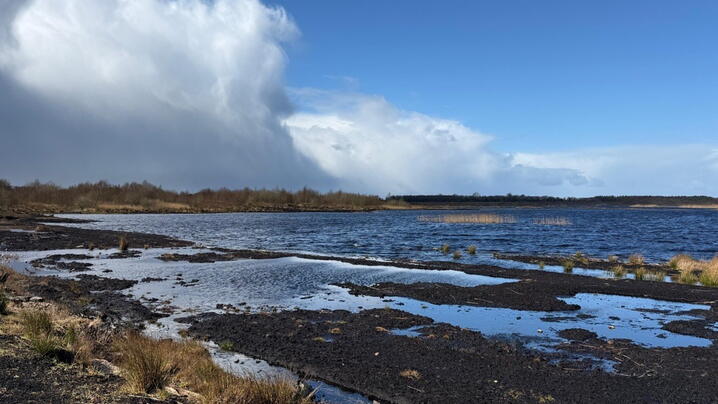
The delegation spent a day in County Longford in Ireland’s Midlands, whose main economy for years has centered around peat harvesting for power generation. With a national government decision to phase out peat production for energy in 2021, the counties of Laois, Longford, Offaly, and Westmeath had to create policies and programs to quickly transition the local economies away from peat production and peat-based electricity generation. With some major funding and through collaboration among local authorities, educators, industry, and community partners, the region has developed a coordinated strategy focused on building a future-ready economy based on regional tourism.
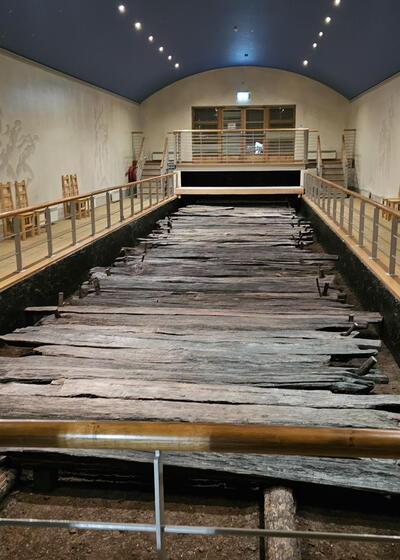
Several years ago, the region became designated by Failte Ireland (Irish Tourism Board) as part of a new tourist region, branded “Ireland’s Hidden Heartlands.” The area of bogland in Longford has been reduced by 80 percent due to peat harvesting, but over the past few years, there has been an intentional move toward conservation and restoration of the bogs through rewetting projects. The delegation visited the Corlea Iron Age Roadway and Visitor Centre, which showcases tourism as one practical pathway for economic renewal. With support of the Ireland’s Office of Public Works, the Visitor Centre was created in the middle of the rewetted peat bogs to acknowledge and celebrate the history and heritage of the bogs as well as to showcase the power of environmental protection. An oak wood trackway that dates to 148 BC was uncovered under the bog, where it was perfectly preserved for two millennia. A portion is on display at the Visitor Centre, which also includes hiking and biking trails through the natural beauty of the wetlands.
When speaking about the experience, Cindy Steinhauser, deputy city administrator, Rochester, Minnesota, and ICMA Midwest Regional Vice President, noted that
“It’s a really powerful story about regionalism and collaboration.”
Paddy Mahon, chief executive, Longford County Council, indicated, “The Midlands came out with a brand that coincided with the transition funds and provided an opportunity to focus on the bogs as a place where people can come and understand what happened in the past and appreciate the efforts to rewet the bogs and help them become carbon sinks once again. This will continue to attract visitors for many years to come.”
A substantial portion of the work in the Midlands has been supported by a European Commission program, the Just Transition Fund (JTF). Funding from this program supports places like the Midlands that are working to become more sustainable and resilient in the era of a changing climate. The Midlands region was approved for 169 million Euros to plan for and implement change that aligns with Ireland’s national and the European Union’s regional policy directions.
County Longford organized a panel discussion on tourism, showcasing how the local government and its partners have played a critical convening role, bringing together public agencies, entrepreneurs, communities, and neighboring counties to build momentum where no single actor could succeed alone. Panelists described the JTF as more than a financing mechanism; it encouraged new thinking, accelerated collaboration, and supported projects that reflect the region’s distinct assets and early-stage tourism potential.
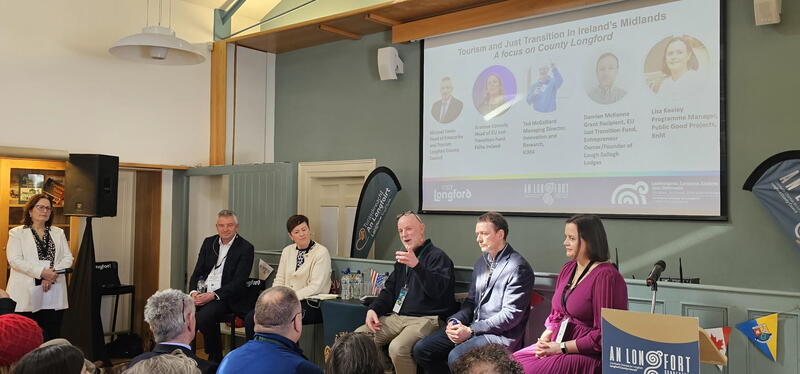
The discussion also underscored the importance of enterprise and local initiative. The construction of the accessible Lough Sallagh Lodges illustrates how public investment, private commitment, and inclusive design can combine to create lasting community value.
Another highlighted project, Center Parks Longford Forrest, is Ireland's single largest private tourism development, which represents an investment of €230 million in County Longford, welcoming 5,000 guests per week and generating a substantial economic impact across the region.
Tad McGalliard, ICMA managing director, Innovation and Research, commented on a familiar redevelopment storyline in communities built largely around a single industry that is playing out in the Midlands and County Longford: “It takes a real change in attitude and workforce preparation for what comes next.” The Midlands is changing rapidly. To meet the moment, collaboration and coordination between all levels of government, communities, and the private sector is ongoing and showing progress. As Andy Pederson, village manager, Bayside, Wisconsin, and ICMA President-elect remarked,
“The story of the Midlands transition is inspiring, in great part because of the timeline. It’s an example to all of us as we go back home to our communities about how we can do things differently and quicker when we work together.”
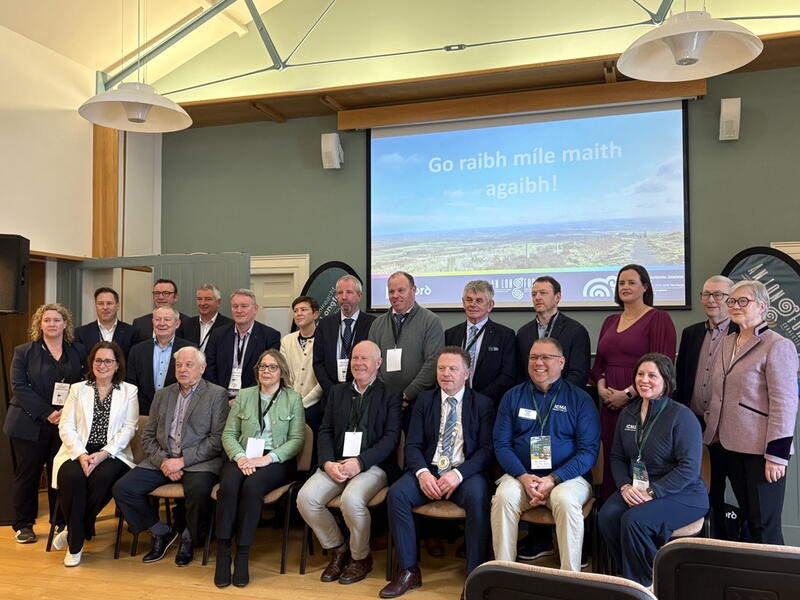
Thanks to ICMA’s Global Exchange, ICMA members can learn about efforts like the ones in the Midlands, Ireland to adapt to change, and actively shape more innovative, inclusive, and sustainable futures for their communities.
Interested in hosting the next ICMA Global Exchange? The call for Global Exchange Host Applications is open. Apply today to host an ICMA Global Exchange in 2027 or 2028. Learn more about the application process and criteria.
If you are an ICMA member interested in participating in a future ICMA Global Exchange, watch out for information about the next destinations for the ICMA Global Exchange that will be revealed this summer.
Publish with ICMA!
We’re searching for interesting and insightful stories that can help others learn a memorable takeaway to serve their communities better.
