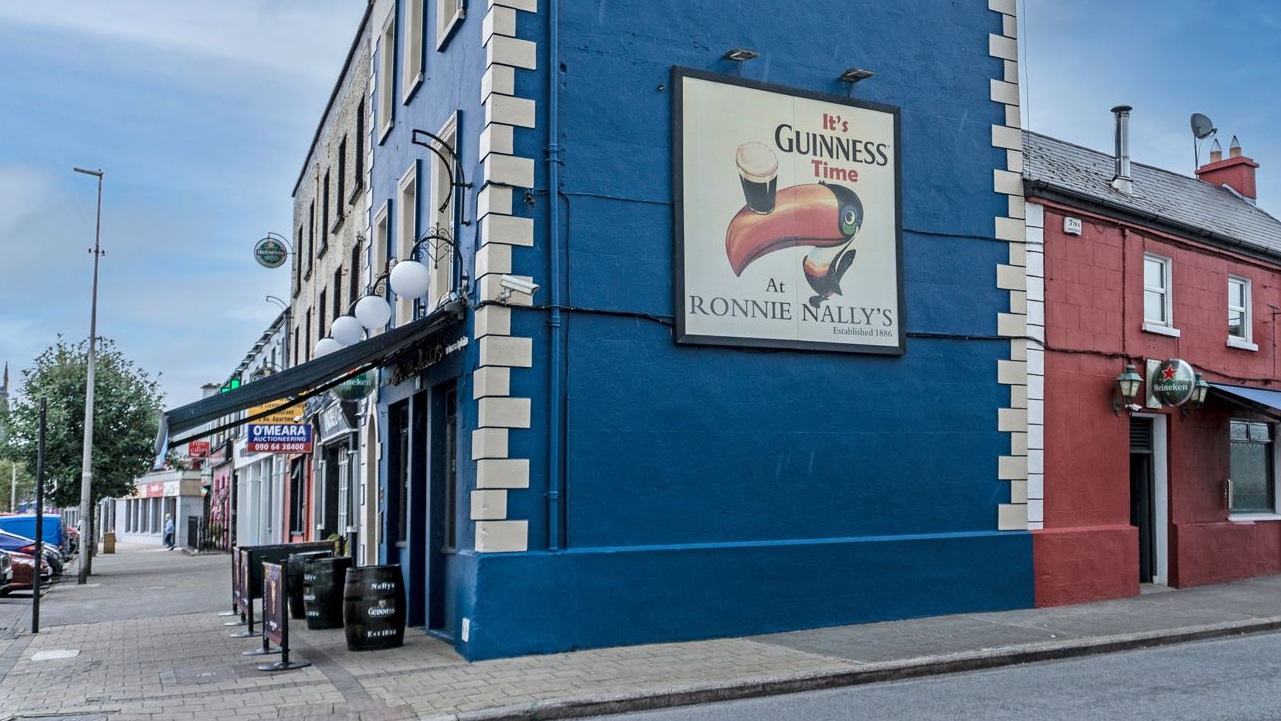
County Longford, Ireland and the city of Alcoa, Tennessee are separated by thousands of miles, different histories, and very different accents. However, the ICMA Global Exchange in March 2026 revealed just how closely our communities are connected through shared challenges and aspirations.
Alcoa, a city of roughly 15,000 residents nestled within Blount County’s population of nearly 140,000, found an unexpected parallel with County Longford, Ireland, home to approximately 50,000 residents and communities navigating many of the same economic questions we have faced for decades.
Conversations that began around economic redevelopment quickly evolved into discussions about workforce retention, infrastructure investment, and the responsibility local governments carry in helping residents build successful lives close to home. Somewhere between redevelopment presentations, a Team Ireland World Cup pre-qualification match being broadcast live during a formal dinner, and locals at the pub patiently teaching us the proper pronunciation of “Jesus, Mary, and Joseph,” it became obvious that while cultures may differ, the goals of local government remain remarkably similar.
Alcoa and County Longford were built around industries that shaped not only local economies, but community identity itself. Aluminum production has served as the economic foundation of Alcoa for more than 107 years. County Longford experienced a similarly deep connection to peat harvesting and fossil fuel industries that provided generations of residents with stable jobs and opportunities. The roots of that relationship stretch back centuries. During the exchange, our group visited the Corlea Trackway, an Iron Age Road constructed in 148 BC through the region’s peat bogs. The preservation of the roadway highlighted how peat has influenced daily life, heating, cooking, transportation, and the local economy in Ireland for generations. As those industries declined or evolved, both communities faced the same difficult question: How do you preserve the character of a community while creating new opportunities for future generations?
That shared challenge made many of the conversations during the exchange feel immediately familiar. Leaders throughout Ireland repeatedly emphasized that redevelopment cannot happen in isolation and that long-term success depends on relationships between governments, businesses, and residents.
One of the clearest lessons from the exchange was the realization that relationships become a form of infrastructure just as important as roads, utilities, and public facilities. Irish communities participating in redevelopment through the EU’s Just Transition initiative demonstrated an impressive ability to align local governments, national leadership, private business, and residents around common goals. The pace of those changes was particularly striking. Economic diversification in Alcoa occurred gradually over several decades following World War II and increased competition within the aluminum industry. Irish communities tied to fossil fuel industries, however, were forced to adapt within only a few years as policy changes accelerated the decline of traditional industries.
Collaboration stood out as the defining characteristic of many of the Irish redevelopment efforts. Preparations underway in County Limerick for the 2027 Ryder Cup offered a particularly strong example of coordinated leadership and long-term planning. City, county, and national governments are collectively addressing housing, transportation, retail, and infrastructure improvements needed to support the event and future growth opportunities. The level of cooperation was so refined that the Ryder Cup preparations became a microcosm of Ireland’s broader redevelopment strategy.
Regional cooperation has similarly shaped growth in Blount County. Leaders in Alcoa, Maryville, and Blount County have intentionally worked to remove competitive barriers between communities and instead focus on what best serves residents throughout the region. That philosophy has helped generate more than $1.2 billion in new investment across Blount County over the last five years, including nearly $800 million within Alcoa alone. The relocation of the Smith & Wesson headquarters and development of a major Amazon distribution hub brought more than 4,200 jobs to the region while strengthening workforce opportunities and public infrastructure investments. Tourism has also become an increasingly important part of Alcoa’s diversification strategy as the home of McGhee Tyson Airport and a gateway community to the Great Smoky Mountains National Park.
Community identity remained central to redevelopment discussions in both Tennessee and Ireland. Public acceptance of major economic change often depends on whether residents still recognize their community afterward. Redevelopment efforts in Alcoa continue to focus heavily on creating a walkable downtown district and reinvesting growth revenues into public spaces, local businesses, hotels, restaurants, and gathering places that allow residents to envision a future for themselves and their children. Irish leaders expressed many of the same priorities while balancing economic reinvention with preservation of local culture and character.
A lunch stop at Cooney’s Hotel in Ballymahon provided one of the most memorable moments of the exchange. The owner spoke passionately about how growing tourism opportunities were creating a future where younger residents would no longer feel obligated to leave their hometowns in search of opportunity elsewhere. That conversation resonated deeply because the same goal continues to drive redevelopment efforts in communities across East Tennessee and the world. Economic development is ultimately about giving people the opportunity to stay and build a life in the communities they love.
The ICMA Global Exchange created a rare opportunity to spend several days engaged with ministers, county executives, planners, and local leaders confronting many of the same issues faced by communities back home. Professional growth came not only through formal presentations and redevelopment tours, but also through shared meals, conversations at local pubs, and invitations from new Irish friends to future family weddings.
Experiences like those create a deeper appreciation for how strongly people care about their hometowns regardless of geography or nationality. The exchange ultimately reinforced a lesson that applies equally in Tennessee and Ireland: Communities accomplish far more when leaders place residents ahead of institutional ego and commit themselves to building a shared future together.
The host for the ICMA 2027 Global Exchange is currently being determined. Stay tuned for more information as it becomes available in the coming months. Reach out to global@icma.org with any questions.

BRUCE M. APPLEGATE JR., ICMA-CM, is city manager of Alcoa, Tennessee.
Publish with ICMA!
We’re searching for interesting and insightful stories that can help others learn a memorable takeaway to serve their communities better.
