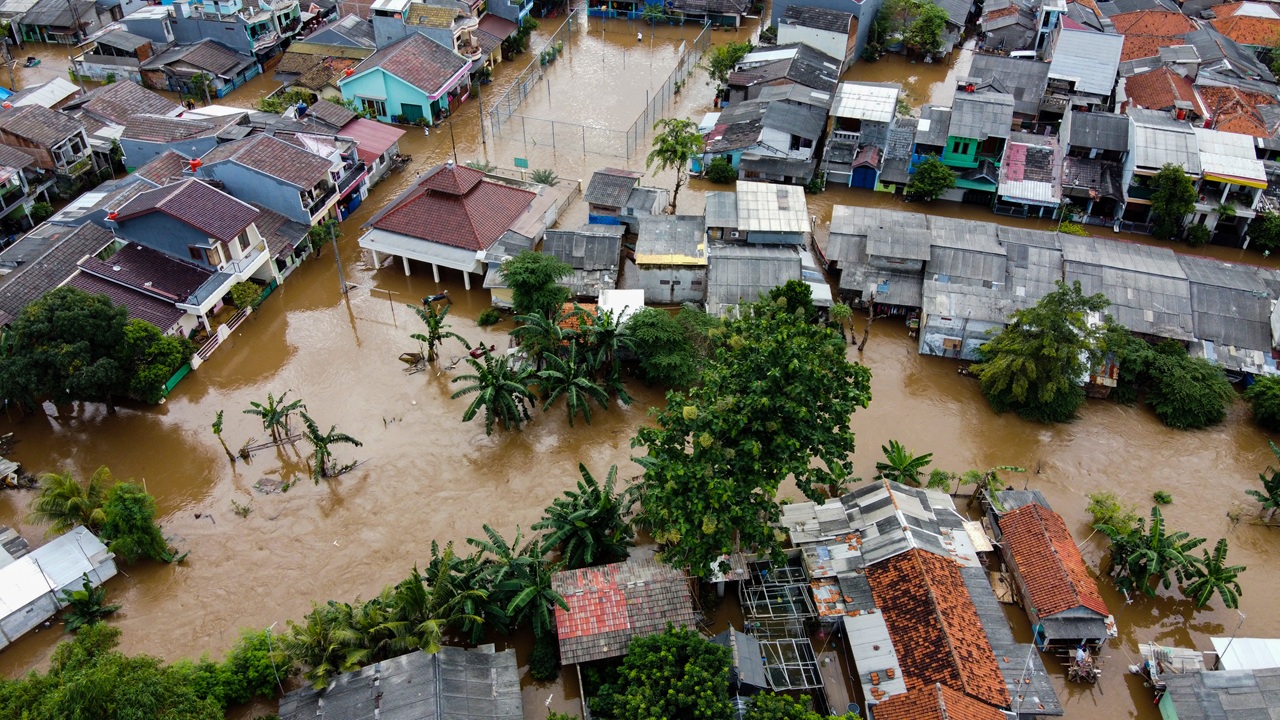
No matter where you get your news, extreme weather, natural disasters, and the rising tide of mass shootings are making the news. In the 30 minutes of what we know as “network” news, there is only 15 minutes of story content and disasters of all kinds are taking up more and more of that limited space. While there might be a sprinkle of entertainment news, the other stories dominating the news are the conflicts overseas and the controversies in the nation’s capital, and it’s becoming increasingly clear that what is happening in Washington will find its way to impacting every American community, big or small.
Regardless of where you find yourself on the political spectrum, the austerity associated with staff and programmatic budgets being marshaled through the halls of Congress and to President Trump is unprecedented. Fiscal rolls backs on infrastructure, education, healthcare, and of course, disaster preparedness and recovery will have a decades long effect on our communities for a couple of major reasons. Thinking strategically about the financial and human resources your community will need in the wake of these changes will be critical to effective disaster management.
Federal Expenditures
Federal government expenditures touch every part of our lives and are a significant contributor to the local economy in every corner of our country in both the private and public sector. In the public sector, competitive applications or formula-based awards are the two ways federal transfers fill local coffers through direct grands or state “pass throughs.” Forty years ago, the federal government accounted for just under 11% of state and local budgets (10.6% in 1989), and according to the census department’s Annual Survey of State and Local Government Finances, that percentage has grown significantly, especially with surges during the Great Recession and COVID. Now, 39 of the 50 states (as well as DC), rely on the federal government for more than one-quarter of their budget while twenty-three receive nearly 30% or more and nine have almost 40%.
Then, there’s the 2.4 million federal workers scattered across the United States, as well as medical professionals providing care underwritten in part by Medicare and Medicaid, employees of local businesses with defense or other federal contracts, staff at local human service agencies, and postal workers. The purchasing power of employees in the public, private, and nonprofit sectors is another way federal expenditures are infused into the local economy. And that’s before consideration of all the goods and services these agencies, companies, and organizations purchase from local vendors, such as vehicles, technology, equipment, fuel, and office supplies.
Human Capital
Federal, state, and local public agencies have been bracing for the continued loss of seasoned public servants as the last wave of baby boomers exit the workforce, taking with them enormous technical expertise and institutional knowledge. This process has been accelerated by the Trump Administration as staff across nearly every agency, has been decimated while communities hastily struggle to determine what if any program or service they may need to absorb while uncertainty regarding the talent pool looms large.
The Federal Emergency Management Agency (FEMA) was established in 1979. Over its nearly 50-year history, it has evolved and matured into an agency with an identifiable brand and programs critical to disaster preparedness, response, and recovery. From investments in local infrastructure that mitigate the impact of natural disasters to the training of local first responders to provide mutual aid as well as direct reimbursements for losses suffered by disaster survivors, FEMA is baked into the DNA of Americans and is synonymous with disasters.
FEMA’s bottom-up approach is consistent with the knowledge that, just like politics, everything is local. So, Trump’s March 19 Executive Order 14239, “Achieving Efficiency Through State and Local Preparedness,” leaves a lot of uncertainty. In April, critical resilient infrastructure grant programs were terminated, while in June, Department of Homeland Security Secretary Kristi Noem stated, “I want to be very clear. The President wants [FEMA] eliminated as it currently exists. He wants a new agency.”
Yet, FEMA is not the only agency that plays a critical role in preparedness as National Oceanic and Atmospheric Administration (NOAA) has been forced to significantly reduce staff, including weather forecasts. The National Weather Service (NWS) lost nearly 600 staff when its forecasting offices were already facing 40% vacancies. Early warning systems managed by meteorologists at NWS play a critical role in communication coordination between forecasters, emergency managers, and the public. These cuts to NOAA and NWS programs, staff, and data are making communities more vulnerable to storms like the one that hit Kerr County, Texas in July 2025.
Mitigation projects preemptively protect communities against damages caused by future disasters and can save between $6 to $13 for every $1 invested, and everyone believes that is money well spent. How communities will replace $2.1 billion in supplemental infrastructure support from the enormous programs focused on mitigation, as well as coordinate across boundaries and help disaster survivors, remains to be seen. If these funds are delivered to the states as block grants often determined by population, rural communities will be put at even more risk. If states and local communities will be expected to backfill these funds, they may not be able to underwrite the investment and as a result, put their community at greater risk or make the capital outlay and likely forego some other important community projects.
Finally, there are some roles that local communities simply cannot support on their own. Natural disasters seldom comply with municipal boundaries, yet local response relies on the ability to prepare with warning of conditions hundreds of miles away. Mutual aid with support from communities outside the disaster zone is essential, with the full understanding that coordination across agency and geography is tantamount to success.
And just because the federal government may be abandoning programs does not mean the demand for these services will disappear. States and local leaders will have to make some hard fiscal choices as the burden shifts, straining existing resources as new revenue streams will need to be developed.
Size Matters
In most smaller or rural communities, the city/county manager or administrator ends up wearing multiple hats. Small communities struggle more with stretched financial and human resources. They likely do not have as many specialized agencies, from land use planning to parks. There is less of a chance that they have disaster management professionals or a separate emergency management department or agency. That means the city/county manager is likely also the emergency manager. It means that the training, professional networking, and support that emergency managers are getting in larger communities are not part of the small town city manager’s portfolio of experience. This has the potential to undermine the effectiveness of the city/county manager when a disaster strikes, simply because they will lack the depth of expertise their peers may have acquired.
The August 2024 issue of PM Magazine highlights strategies that communities can deploy to integrate, and there is likely a lot we can learn from places that are integrated because they have to be.
Balancing Future Concerns
In a recent ICMA survey, city/county managers suggested that financial matters and disasters concerns are nearly equal as the most important challenges facing their community. Forty-two percent of survey respondents stated that fiscal concerns—including rising costs, lack of financial flexibility, greater demands for a wider array of needs, and the pressing demands of infrastructure costs on their budgets—was their greatest concern. Collectively, natural disasters, industrial disasters, and violence or mass shootings was the number-one challenge reported by 37% of survey respondents.
What that tells us is that future fiscal challenges are essentially equal to future disaster concerns. But I wonder if city/county managers spend equal time focusing on those matters. I will bet they are not even close. If fiscal concerns are equal to concerns over disasters, how might city/county managers balance these competing priorities knowing that disaster and emergency management will get less attention.
We know that states are going to be stretched thin as the impact of federal budget cuts and agency attrition are felt locally. State governments and state-wide organizations such as ICMA affiliates can play a critical role in helping local government leaders, especially those in small towns, be better prepared.
Human and Financial Solutions
Technical Assistance
Just because a community does not have a separate emergency management agency or emergency manager does not mean they should be without a plan. ICMA state affiliates could gather plans from communities around the state, organize them, and place them in a central repository for all members to access. A committee of local governments partnering with the State Emergency Management Agency could select emergency plans to review and develop a template of best practices, allowing a small community to adapt one from a peer. A small competitive grant program could allow access to professional technical assistance to aid city/county managers in preparing their own unique plan. Additionally, webinars, trainings, or other resources could be offered to strengthen emergency management skills.
Rainy Day Fund
Land-use policy is considered a local matter. In On the Move, Abrahm Lustgarten, argues that for years, disaster prone communities have been subsidizing state insurance funds as insurance companies were no longer willing to underwrite the risk in these hurricane and fire-prone places. As difficult as it may be, local communities may need to make some hard land-use decisions, while also taking specific steps to discourage people from returning to disaster-prone areas. If communities are going to replace FEMA programs and investments, they’ll need more financial resources, and communities should consider new revenue that causes residents living in these high-risk places to bear the burden of mitigation and recovery. This will not be popular.
However, in the same way that property tax and other incentives are used to encourage economic development and infrastructure investments, special assessment districts could collect an additional stream of revenue where property owners would pay a little more to invest in disaster preparedness infrastructure and stand-by recovery resources. The enabling legislation should ensure the revenue is placed in a “lockbox” to prevent elected officials from siphoning it off for another purpose. When a disaster strikes, the fund can help survivors while a portion of the future revenue stream could be leveraged against bond-supported mitigation infrastructure investments.
Improving Survivor Success
FEMA’s Individual Assistance (IA) provides direct financial assistance and support to individuals and households who have suffered loss due to a presidential-declared natural disaster. FEMA’s average IA payout is $3,208 per household, as confirmed in field research in states such as Michigan, Missouri, and Texas. But, in Michigan and Missouri, only half the claimants were successful. On its own, the claims process can be daunting, but the appeals process even more so.
While IA programs are managed by states, local communities should ensure there is, according to Elizabeth Melton, CEM, disaster expert and senior manager at Cohn-Reznik, “a survivor-centered approach.” She also suggests, “Establishing memoranda of understanding with partners that are likely to support individual and household recovery is key.” Partnering with local human and social service agencies to assist residents in applying and appealing can significantly increase a claimant’s success. Imagine if just 100 more households are successful—that’s another $300,000 of spending power in an impacted community. Who would turn that down?
At the same time, communities are often overwhelmed with donations of clothing and unnecessary items. Even though these things might seem helpful, the storage and management of the donations can distract local leadership from focusing on other important challenges. Sam Anselm, ICMA-CM, city manager of West Plain, Missouri, will tell you, “Send cash, not goods. Gift cards for local retailers allow survivors to spend money on things they know they need and stimulates the local economy.”
Know Your Neighbors
According to Dr. Jamal Zaki, Stanford University professor of psychology and author of Hope for Cynics: The Surprising Science of Human Goodness, “There is a lot of evidence throughout history and from the scientific literature that when people face disaster or trauma, oftentimes they respond not by falling apart but by coming together and by helping one another, stepping across lines of difference that sometimes divide them and trying to be there to support each other during the hardest times.” Some folks call it mutual aid, others call it community.
As a disaster expert and survivor, I’m particularly drawn to this work. I am forever impressed by how disasters bring folks together in unexpected ways, based upon a fundamental understanding that taking care of our neighbors is part of who we are. It’s part of the social contract that we have one to another and I argue that mutual aid/community is part of our genetic code.
Mutual aid among electric utilities is commonplace. But if FEMA no longer provides mutual aid training, local communities will have to ensure they are plugged into a network of trained professionals and colleagues with everything from front-end loaders to extra orange cones who can be called up to assist. Beyond state emergency management agencies, the ICMA network of professionals can also play a critical role. Sam Anselm will also tell you the other big take away from his experience after the historic 2011 EF-5 tornado in Joplin, Missouri, where he was assistant city manager at the time. “Know your neighbors. Our ability to respond and recover was based upon support we received from other communities in the region that sent their equipment and their people our way.”
Conclusion
As federal support for disaster management faces unprecedented uncertainty, local communities must adapt with resilience and ingenuity. The evolving landscape demands that city administrators and emergency managers—especially in smaller communities—embrace new strategies for technical assistance, fiscal planning, and survivor support. By fostering mutual aid networks, leveraging local expertise, and developing sustainable revenue streams, communities can better prepare for and recover from disasters, even as federal programs recede.
Ultimately, the strength of disaster management will depend not only on policy and funding, but on the collective commitment of neighbors, leaders, and organizations to safeguard one another and build a more resilient future together.

JAY JUERGENSEN is a nationally recognized expert in community and economic development, disasters and recovery and capital programs/public works management, having implemented $30 billion of investment in more than 31 communities and 20 states. (j-assoc.com)
Publish with ICMA!
We’re searching for interesting and insightful stories that can help others learn a memorable takeaway to serve their communities better.
