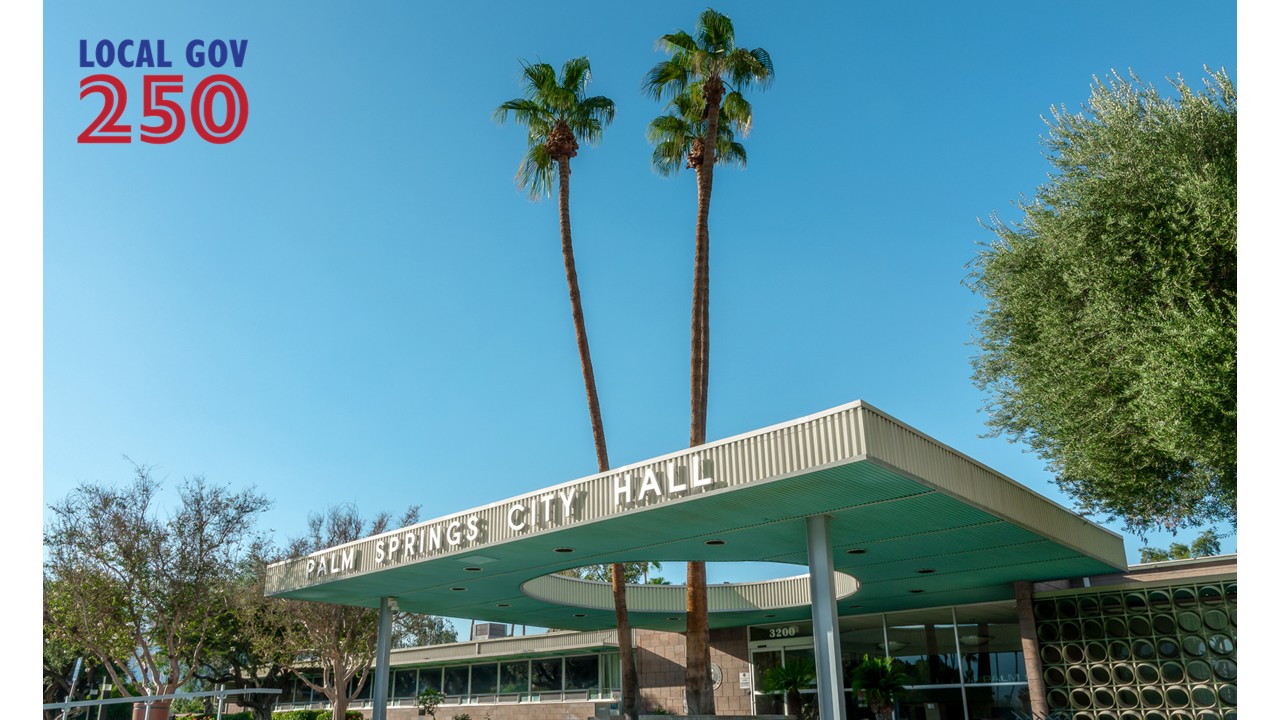
For 250 years, local governments have served as the most immediate expression of American democracy. Long before national conversations reach headlines, local officials are responding to resident concerns, shaping policy, and translating community values into action through legislation. That work does not end when an ordinance is adopted. In many ways, it begins there.
Municipal codes are more than collections of local laws. They are the operating framework of local governance. And maintaining them is one of the most important acts of civic stewardship local leaders can perform.
A Semiquincentennial Continuum
As communities reflect on 250 years of local governance, it is worth remembering that democracy has always required attention at the local level. From colonial town meetings to contemporary council chambers, local governments have translated collective values into enforceable rules that shape our daily lives.
Each amendment, each reorganization, each clarification is part of that ongoing story. Maintaining a municipal code is not simply administrative upkeep. It is the preservation of a living record of community priorities and decisions.
Stewardship ensures that future leaders inherit laws that are coherent, accessible, and reflective of the communities they serve.
The Code as Democratic Infrastructure
Streets, water systems, and public buildings require upkeep to function safely and effectively. Municipal codes are no different. They provide structure and clarity for everything from zoning and development to public safety, procurement, housing standards, and administrative procedures.
When a code is organized, current, and internally consistent, it strengthens fairness and predictability. Staff can administer regulations efficiently. Elected officials can make informed decisions. Residents and businesses can understand their rights and responsibilities. The rule of law becomes visible and accessible.
When a code is outdated or fragmented, the opposite occurs. Conflicting provisions create uncertainty. Obsolete references undermine credibility. Amendments adopted over time may never be fully integrated, leaving staff to reconcile inconsistencies manually. What should be a reliable guide becomes a source of confusion. Local democracy depends on clarity. And clarity requires maintenance.
Stewardship in Practice
Civic stewardship is often associated with fiscal responsibility or long-range planning. Code maintenance deserves the same strategic framing as it operates across three essential dimensions.
Accuracy and Integrity: Incorporating amendments promptly, eliminating redundant provisions, and correcting internal conflicts preserve the integrity of local law. Even small inconsistencies can carry significant legal and operational consequences. A disciplined approach to supplementation and periodic recodification ensures the code reflects what the governing body has actually adopted.
Accessibility and Transparency: Democracy functions best when laws are visible and understandable. Today, accessibility extends beyond physical copies stored at city hall. It includes searchable digital platforms, intuitive organization, and compliance with web accessibility standards. When residents can easily find and interpret local law, trust in government increases.
Responsiveness to Change: Communities evolve. State and federal mandates shift. Emerging issues, whether related to housing supply, technology, environmental resilience, or economic development, require regulatory adaptation. A code that is routinely reviewed and updated allows local governments to respond thoughtfully rather than reactively.
Together, these practices transform code maintenance from a technical task into a leadership responsibility.
The Cost of Neglect
It is not common practice for jurisdictions to intentionally allow their codes to fall behind. More often, competing priorities and limited resources push maintenance to the margins. Over time, however, deferred updates compound.
Outdated cross-references or conflicting sections may create legal exposure. Staff may spend valuable time interpreting or reconciling language rather than implementing policy. Developers and business owners may encounter delays as questions about applicability arise. Residents may struggle to understand requirements, leading to frustration and diminished confidence in their local government.
Inconsistent enforcement, real or perceived, can further erode trust. When laws are unclear, application becomes uneven. The result is not simply administrative inefficiency; it is weakened democratic legitimacy. Proactive maintenance is far less costly than corrective action.
A Management Function, Not Housekeeping
For city and county managers, code health should be viewed as a core management function. It intersects with risk management, operational efficiency, economic development, and community engagement.
Establishing regular supplementation schedules, defining workflows for ordinance integration, and assigning clear responsibility for code oversight are foundational management practices. Periodic comprehensive recodification provides an opportunity to reorganize, clarify, and modernize structure, often yielding long-term efficiencies.
Just as infrastructure assets are tracked and assessed, municipal codes benefit from a systematic “health check.” Warning signs may include frequent staff reliance on informal interpretations, repeated confusion about applicability, multiple standalone amendments awaiting integration, or references to outdated statutes and agencies.
Addressing these signals early preserves institutional knowledge and supports continuity through transitions in leadership.
Updating the Code Is Updating Democracy
In moments of celebration, it is natural to focus on milestones and achievements. Yet the durability of local government over 250 years has rested not only on visionary leadership, but on disciplined, day-to-day management.
Updating a municipal code may not command headlines. It rarely draws public ceremony. But it is one of the clearest demonstrations that local government takes its responsibility seriously by maintaining clarity, fairness, and transparency in the laws that guide community life.
Democracy is not self-executing. It is stewarded. And in cities, towns, and counties across the country, that stewardship is written, carefully and continuously, into the pages of the municipal code.
Learn More about Local Gov 250
In collaboration with other local government associations, ICMA is commemorating America’s 250th anniversary by celebrating the “democracy at the doorstep” facilitated by cities, counties, regional councils, and tribal governments. Learn more at localgov250.org.

CRISTINA LOVERDE is vice president of client solutions at ICC Innovation and brings more than 20 years of experience in the municipal codification industry.
GENERAL CODE, founded in 1962, is a member of the International Code Council’s Family of Solutions.
Publish with ICMA!
We’re searching for interesting and insightful stories that can help others learn a memorable takeaway to serve their communities better.
