ICMA has collaborated internationally for more than 100 years. Members have been traveling around the world participating in donor-funded programs, teaching at universities, attending events, and exchanging best practices. One of the strongest connections has been between local government professionals in the United States and Australia.
Autumn Monahan: From Ashes to Action—Bega Valley’s Resiliency Journey

In June 2025, ICMA member Autumn Monahan, administrative services director, Issaquah, Washington, traveled to Bega Valley Shire Council in New South Wales, Australia, to learn more about natural disaster management as a recipient of the Tranter-Leong Fellowship. She shares lessons learned and benefits of the ability to experience local government in other parts of the world.
From the devastating Black Summer fires to record-breaking floods, Bega Valley Shire Council has faced challenge after challenge. And through every disaster, one value remained at the heart of the council’s response: people come first.
Home to 36,000 resilient locals, Bega Valley is nestled between breathtaking hillsides and sparkling seas on Australia’s stunning south coast. I traveled to Bega Valley in June 2025 and studied the community’s inspiring resiliency journey.
A History of Disasters
Starting in 2018, a series of disasters continually tested Bega Valley, starting with the Tathra Bushfire. Caused by a tree falling onto an electrical line, 40 mile-per-hour winds fanned the bushfire across thousands of acres of forest and farmland. Within hours, 69 homes were destroyed, and it was quickly clear the speed and scale of the fire overwhelmed emergency response.
Five months later, the Yankees Gap Bushfire started on private property, and four additional homes were lost. While the community members and council staff focused on recovery efforts, little did they know greater challenges were ahead.
Following the Tinderbox Drought—a severe three-year streak of significant rainfall deficits—Australia’s historic 2019–2020 bushfire season erupted. In Bega Valley, the fires first raged in December 2019, and lasted 64 horrific days. Four people lost their lives and 467 homes were destroyed, along with 1,000 shed and outbuildings. Close to 70% of the shire was burned, making it the most catastrophic natural disaster in Bega Valley’s modern history. Compounding disasters came next, including a series of significant floods and the COVID-19 pandemic.
Recovery and Revitalization
To organize its recovery efforts, Bega Valley leadership essentially created a new internal team focused on three key areas: community health and wellbeing, rebuilding infrastructure, and economic development. A majority of this team was staffed with current employees, meaning day-to-day positions needed to be temporarily backfilled to ensure continuity of operations. The creation (and many years later, dissolution) of this team was a massive undertaking by human resources to recruit, hire, and support.
Most all the council’s employees also lived in the shire, and many were personally affected by the bushfires, highlighting the need to provide social and emotional support to internal staff following such a traumatic incident.
Lifelong Learning
Now years later, Bega Valley leaders have clear advice for communities like mine in Issaquah, Washington, that have yet to face a significant wildfire: education is key. While our community members may believe they are prepared, after they are asked a series of “what if” questions, it’s often clear more work needs to be done.
Bega Valley has plenty more lessons learned to share with other communities, including:
• Organize a recovery fund ahead of future disasters. Partnering with a trusted nonprofit can facilitate tax-deductible contributions.
• Make a business continuity plan to accommodate long-term staffing needs.
• Encourage resilient development, considering where and how structures are built.
• Leverage betterment opportunities, guided by the principle of not just restoring infrastructure but improving what was lost in previous disasters.
• Remember that each response is unique and should be tailored to your community’s specific needs. People come first.
This trip was incredibly valuable for me as a professional who has dedicated more than 17 years to serving one city. Shadowing public servants in a completely different part of the world gave me fresh insight into new team structures, processes, and leadership styles.
At the same time, I was also struck by the many similarities our local governments share, especially the ongoing challenge of managing rising costs with limited revenue options. I’m grateful to remain connected to several colleagues at Bega Valley Shire Council, and together we plan to keep exchanging ideas. Though oceans apart, our communities face many of the same challenges. And together, we’re shaping solutions that reach far beyond our borders.
David Biggs: Long Lasting Global Connections—California/Australia Exchange Program

While Autumn’s trip to Bega Shire Valley Council happened quite recently, ICMA members have been taking part in these types of exchanges for many years. David Biggs, ICMA Life Member and retired city manager, participated in an exchange organized by the League of California Cities’ City Managers Department more than 20 years ago, and his connections last to this day.
While now retired, I had the immense pleasure to participate in the CalCities City Managers Department Australian Exchange Program in 2000. I was the economic development director in Huntington Beach, California, and hosted Graham Apthorpe, then director of economic development from Cowra, New South Wales (NSW), in our home. He shadowed me on the job and also attended the department meeting in Palm Springs. I travelled later that year to Australia and attended the Local Government Managers Association Conference in Batemans Bay, NSW.
While Graham and I have kept in touch over the past 25 years, a recent trip to Australia allowed me to make a daytrip to Cowra to reconnect with him. Graham has retired from the Cowra Council as the director of corporate services and returned from retirement once to serve as interim general manager.
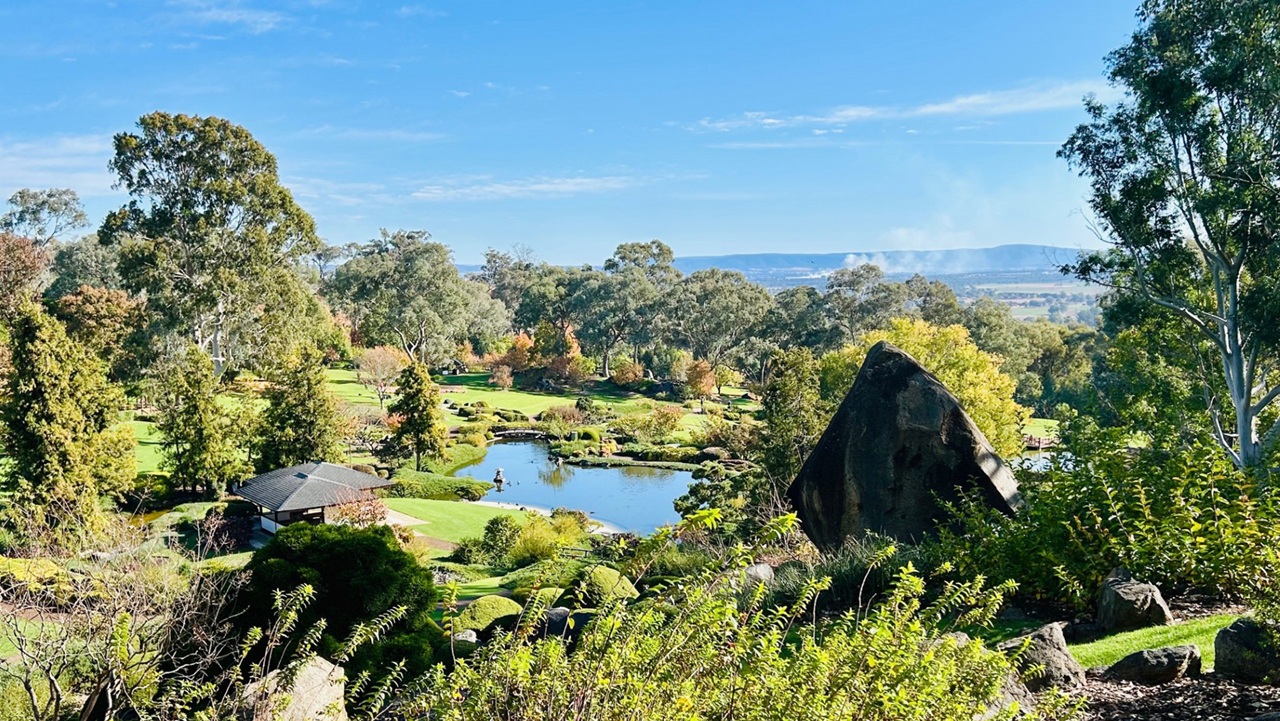
Cowra is known for its infamous prisoner of war camp, where 1,000 Japanese prisoners made the largest escape attempt of World War II, which led to the deaths of 231 Japanese prisoners and four Australians. I toured the camp site, the POW cemetery, and the new Japanese garden, built after the war as part of a reconciliation effort. Graham played an important role in the enhancement of the POW camp site, which is now a historical attraction for the region, and played a leadership role in the reconciliation efforts, which continue today.
The visit to Cowra also afforded the opportunity for me to meet Paul Devery, current general manager of the Cowra Council. Paul also participated in the Department Australian Exchange in 2009 when he was paired with the now-retired Santa Clara city manager Jennifer Sparicino. Both Australians recounted the great experiences they had and the long-lasting friendships and collegial relations made because of the exchange. My professional career and approach to my local government roles benefitted from my own exchange experience and perspectives, which were broadened as a result. Now, 25 years later, the dividends of the exchange program are still being realized.
Gavin Carnegie: ICMA-LGPA NSW Strategic Alliance—Australian Delegations Tour U.S. Cities

These exchanges also include delegations traveling to the U.S. to learn more about U.S. local government best practices. For the past 15 years, ICMA and Local Government Professionals Australia (LGPA) have maintained an organizational relationship and have worked together to provide exchange opportunities for their members. ICMA and LGPA NSW 1 staff have helped to provide contact information for local governments with projects of interest. Gavin Carnegie, executive manager, LGPA NSW, shares how recent exchange opportunities have allowed for new perspectives and have helped to shape local government professionals’ careers in Australia.
How It Started
In 2022, LGPA NSW focused on the professional development of senior leaders in local government. This demographic is highly educated and busy, making them selective about their professional development opportunities. We needed something significant to attract their attention, and the largest local government gathering in the world—the ICMA Annual Conference—became our drawcard. To enhance the program, we decided to visit nearby communities to explore their most interesting and innovative projects, meet their senior leadership teams, and discuss pressing issues. What started as a “nice idea” quickly became the most significant and engaging element of our delegation to the USA, with leaders connecting across the globe over similar challenges and sharing valuable insights.
Study Tours Coinciding with ICMA Annual Conferences
The scope of local government is incredibly broad, and while the USA and Australia differ in some of the services they deliver, they share many common challenges and issues. Our first visit was to Texas, coinciding with the 2023 ICMA Annual Conference in Austin. We explored a shared-use pathway, a cool pavement program, restoration of a downtown precinct and a town hall, along with a rehabilitated illegal dump. Additionally, we discussed intangible projects with senior leaders, including drone technology, autonomous vehicles, and bitcoin. The engagement was evident, and the feedback was universally positive, as senior leaders expressed how inspiring it was to see and experience the thoughtful work being done for the communities. Interestingly, the cool pavement program, which piqued the interest of several delegates, has been used in Australia, but we had to travel to Texas to discover it!
The following year, the conference was held in Pittsburgh, so we divided our visits between the Washington, DC and Pittsburgh areas. The projects we encountered ranged from two flood mitigation projects created to adapt to climate change, new urbanism community planning, and a missle site rehabilitated into community parkland, as well as intangible initiatives such as financial counselling for residents and an education program called the Residents Academy. Once again, this was an incredibly engaging element of the delegation. A participant who attended both years—Paul Bennett, general manager of Tamworth Regional Council—provided the following testimonial:
The LG Professionals NSW ICMA delegation provides an incredible development opportunity for professional staff at any level of the organization. The global insights and learnings around the issues we are experiencing in Australia provide a whole new perspective on how we might deal with these challenges. The individual council visits provide hands-on, practical examples of innovative solutions to common challenges, while the ICMA Annual Conference is a spectacular aggregation of leadership, knowledge, and experiences from across the globe that cannot fail to inspire. If you want to go to the next level of leadership, then you have to make the commitment to participate in this fantastic program.
The visits are truly inspiring, showcasing projects that thoughtfully incorporate the aspirations and goals of the communities they serve. While the outcomes of these projects may vary, they share common themes: the use of public spaces to foster connection, a focus on environmental sustainability, and a commitment to community-driven initiatives. This year, we were excited to travel to Florida for our third U.S. delegation, visiting councils in Miami, West Palm Beach, Lakeland, and Tampa, looking at challenges such as climate resilience, urban planning, and partnerships to support our communities.
Bringing the Exchange Ideas Back Home
We recognized that not everyone can afford the time and money to travel to the States, and several leaders expressed interest in a more accessible option. Therefore, this year we created our first domestic delegation in NSW, aligned with our annual conference. We visited four councils, each with various projects and community goals, and the engagement was comparable to our U.S. delegation. One delegate noted that we rarely knock on our neighbors’ doors and ask to be shown around, and there is great work being done on our doorstep. This feedback has inspired our 2026 delegation, which will include a second delegation to NSW, another to Victoria, and a third to New Zealand.
I believe all professionals should consider the exploratory experience that a delegation offers. It provides an opportunity to be inspired by other professionals in local government and to continue celebrating the remarkable work our industry does for the communities we serve.
AUTUMN MONAHAN is administrative services director of Issaquah, Washington, USA.
DAVID BIGGS, ICMA-CM, is an ICMA Life Member and retired city manager.
GAVIN CARNEGIE is executive manager of Local Government Professionals Australia, New South Wales.
Endnote
1 LGPA NSW has a strategic alliance agreement with ICMA and is the lead association for eight local government associations in Australia who form the LG Professionals Australia Federation.
Publish with ICMA!
We’re searching for interesting and insightful stories that can help others learn a memorable takeaway to serve their communities better.
