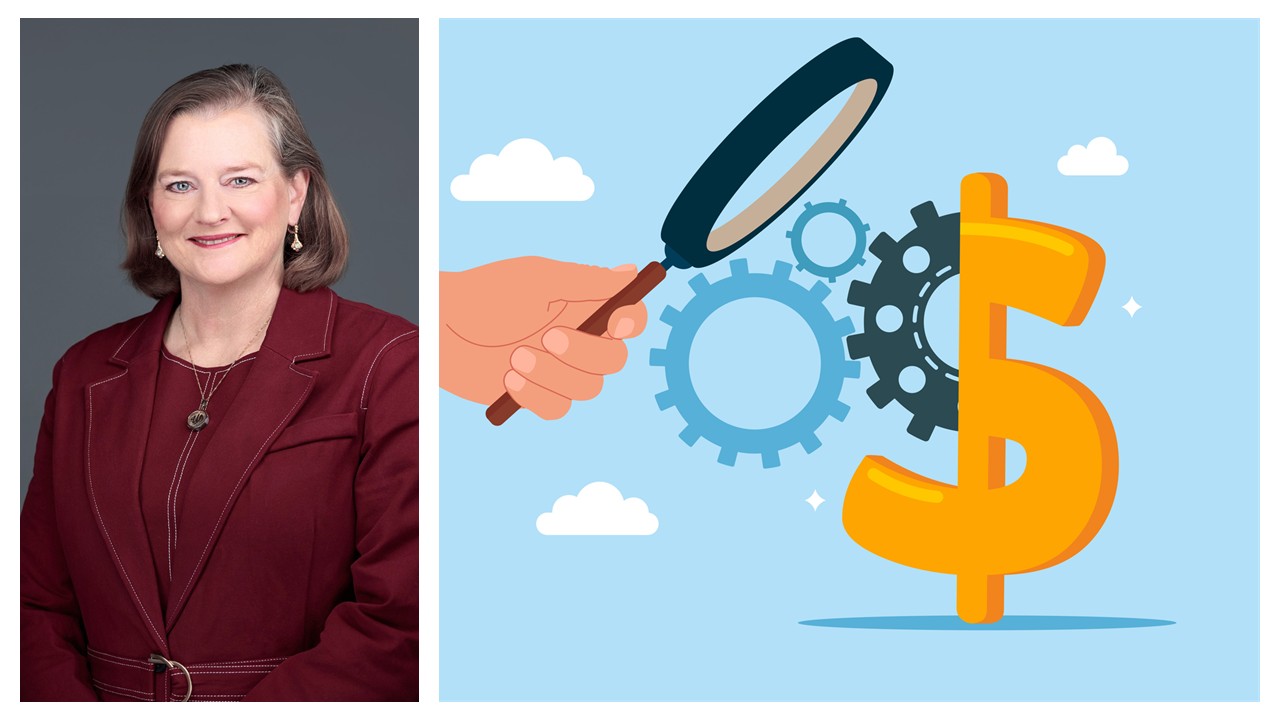
Every budget season forces a reckoning. Not just with numbers, but with priorities, values, and the kind of government we intend to build. A budget is never just a spreadsheet—it’s a statement of purpose.
I was inspired by a commitment made by Haley Kadish, policy and budget manager for Bernalillo County, New Mexico, to ask leadership if they are “funding the government they need or the government they have had?”
That question lands with particular weight this month as Public Management explores the fiscal cliff and the evolving landscape of public finance. The articles in this issue remind us that the pressures facing local governments are not abstract—they are structural, human, and urgent.
“Avoiding the Utility Fiscal Cliff” challenges us to rethink cost-plus pricing as a tool for long-term stability, not just cost recovery. It’s a reminder that infrastructure doesn’t crumble overnight; it erodes slowly when we fail to align rates with reality.
“The Human Cost of Fiscal Shifts” brings the impact of federal policy changes into focus. Fiscal cliffs are not just financial events; they are also the consequences of policy choices. When local governments are expected to deliver services and the funding stream dries up, it is the lived experience of some of our most vulnerable populations.
“Navigating Financial Challenges Through Priority-Based Budgeting” pushes us to be intentional about outcomes. When every dollar must work harder, we cannot afford budgets that merely reflect history. We need budgets that reflect intention.
“Rethinking Service Design in an Era of Fiscal Constraint” reminds us that innovation is not a buzzword; it’s the creative process that solves real problems! Journey mapping and segmentation are not just the tools of “innovation”—they are survival strategies when we must deliver more with less.
“Fraud Risk Hides in Operations” exposes the internal control vulnerabilities that quietly invite embezzlement. Fiscal responsibility is not only about balancing budgets; it’s about protecting the public trust. I don’t usually plug documentaries, but if you have not watched All the Queen’s Horses, I would invite you to do so. It chronicles how a trusted member of the community, and comptroller of tiny Dixon, Illinois, embezzled $53 million over 20 years. The lack of internal controls allowed her to steal public funds without detection. It’s available on multiple streaming platforms—and brings important lessons for local government professionals to the forefront!
Across all these themes runs a common thread: outcomes matter, and achieving those intended outcomes requires stewardship.
I heard Mark Funkhouser—former Kansas City auditor and later its mayor— speak at a priority-based budgeting conference several years ago, and he named this truth with characteristic clarity:
“If you want to take care of the people, you have to take care of the money.”
Fiscal responsibility is not about austerity; it’s about capacity. It’s about ensuring that the services our communities depend upon are sustained and accessible to everyone in the community.
As public managers, we are stewards of both public resources and public trust. The choices we make today—how we price utilities, how we design services, how we prioritize investments, how we safeguard assets—shape the government our communities will inherit tomorrow.
So, as you read this month’s issue, I encourage you to sit with that question from Bernalillo County. Let it challenge you. Let it provoke honest reflection. And let it guide your work. Are we funding the government we need or the government we’ve had? The answer will define not just our fiscal future, but our collective one.

JULIA D. NOVAK, ICMA-CM, is executive director of ICMA.
Publish with ICMA!
We’re searching for interesting and insightful stories that can help others learn a memorable takeaway to serve their communities better.
