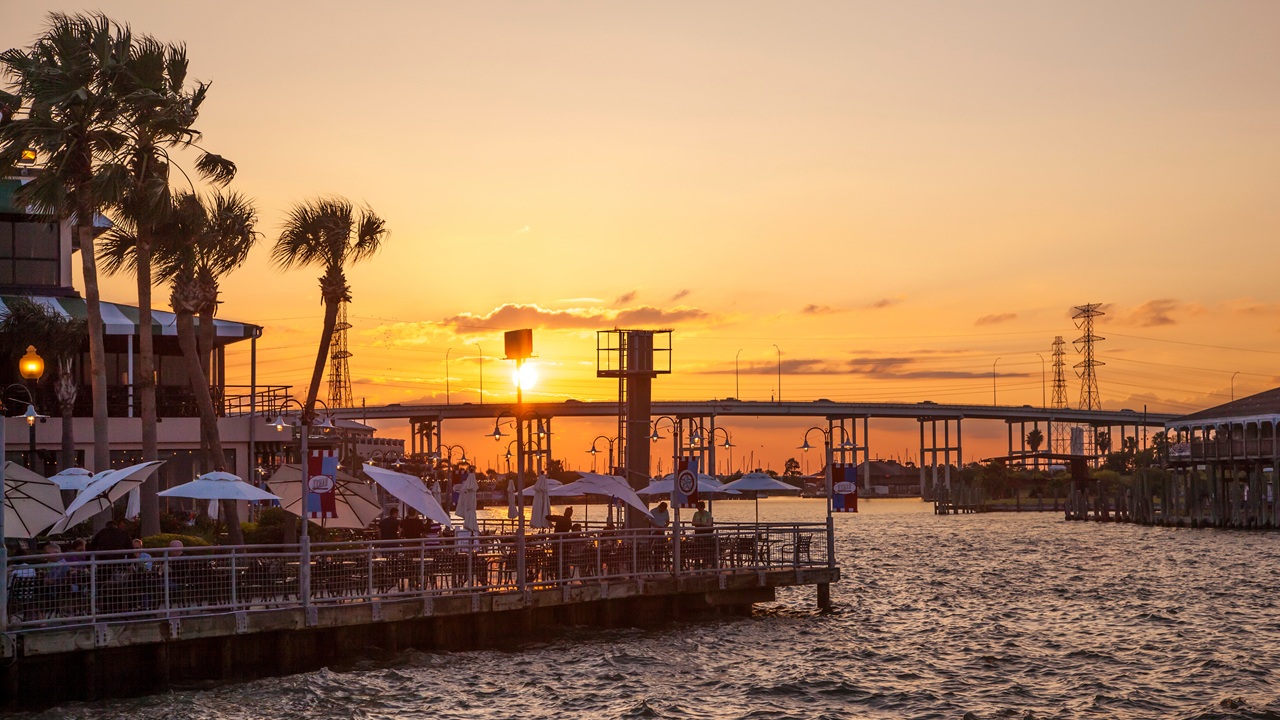
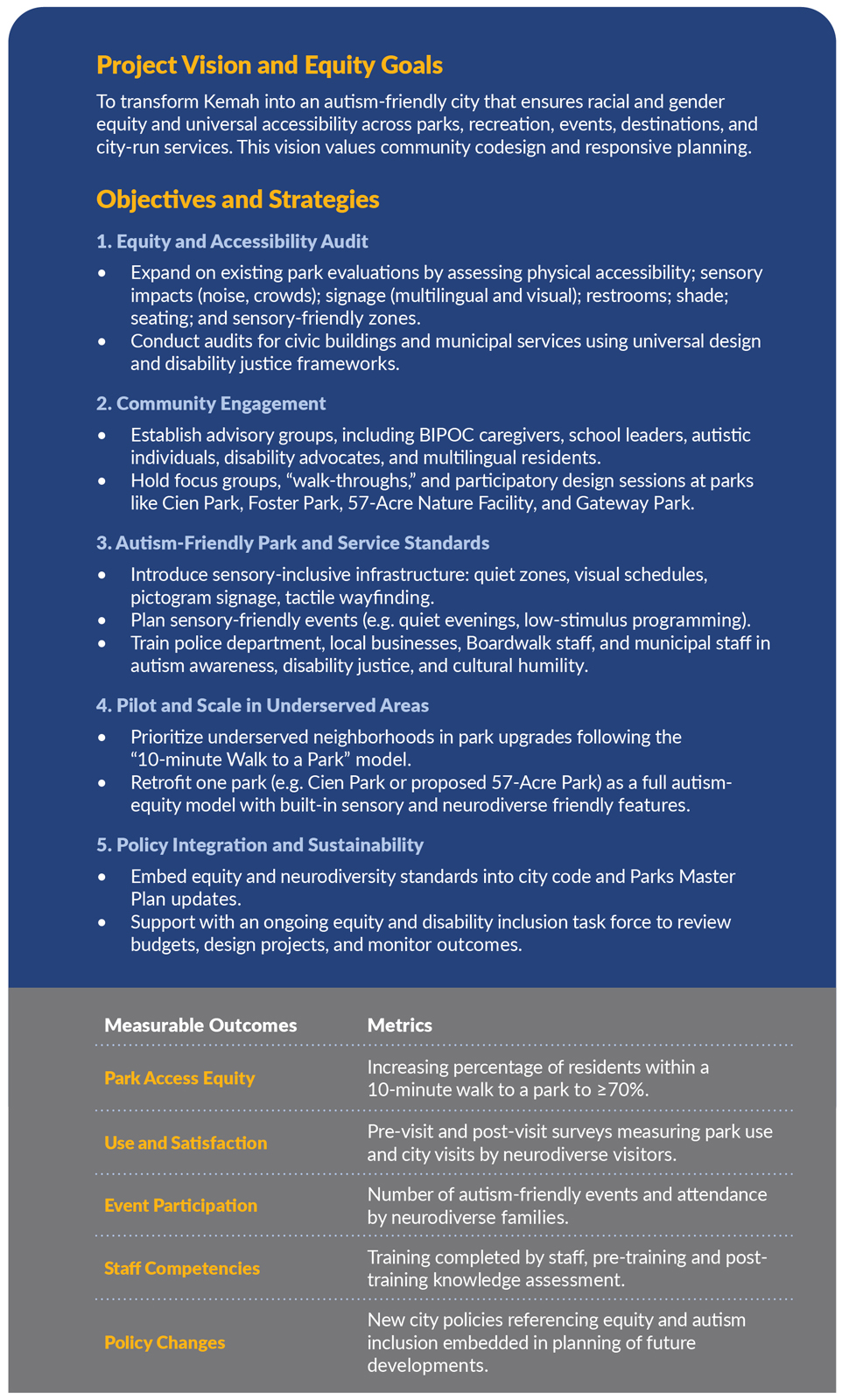
My participation in the 2025 cohort of ICMA’s Leadership Institute on Race, Equity, and Inclusion provided the opportunity to develop a capstone project in service to my city of Kemah, a coastal city of approximately 1,800 residents southeast of Houston. In my capstone, I propose a framework to ensure equitable access to green spaces, public spaces, events, and city services—especially for neurodiverse and autistic residents—by embedding universal design, cultural responsiveness, and autism inclusion into city planning and programming.
Demographics and Equity Considerations
Kemah’s population is approximately 64% non-Hispanic White, 22% Hispanic/Latino, 3.4% Black, and 4.8% Asian, with smaller proportions of other groups. About half of the city’s residents live within a 10-minute walk of a park—below the national median of around 74%. Reduced access among Black (54%) and Native American (100% but small sample) populations suggests disparities.
Staff diversity has increased. With the hiring of both the first Hispanic city administrator and first Hispanic police chief in January 2025, the city staff breakdown now matches or exceeds the diversity of the city with minorities in every department and women strongly represented in leadership positions city-wide. The practice of having correlating demographics between city staff and its residents leads to better communication and understanding. Although to many it may seem like a small circumstance, but it increases staff/resident relatability.
Parks and Recreation Planning
Kemah is currently implementing its Parks and Open Space Master Plan (established in April 2024), which involves community workshops, surveys, pop-up events, and site assessments on accessibility, safety, and cultural relevance. Kemah is developing a new 57-acre nature facility (the 57 Acre Park) with walking trails, pavilions, playgrounds, and an outdoor learning center. Construction began in June 2024 and the first two phases of 11 were complete by summer 2025, using approximately $832,000 in public funds.
Additionally, Kemah has now adopted a linear park plan that it has named Gateway Park in honor of its Gateway to the Bay moniker. The park will feature native plants, green stormwater initiatives, and an ADA accessible trail that extends over one mile and includes trailheads and rest stops. The park culminates with a boat ramp and entertainment area where family-friendly and neurodiverse-friendly community events will take place.
Another recent highlight is the renovation of Foster Park, which includes an ADA walking path and the addition of an accessible playground and swings. Plans for future park space additions will include further ADA developments and sensory-friendly installments.
Training in Pursuit of Autism City Certification
Kemah is working hard to follow in the footsteps of Jonesboro, Arkansas, which became the first Autism Certified City in America in 2016 through the International Board of Credentialing and Continuing Education Standards (IBCCES). Jonesboro’s 75,000-resident population, schools, and local businesses have worked together to drive their pursuit of inclusivity.
Other cities have begun to follow suit with autism-specific initiatives. In 2017, Cherry Hill, New Jersey, became the first township to require autism training for all of their police officers. In 2019, Miami Beach, Florida, launched Autism Access Miami, a partnership with local organizations to make the city a more welcoming place for people with autism by providing sensory-friendly events and activities. Closer to Kemah, in 2020, Plano, Texas, launched Autism Friendly Plano, which provides training to local businesses and community members on how to better serve individuals with autism.
As for Kemah, all city staff have completed autism training, and our police department has begun requiring the same training for all of our officers. Our next task is having certain city staff complete the Certified Autism Travel Professional (CATP) program.
Steps to Becoming Certified
Achieving the Autism Certified City designation may seem like a daunting task, but there are several ways in which other cities can follow Jonesboro’s example and create a more inclusive environment for individuals with autism. Here are a few steps that we have begun to take.
1. Partner with local organizations
One of the keys to Jonesboro’s success was its partnership with local organizations, including schools, businesses, and healthcare providers. By working together, these organizations were able to share resources and expertise to create a more comprehensive approach to autism/neurodiverse inclusiveness.
2. Conduct thorough training
The IBCCES certification process requires extensive training for city employees, local businesses, and community members on autism awareness, understanding, and acceptance. Providing this training is essential for creating an environment that is truly welcoming and supportive of people with autism.
3. Create sensory-friendly spaces and events
Sensory-friendly spaces and events are an important component of an Autism Certified City. By making adjustments to lighting, sound levels, and other environmental factors that can be overwhelming for individuals with sensory sensitivities, cities and partnering businesses can create a more comfortable environment for people with autism.
4. Implement safety measures
Safety measures such as emergency responder training are crucial for ensuring the safety of individuals with autism in emergency situations.
By taking these steps and following Jonesboro’s example of collaboration and commitment to inclusivity, other cities across the country can also become Autism Certified Cities. Learn more at ibcces.org/autism_certified_city.
Existing Accessibility Features
Kemah is a popular tourist destination due to its enticing restaurants and attractions, so accessibility is being taken into account in those locations as well. The Kemah Boardwalk, the city’s main entertainment district, boasts wheelchair-friendly pathways, elevator access, accessible restrooms, and even a quiet room for neurodiverse visitors. However, gaps remain in sensory-informed signage, multilingual information, staff training, and structured autism-friendly events.
One step we’ve taken when planning large events is arranging for quiet zones during louder days. Our hope is to have the Boardwalk and other local businesses also consider becoming IBCCES Accessibility Card locations. Accepting this card streamlines accommodations for those with neurodiverse deficiencies. The Boardwalk and neighboring restaurants have joined our efforts by providing autism and neurodiversity training for staff and scheduling special days and times for autism/neurodiverse population attendance. Local businesses, such as salons and barbers, are also completing similar training.
Next Steps
Texas has launched a Driving with Disability Program that focuses on improving the interaction between law enforcement and drivers with disabilities that have unique communication needs. Texans now have the option to disclose that they have a “communication impediment” on the front of their driver license or state ID and when registering their vehicle through the DMV. This will alert the trained officer that the individual is deaf, hard of hearing, or may be slower to respond. There is now a sticker that can be affixed to the rear window of a vehicle to alert an officer of this situation as they approach the car.
Following this lead, Kemah is working with the Governor’s Committee on People with Disabilities on convening a Sensory Accessibility Taskforce to explore opportunities to support and promote sensory-friendly practices across Texas communities. The goal of the taskforce is to identify priorities and discuss how Texas can build toward broader sensory-friendly community designations. The hope is to explore the potential of Kemah becoming the first sensory-friendly city in the state and to create a standard for others in the state, nationally, and globally to emulate.
Conclusion
Kemah has developed a clear path for expanding equitable access for individuals with autism and neurodivergence in the city’s parks, public spaces, events, and services. With ADA improvements and training underway, along with growing community partnerships, the city is building the capacity needed to serve residents and visitors more effectively. By pairing these efforts with targeted outreach and measurable outcomes, Kemah is on its way to achieving autism-friendly city certification.

CESAR GARCIA, ICMA-CM, is city administrator of Kemah, Texas.
Publish with ICMA!
We’re searching for interesting and insightful stories that can help others learn a memorable takeaway to serve their communities better.
