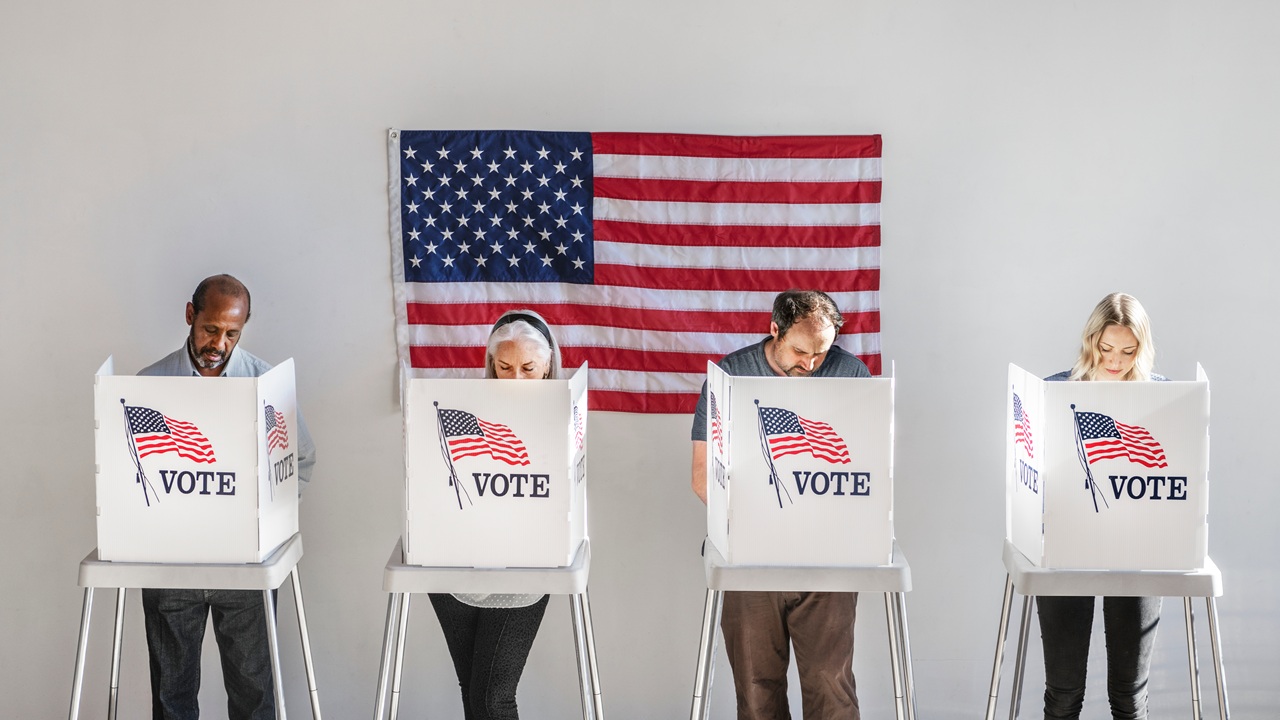
Local government professionals spend their careers building public confidence in systems that must work every day. We pave streets, finance infrastructure, issue bonds, manage enterprise funds, and defend zoning decisions in packed hearing rooms. These are visible systems—residents see the road improvements, feel the drainage work, and debate development proposals.
Elections belong in that same category of essential infrastructure. In fact, public elections were formally designated as “critical infrastructure” in January 2017 by the U.S. Department of Homeland Security, placing election systems alongside energy grids and water systems in terms of national importance.
But unlike roads or water systems, election infrastructure operates largely behind the scenes. Most voters encounter it only briefly—a few minutes marking a ballot—and then step away. The system’s strength depends almost entirely on public confidence in processes they rarely observe.
When that confidence weakens, governance itself becomes unstable.
From Improv to Statute
For most of my career, I worked in community development and city management. I navigated contentious zoning cases. I presented capital improvement plans and budget proposals. I worked with bond counsel to issue debt for critical infrastructure. In that environment, public service can feel like a blend of structured policy and improvisation. You have a framework, but you read the room. You adjust your messaging. You refine the approach. Sometimes it feels closer to stand-up comedy than statutory compliance—the audience reaction shapes the delivery.
Then I moved into election administration, and quickly realized that this is not improv. If much of local government management allows for adaptation within policy boundaries, election administration operates within far tighter lines. The script is written in statute. The terminology has its own language and acronyms. Deadlines are fixed. Procedures are prescribed. There is little room—and little tolerance—for improvisation.
That rigidity is not bureaucratic inflexibility. It is the foundation of public trust.
The Basics Are Simple, The Framework Is Not
At its core, the mechanics of elections are straightforward. A voter receives a ballot (typically paper or a ballot that produces a paper record), marks selections, and those votes are tabulated. Most jurisdictions operate on this same principle. Beneath that simplicity, however, lies considerable variation.
The United States is a nation of states. There is no single national ballot every voter casts. Each state establishes its own voter registration deadlines, identification requirements, early voting windows, vote-by-mail rules, and canvass procedures.
Elections are also highly decentralized. In most states, counties administer elections. In others, municipalities or townships do. Yet voters often identify most strongly with their city or neighborhood—not the county that administers their ballot.
That structural reality can create confusion. And confusion, if unaddressed, erodes trust.
Don’t Assume Voters Know the Rules
One of the most important lessons I learned in election administration is this: never assume voters understand the mechanics.
Registration rules differ widely. Some states allow same-day registration; others require registration weeks before Election Day.
Identification requirements vary. Some states require government-issued photo ID. Others accept non-photo identification or signature verification. A few rely on other safeguards and don’t require ID at the polls. Voters who relocate between states often assume uniform rules, but there are none.
Polling location rules also differ:
- In some jurisdictions, voters must vote at an assigned precinct on Election Day.
- In others, voters may cast a ballot at any countywide vote center.
- Some operate hybrid systems.
Political party affiliation adds another layer—particularly during primary elections. In closed or semi-closed primary states, voters must be affiliated with a political party—often before a deadline—to participate in that party’s primary. In open primary states, voters may select a party ballot on Election Day.
From an administrative standpoint, primary elections are often the most complex to conduct. Multiple parties may require different ballot styles within the same precinct. Two neighbors standing side by side may receive entirely different ballots based on party affiliation. Managing those ballot styles accurately requires careful planning and precise distribution controls.
By contrast, the November general election is typically more streamlined from a ballot-style perspective: every voter within a precinct receives the same ballot.
To election professionals, these distinctions are routine. To voters, they can be confusing. Clear and repeated communication strengthens confidence. That includes:
- How to check voter registration status.
- Registration deadlines.
- Identification requirements.
- Party affiliation rules for primaries.
- Whether Election Day voting is precinct-based or countywide.
- Where to find official polling place information.
- How to access a sample ballot.
Providing accessible polling site information—addresses, hours, accessibility details—prevents frustration that might otherwise be mistaken for dysfunction.
Offering specific sample ballots before voting begins reduces uncertainty, shortens lines, and increases voter confidence. When voters know what to expect, the process feels orderly and deliberate. Clarity builds trust.
Safeguards That Reinforce Confidence
Public trust is not sustained by assurances alone. It is reinforced by documented safeguards. Well-administered elections—regardless of state—share common operational controls.
Ballot Accounting and Reconciliation
Every ballot is tracked from printing through tabulation. Election offices reconcile ballots issued, ballots returned, provisional ballots, spoiled ballots, and unused ballots. The number of voters checked in must align with the number of ballots cast, subject to documented exceptions. This balancing process ensures that every voter and every ballot is accounted for.
Chain of Custody
Ballots and memory devices are logged whenever they move—from warehouse to polling location, from polling location back to election headquarters, and through tabulation. Two-person teams, sealed containers, tamper-evident seals, and transfer logs are common safeguards. These controls exist because accountability is expected.
Bipartisan Oversight
Many states require bipartisan participation during ballot processing and canvassing. Structured observation strengthens legitimacy.
Transparent Canvass
Election Night is not the finish line. Results reported that evening are unofficial. The formal conclusion occurs during the canvass, when provisional ballots are reviewed, reconciliations are finalized, and certification occurs. The deliberate pace is not delay; it is verification.
Federal Coordination and Local Administration
Following the 2017 designation of elections as critical infrastructure, federal coordination around cybersecurity and threat monitoring expanded. That collaboration focuses on information sharing and resilience.
Elections themselves remain state-run and locally administered. When residents understand that their ballot is managed by their local election office under state law, trust often increases.
Stewarding Confidence
Misinformation about elections often targets process—ballot handling, counting timelines, polling access. Local government leaders cannot control national rhetoric, but they can reinforce accurate local information.
Residents frequently trust communication from their city or local government channels. That makes municipal leadership an important partner in reinforcing deadlines, identification rules, polling locations, sample ballot access, and canvass timelines.
This is not advocacy; it is governance. Public trust in elections does not belong solely to election administrators; it is shared infrastructure.
Local government professionals steward roads, budgets, and public safety systems. We also steward confidence. And in elections, confidence may be the most essential infrastructure we manage.

FRED SHERMAN, AICP, CERA, is a local government professional with more than three decades of experience in municipal and county administration in the Kansas City metropolitan area, and served as election commissioner for Johnson County, Kansas, from 2021 through 2025. He also holds the Certified Elections/Registration Administrator (CERA) certification from The Election Center.
Publish with ICMA!
We’re searching for interesting and insightful stories that can help others learn a memorable takeaway to serve their communities better.
