
“In Our Region” is PM’s new column written by ICMA’s regional directors. In this edition, two outgoing regional directors each share a book that influenced their careers. Their book reviews, while covering different periods in U.S. and world history, reveal a common thread about the importance of nurturing community to ensure its survival.
As a reminder to ICMA credentialed managers, you can receive 10 hours credit for each professional book that you read.

Randall Reid, Former Southeast Regional Director
What book did you choose to highlight and why?
In 2024, to commemorate the upcoming 250th anniversary of our country, I dedicated myself to reading books that would deepen my understanding of America’s significance. Among these, I chose to highlight The Roots of American Order by Russell Kirk. This work is a comprehensive portrayal of America’s foundation and is an insightful depiction of the unique balance of “liberty and order” that our founders achieved.
How did the book encourage you to think more broadly or change your mind about an issue?
Reading Kirk’s work made me appreciate the uniqueness of America’s experiment in governance and renewed my respect for the wisdom inherent in our founding documents. The book asserts that America’s founding was a deliberative selection from various Western cultural influences, based upon common theological beliefs and shared aspirations for a self-government that affirms individual rights. The founders designed a democratic republic, drawing on historical precedents, and documented their reasoning in the Federalist Papers. Kirk prophetically warned critics of Western civilization that “nations are like trees; it will not do to hack at their roots, though we may prune their branches,” and reminds us that these roots of liberty are not self-sustaining and must be “watered” through a renewed respect for the traditions and institutions that made our country possible.
Interesting for public administrators, Kirk highlights five cities (Jerusalem, Athens, Rome, London, and Philadelphia) and describes in detail their contributions to American’s political foundations. Similarly, Kirk covers historical movements such as the Protestant Reformation, and highlights the work of Plato, Aristotle, Cicero, Augustine, Locke, Hobbes, Calvin, and Burke, to name only a few who influenced our well-educated founders. One reads and sees clearly it is not by accident we have a written Constitution and Bill of Rights, the classical architecture of the physical structures in DC, federalism establishing intergovernmental relationships, and governing systems with checks and balances.
What practical strategies from the book could be applied in local government?
A principal lesson from Kirk’s book is the importance of each individual local official being educated in and actively reinforcing American civic heritage and values in their daily roles. The council’s dais is a stage for continuing a three century-old production of democratic theater that reinforces the “liberty and order” we cherish.
Did you find anything in the book that was particularly relevant to your region?
Kirk provides timely warnings for public officials in an era marked by cultural fragmentation and partisan deception. He asserts that order must precede freedom and justice if society is to flourish; without moral and social order, chaos and violence may ensue. Maintaining “liberty and order,” along with our public institutions and federalist system, becomes difficult when public officials contribute to or foster disorder as recent sanctuary city litigation and ICE enforcement represent.
Have you already implemented any ideas from the book?
I have been encouraging ICMA colleagues to seize the opportunity presented by the 250th anniversary to celebrate America’s story, highlight our civic values, and welcome those who embrace them. Localgov250.org is one way of doing so.
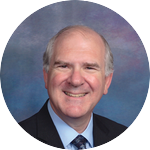
Wayne Parker, Former Mountain Plains Regional Director
What book did you choose to highlight and why?
The latest book I picked up is Leadership: Six Studies in World Strategy by Henry Kissinger. I am a bit of a history buff, and I love reading about leadership, so Kissinger’s perspective really caught my attention. He was both a colleague and an observer of some of the world’s most influential leaders. With the polarization and rise of authoritarianism we are seeing today, I wanted to learn more about leaders from the past 50 years who have shown a range of leadership styles.
How did the book encourage you to think more broadly or change your mind about an issue?
Kissinger’s main point is that the best leaders operate at the crossroads of two big questions: how do you balance the past with the future, and how do you connect the values of your people with their aspirations? That might sound a little abstract (classic Kissinger), but he brings it to life with real-world case studies.
Kissinger examines six leadership traits: humility, will, equilibrium, transcendence, excellence, and conviction. As someone who’s read a lot of history, I thought I knew these leaders pretty well, but the case studies gave me a much more nuanced view. For example, I never ranked Richard Nixon very highly as a world leader, but Kissinger’s behind-the-scenes stories helped me understand Nixon’s approach to leadership, diplomacy, and negotiation in a new way.
What practical strategies from the book could be applied in local government?
Working in local government is just as complex and nuanced as the situations Kissinger describes. One of our biggest challenges is finding common ground among people who might have strong disagreements. I was especially struck by the story of Konrad Adenauer, who took a tough but realistic approach to helping post-WWII Germany move forward—admitting national guilt and working toward reconciliation. That really highlighted the importance of humility in public policy for me.
Did you find anything in the book that was particularly relevant to your region?
Many ICMA members in the Mountain Plains Region (soon to be Region B) are dealing with polarization, political contempt, and growing skepticism toward professional local government managers. The example of Lee Kwan Yew, Singapore’s leader, really resonated with me. He managed to bring together different factions and focused on the nitty-gritty of economic policy and social harmony, which led to Singapore’s success. On our scale—whether it’s a city, county, or region—we can learn from that approach: focus on the fundamentals, deliver great services, and build a stronger community.
KATE FITZPATRICK is ICMA’s northeast regional director (kfitzpatrick@icma.org).
Publish with ICMA!
We’re searching for interesting and insightful stories that can help others learn a memorable takeaway to serve their communities better.
