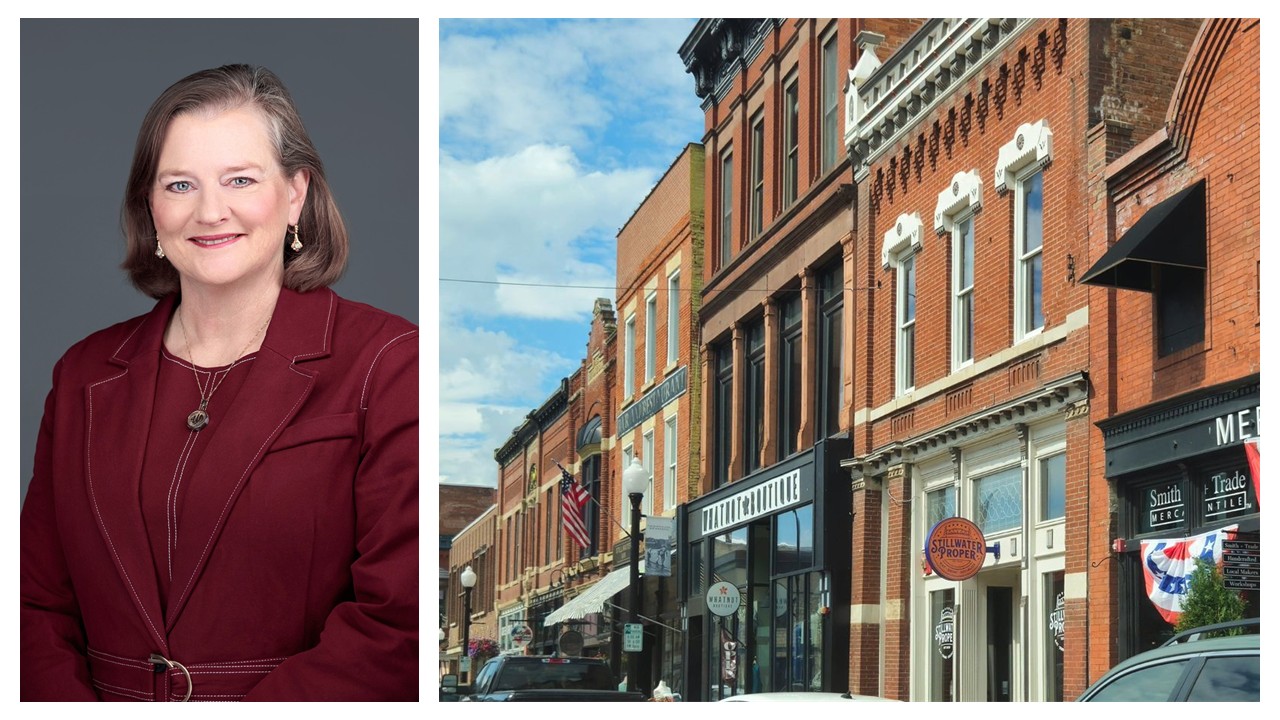
This month’s issue of Public Management focuses on small towns and rural communities—places central to the story of local government in the United States and to the work of ICMA. These communities are not simply smaller versions of larger jurisdictions. They have their own rhythms, expectations, constraints, relationships, and opportunities.
They are also not a niche part of our profession. The U.S. Census Bureau’s Census of Governments shows that of the more than 38,700 general-purpose local governments in the United States, more than 35,000 have populations of 25,000 or fewer, and more than 28,800 have populations of 5,000 or fewer. From a membership perspective, more than 2,700 ICMA full members work in communities with fewer than 25,000 residents—47% of our 5,760 full members.
Those numbers remind us that much of local government happens at a scale where people know one another, decisions feel immediate, and the person answering the phone may also be preparing the council packet, reviewing a grant opportunity, coordinating a public works response, and helping a resident navigate a complicated issue. In small communities, government is close. The manager, administrator, clerk, department head, or assistant may see residents at the grocery store, at a school event, or at a Friday night game. The distance between policy and lived experience is short.
Our August issue recognizes that reality. The articles gathered here explore right-sized solutions for rural communities, small-scale approaches to artificial intelligence, the coordination required when everyone wears five hats, climate resilience implementation, community-driven economic recovery, and the possibility that some towns can thrive without growing. Together, they reflect a truth that every local government professional knows: effective management is not defined by population size. It is defined by the ability to align people, resources, values, and action in service to a community.
Capacity is often the central issue—not commitment, talent, or ambition. Many small communities are served by capable professionals and deeply committed elected officials, staff members, volunteers, and partners. But there may be fewer people to do the work, fewer specialized departments, and less depth when a vacancy occurs, a key person is out, or a new mandate arrives.
Expectations are not small. Residents care that trash is picked up, snow is plowed, roads are maintained, development is contextually appropriate, public safety is reliable, parks are welcoming, and community activities help people feel connected. They expect decisions to be transparent and local government to be responsive, ethical, and competent. They may understand that resources are limited, but they still expect their local government to solve problems and deliver services that matter in daily life.
ICMA’s commitment to small communities is reflected not only in this issue but also in how we think about membership and service. ICMA makes a small community discount available to full members who serve as chief administrative officers and assistant chief administrative officers in communities of fewer than 7,500 with budgets below $7.8 million. Approximately 1,100 members serve communities of fewer than 7,500 residents, and 57% take advantage of this discount. Professional connection, ethics guidance, practical resources, and peer learning should not be limited by the size of a jurisdiction or its budget.
To our members serving small towns and rural communities: We understand that your challenges are real—limited capacity, fewer specialized staff, intense public visibility, and the constant expectation that you will find practical solutions no matter the constraint.
We see the professionalism required to lead when relationships are close, resources are limited, and the work is both strategic and deeply hands-on. We also see the pride that comes from helping a community make progress in ways that are tangible and meaningful.
We also see the innovation that comes from necessity. Small communities need solutions that are clear, manageable, affordable, and durable. That discipline can produce some of the most useful ideas in the profession. When a small staff coordinates across departments, simplifies a process, leverages a partnership, communicates with residents, or implements a practical technology solution, the lesson is often valuable far beyond that community.
For that reason, this issue is not only for members who serve small towns and rural communities. Members in larger communities will find good ideas and adaptable solutions throughout these pages. A strategy developed for a small town may translate to a neighborhood, department, service area, or pilot program in a larger organization. A rural resilience approach may offer lessons about partnership and implementation. A small-scale AI strategy may help a larger government think more carefully about targeted use cases and responsible adoption. A story about thriving without growing may challenge all of us to think more broadly about what success means.
ICMA is stronger when it reflects the full range of communities our members serve. Our profession is stronger when we learn across size, geography, structure, and circumstance. And our communities are stronger when local government professionals have access to ideas, peers, tools, and encouragement that meet them where they are.
This month, I hope you are reminded that ICMA is committed to all our members—and that small community professionals are essential leaders in the future of local government.

JULIA D. NOVAK, ICMA-CM, is executive director of ICMA.
Publish with ICMA!
We’re searching for interesting and insightful stories that can help others learn a memorable takeaway to serve their communities better.
