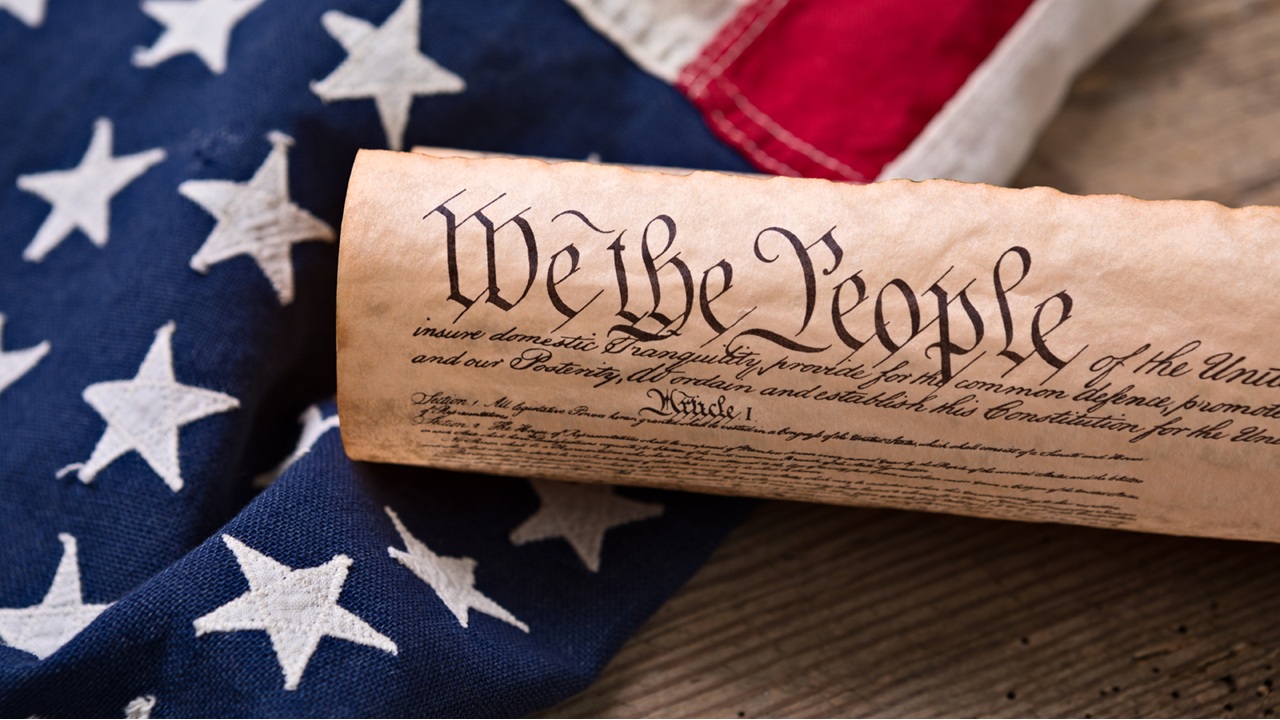
The year 2026 marks the milestone of 250 years of democracy in the United States. While the associated events of the American Revolution spurred a movement for democratic (with a small “d”) government to gain a foothold across the globe, in the United States we still struggle to live up to the U.S. Constitution’s lofty ideals:
“We the People of the United States, in Order to form a more perfect Union, establish Justice, insure domestic Tranquility, provide for the common defence, promote the general Welfare, and secure the Blessings of Liberty to ourselves and our Posterity, do ordain and establish this Constitution for the United States of America.”
Perhaps we should view the words in the U.S. Constitution’s preamble as aspirational. Maybe the ideals are meant to be on a continuum that we can never fully complete. That may help explain why half of the United States thinks our country is on the right track and the other half believes democracy itself is in peril.
The Study of Democracy Matters
I’ll confess something: I have always been a nerd for democracy. I didn’t have a poster of the latest ’90s heartthrob in my bedroom; I had a copy of the U.S. Constitution on my wall instead. I’m sure this is at the heart of why I continue to choose this profession despite its challenges.
I found an undergraduate home surrounded by other government geeks at a small public and international affairs school within Michigan State University—James Madison College—where I majored in political theory and constitutional democracy. Fun fact: Steve Batha, an ICMA Executive Board member and co-chair of the Committee on Professional Conduct, was in this program at the same time!
One of the program’s highlights is education through the Socratic Method. According to Brigham Young University, it is “often used to promote critical thinking … the answers to questions are not a stopping point for thoughts but instead are a beginning to further analysis and research.” For the thousands of members I have talked with over the years about ethics dilemmas, you already know how this experience has shaped my approach to those “gray area” situations in the profession.
I’m getting to experience what democracy means today through the eyes of my middle school daughter. Her class had a field trip to Yorktown and Williamsburg, Virginia, in the fall, then she visited the National Archives to view the United States’ founding documents. Together we watched the documentary, “The American Revolution,” and discussed her enlightening perspectives over the dinner table.
Through a modern lens, we can see many similarities between that time and what we experience today. I think this is why ICMA’s Code of Ethics addressed this value first in what this profession stands for in Tenet 1: “We believe professional management is essential to effective, efficient, equitable, and democratic local government.”
Ethics Theme for 2026: Local Government’s Commitment to Democracy
As noted by Local Gov 250, a national effort to honor the role of local government as the U.S. approaches its 250th anniversary:
“…While the Constitution goes to great lengths to separate powers and define federalism, the most widespread level of government, local government, is not mentioned at all. In the United States, there are more than 36,000 general purpose local governments.
Despite their lack of introduction in the country’s founding documents, local governments are closest to the people that live and work in places large and small in America. Local jurisdictions provide a substantial part of the services, utilities, and infrastructure necessary for modern life. Maybe more importantly, these same local governments are bastions of democracy where public meetings are held, constituents are engaged, and elections are managed.
Much of the American democratic experiment has played out in our nation’s cities, counties, towns, and townships. Most people know that the Declaration of Independence was drafted and more than a decade later the constitutional convention was held in Philadelphia, one the earliest local governments in the United States.”
This initiative encapsulates the role ICMA has in delivering democracy to the doorstep in our communities. ICMA will operationalize this commitment in 2026 through several key initiatives:
Local Government Reimagined Conference Focused on Democracy and Public Trust
The event takes place May 13–15, in Philadelphia, Pennsylvania, and celebrates the work of ethical, professional local government management despite the heightened political polarization that plagues our communities.
Ethics Training that Emphasizes the Profession’s Values
In our webinar series, we’ll build on the success of the inaugural 2025 series for members by going in-depth on the ethics topics that matter to you most. In the meantime, catch up with these free resources that further the profession’s commitment to democracy:
• This article recaps a webinar that highlighted both a practitioner’s and the Braver Angels approach with the extensive resource list prepared for this webinar.
• Three practitioners offer advice to preserve our democratic institutions, public processes, and the council-manager form of government in this article.
Guest authors for the Ethics Matter Column
I’m excited to share that in April, Steve Bartha (town manager in Lexington, Massachusetts) joins me as a fellow wonk in commemoration of the Battle of Lexington in April 1775, the first military engagement in the American Revolution. For context, as British soldiers marched to nearby Concord, they clashed with Lexington militia on the town common. The British fired shots that resulted in the deaths of eight U.S. colonists known as “the shot heard ‘round the world,” marking the beginning of the U.S. campaign for independence.
Free, In-person Ethics Training for ICMA-affiliated State Associations
ICMA delivers engaging, well-structured presentations that meet the state association’s needs to promote the importance of ethical leadership and management in the local government management profession.
More to Come
I optimistically look forward to ICMA’s 2026 efforts that further our profession’s commitment to democracy. We’ll share the event dates and more details in the Leadership Matters newsletter.

JESSICA COWLES is ethics director at ICMA (jcowles@icma.org).
Publish with ICMA!
We’re searching for interesting and insightful stories that can help others learn a memorable takeaway to serve their communities better.
