
Several years ago, I was promoted from a public works director position to town manager. Eighteen months later, I was fired by the town council. I really wanted to perform well as the manager but was overwhelmed with all the demands and responsibilities of the job and experienced little support from the council. I became burned out at work and emotionally drained and distracted at home with my family.
A year after being fired, I have now found another public works director position in a nearby town; however, I still feel like a failure. I am so disappointed with myself and angry with my former town council. I must admit that these feelings are impacting my performance at the new job and how I interact with my family and friends.
I’m glad that I found a new job in local government management and can support my family; however, I am depressed and still stressed over my failure and have lost some of my confidence.
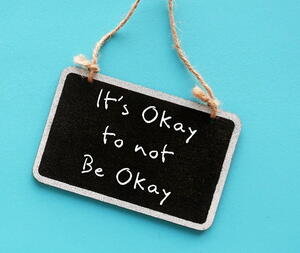
How do I get past this loss? I want to bounce back but I’m having trouble doing so.
Yes, you have suffered a significant loss and you feel pain.
Many of us have experienced losses in life. Loss is part of the human condition. Losses include:
- Getting laid off.
- Losing a parent, child or spouse/partner.
- Suffering a debilitating illness.
- Getting divorced or failing at a significant relationship.
- Being abandoned at a young age.
- Failing at leading a major project.
- Experiencing a natural or human disaster.
- Suffering physical or emotional abuse, such as bullying.
There are many kinds of loss, and they often result in trauma. However, loss and trauma are not the end of the story. (See Shawn Achor, “Growth After Disaster: Going Beyond Resilience," hbr.org, March 15, 2011.)
Oftentimes, these losses are “crucible experiences.” (See Warren Bennis and Robert Thomas, “Crucibles of Leadership,” Harvard Business Review, 2002.) They can either burn you up and destroy you, or they can transform you for the better.
The key question is how do you respond to loss and trauma. Particularly, how does trauma lead to growth? Instead of asking how does one recover from loss and pain, we must ask how will we be changed for the better.
What is trauma?
The term trauma comes from the Greek word for “wound.” It can refer to both a physical wound and a psychological wound.
Trauma is defined as a lasting emotional response to a deeply distressing event or series of events that overwhelms a person’s ability to cope and can limit one’s capacity to form satisfying relationships or enjoy those relationships. Trauma of one kind or another can immobilize you.
What is post-traumatic stress?
As a result of loss and trauma, most of us experience post-traumatic stress (PTS). PTS is characterized by feelings that the world is unpredictable, unsafe or dangerous. It can have a negative effect on one's attitudes, behaviors, relationships, and overall well-being.
It is important to note that PTS is a normal bodily response to a traumatic event and is not considered a mental disorder. The body responds to stress by fighting, fleeing, or freezing.
These responses are normal during a traumatic event, and symptoms can persist for some time after the event. While many people experience a traumatic event or loss, some people are resilient and can return to normal functioning; others cannot and may develop longer-term post-traumatic stress.
It is not about bouncing back
Once you suffer a major loss, you can no longer return to the old reality. It no longer exists.
We often talk about “bouncing back” from a loss or traumatic event. Our personal and work worlds are constantly changing. For instance, if you are bullied or lose a child, spouse or close friend, your “normal” has changed. Therefore, responding to trauma is more about “growing” and somehow “bouncing forward.” It is qualitatively different than merely surviving the traumatic loss or getting back to normal.
What is post-traumatic growth?
Post-traumatic growth (PTG) is the positive psychological change that some individuals experience after a major life crisis or traumatic event. PTG arises from the struggle to cope with trauma-related challenges. It involves positive transformations, such as discovering new possibilities in life, appreciating current or new relationships with others, or finding more joy in serving others.
The five stages of grief (+ one)
After a traumatic event or loss, we often struggle to cope. We go through grief. The work of Elisabeth Kubler-Ross suggests five stages of grief:
- Denial. We refuse to accept the reality of the loss.
- Anger. We experience frustration and anger that is directed at oneself, others or the situation.
- Bargaining. We make deals or devise “what-if” scenarios in an attempt to regain control or change the outcome.
- Sadness. The reality of the loss sets in, leading to feelings of sadness, hopelessness, or even depression.
- Acceptance. We come to terms with the loss and find a way to move forward.
The grief stages are not linear; they don’t happen in predictable time frames; one may experience all or only some of the stages.
David Kessler, an associate of Kubler-Ross, has argued that there is a sixth stage to grief which is “meaning.” Once an individual accepts the loss involved, the person can struggle to find meaning.
What is this darkness trying to teach you?
It is important to note that there is not meaning in the terrible event. Rather, meaning is what one finds after the event. That won’t make meaning worth the personal cost of the trauma. However, finding some meaning helps us heal and move forward in life.
(See David Kessler, “Helping Your Team Heal,” Harvard Business Review, July-Aug 2020.)
What are some forms of meaning?
Meaning may come in many different forms:
- Remembering the joy that someone gave us before the loss (and expressing gratitude).
- More fully appreciating the relationships that we still have or new relationships.
- Learning new or previously undiscovered aspects or ourselves.
- Growing spiritually.
- Recognizing the value and joy of service.
- Taking time to savor life—appreciating the beauty of nature, meeting new people, enjoying good food and drink, and traveling and discovering different cultures.
It is in meaning that we find growth and even transformation.
What is the “neutral zone”?
Once you suffer a major loss (such as being fired or losing a loved one), you can no longer return to the old reality. It no longer exists.
As you grieve your loss, you are in “limbo” land. The old reality is gone, and you have not yet created a new supportive reality. You are in limbo.
This “neutral zone” is “in-between” space between the ending of what was and the beginning of what will be. The British poet Matthew Arnold famously stated, you are “wandering between two worlds, one dead, the other powerless to be born.”
William Bridges and Susan Bridges in their book Transitions—Making Sense of Life Changes (1980) depict this journey:

What happens if you get stuck in the neutral zone?
It takes time to grieve a big loss. You cannot rush it. Eventually you accept the loss and hopefully create a new reality for yourself fused with meaning.
But what happens if you cannot move beyond the loss? If you become stuck in limbo land?
If you cannot get past the loss, if you cannot let go, you perpetually feel angry or sad, out-of-control, and/or cannot experience much joy in your life. You generally feel that things are not well in your world. Everything continues to be out of sorts, in flux.
Frank’s experience with lossI lost my wife Pam 20 years ago. Pam was a great partner in life as well as a wonderful mom to our two small kids. Pam was also the “family connector,” scheduling and arranging for monthly Sunday lunches with extended family members. After she died, I was a mess and cried a lot. I struggled with adequately parenting our kids and lost a lot of passion for my city manager work. With the support of family, friends and colleagues, I went through some of the stages of grief, eventually accepting the loss. I was very fortunate to have family and friends who helped me parent the kids and 
colleagues who shared the burden at work. After some reluctance on my part, my children and I joined grief support groups. In my grief support group, I found solace and comfort in our shared struggles. I also involved myself in individual therapy to help process the loss. Most importantly, over time I did find some meaning in my work and family life: I focused on only a few “passion projects” at work (such as affordable housing, leadership development) and delegated other responsibilities that took up much time and energy. I came to fully appreciate my relationships at work and outside of work, and took the initiative to schedule get-togethers.
The loss was great and I experienced much pain and regret. But I also persevered for myself and my kids, and in the process become a better father, friend, leader, and man. |
How do you move past the neutral zone?
No one wants to suffer. Yet the German philosopher Friedrich Nietzsche believed in the transformative power of loss and suffering. Growing through adversity is possible, but not guaranteed. (Dan Rockwell, “The Neglected Secret of Growing Through Hardship,” Leadership Freak blog, Aug 11, 2025.)
In terms of growth, you want to eventually move past the neutral zone and create what the Bridges term a “new beginning.” This is a space where you may create a new identity, where new energy and behaviors emerge. There is not only acceptance of the loss but also a new sense of purpose and even confidence.
Here are some ideas to accept the loss and move forward:
- Give yourself time. You must give yourself time and space to grieve and experience the stages of grief. Hopefully, you eventually accept the loss and therefore you are “no longer fighting the truth.” (See David Kessler, “Helping Your Team Heal,” Harvard Business Review, July-Aug 2020.)
- Reflect and acknowledge. You need to spend time and effort to reflect upon the loss and the emotions that you are feeling. To spur reflection and self-acknowledgement, ask yourself:
- What am I feeling?
- What has been for me the most challenging part of this loss?
- How am I stuck?
- What is one thing I wish others understood about what I am going through?
- From whom do I need support?
- What is this darkness trying to teach me?
(See Dan Rockwell, “Questions That Encourage Post-Traumatic Growth,” Leadership Freak blog, March 5, 2025.)
Acknowledging and naming what you are feeling (for instance, anger, sadness, exhaustion, uncertainty) helps you eventually move from reacting to responding to the loss. (See Jenny Fernandez and Kathryn Landis, “When Professional and Personal Setbacks Hit at the Same Time,” hbr.org, Nov 13, 2025.)
In processing my emotions after the death of my wife (see box “Frank’s experience with loss”), I used a daily walk to reflect upon my great loss and eventually came to accept the loss. Others experiencing loss find it helpful to write or journal about it.
In the process, you hopefully surrender to the loss. “Surrendering isn’t giving up. It’s yielding to what you can’t change.” (See Dan Rockwell, “Don’t Let Misery Make You Miserable,” Leadership Freak blog, Aug 7, 2025.)
- Share your feelings. With trusted colleagues, coaches, family members or friends, it is helpful to disclose how you are feeling and struggling. Oftentimes, a counselor or therapist or grief support group can help you process your feelings and challenges.
With colleagues, you don’t need to over-share but acknowledging your situation allows you to set certain boundaries or limitations given your loss.
- Seek social support. Nurturing and supportive relationships can help you deal with all the negative emotions and perceive ways to move forward in your life.
In terms of my loss, friends reached out to me or simply showed up. They would just listen and often take a concrete action to assist me, especially with my two small children. I eventually got to the point that I had the energy to reach out to my friends and family members. I now keep a written list by my computer of friends and colleagues whom I need to contact and reconnect with.
Social support speeds recovery and growth.
- Reset expectations and recalibrate. As you struggle with the consequences of your loss, you must ask yourself “What is good enough?” In this moment, what is “good enough” leadership at work? What is “good enough” in terms of your home responsibilities? What are new boundaries that are required?
For example, in terms of new boundaries as the city manager, I stopped fully attending community or business social events. To be home with my two kids, I stopped by an event after work to have a drink and say hello and then left before the meal or program. I also began to strategically delegate some of my city manager responsibilities. While some were energy-sapping activities (such as reviewing and approving staff reports to council), others provided growth opportunities for staff (such as providing staff support for council committees or leading projects for which I had little expertise). By delegating certain responsibilities, I freed up my time and energy for a few “passion projects” (for example, affordable housing, homelessness services) that reenergized me. (See Frank Benest, “Keeping the Passion Alive,” PM, Oct 2006.)
- Create new rituals. Rituals can help you create a new normal. A ritual is a prescribed set of actions regularly repeated in a precise manner by an individual or members of a group. A ritual can help you create some sense of stability and control, even when you feel so out of control.
My daughter Leila and I created a bed-time ritual. In putting my young daughter to bed, Leila would ask me to tell her about her mommy and I would tell her a different story each night.
- Change your mindset. When we experience a loss, we often engage in catastrophic thinking. For me, I feared that I wouldn’t be able to become a good parent for my two children and would thus fail my family.
Instead of immediately going to the worst case, you should consider the best case and the likely case possibilities. You can ask yourself:
- With my skills, personal and professional strengths, social support, and other resources, what is the most likely scenario?
- When did I previously face adversity and hardship and how did I prevail and grow for the better?
- What are my friends, family members, and colleagues doing to support me?
- What am I learning from this traumatic experience?
- What would I love to say about how I handled this loss 12-24 months from now?
(See Dan Rockwell, “Questions That Encourage Post-Traumatic Growth,” Leadership Freak blog, March 5, 2025.)
- Focus on service to others. We in local government are fortunate that serving organization and community members is the purpose of our jobs. For those of us who try to be good servant leaders, we come to understand that in giving a lot, we get a lot. Service to others bestows great meaning to us.
- Create a new story for yourself. There is a story or narrative that we have in our heads about our lives before the big loss. That story is no longer true. Therefore, we need to develop a new story for ourselves.
This narrative might include new endeavors, a renewed sense of purpose, a focus on different kinds of service, and even new joys. This story can then be shared with family, friends, and colleagues.
The story often embraces paradox. Loss and gain. Grief and gratitude. Vulnerability and strength. (See Martin Seligman, “Building Resilience,” Harvard Business Review, April 2011.)
The new story helps foster the transformation.
Post-Traumatic Growth
The Dutch theologian and writer Henry Nouwen reminds us that “The wound is the place where the light enters.”
You don’t overcome a big loss. You live with it. Hopefully, in the process, you grow, discover new life possibilities, and find a new energizing beginning.

Sponsored by the ICMA Coaching Program, ICMA Career Compass is a monthly column from ICMA focused on career issues for local government professional staff. Dr. Frank Benest is ICMA's liaison for Next Generation Initiatives and resides in Palo Alto, California. Read past columns of Career Compass in the archive.
If you have a career question you would like addressed in a future issue, e-mail coaching@icma.org or contact Frank directly at frank@frankbenest.com.
The ICMA Coaching Program offers free one-to-one coaching to ICMA members. If you are an ICMA member, Register on CoachConnect to choose a coach, and explore more Coaching Resources.
If you are a member of the Texas City Management Association, Illinois City/County Management Association or North Carolina City and County Management Association, you will continue to have access to the CoachConnect platform until the state partner coaching agreements expire. Contact your state association for further information.
Publish with ICMA!
We’re searching for interesting and insightful stories that can help others learn a memorable takeaway to serve their communities better.
