For many local government professionals, leadership means managing complex budgets, overseeing infrastructure projects, and navigating difficult policy decisions. But in small and rural communities, those responsibilities come with an added dimension: the people affected by every decision are often neighbors, friends, and family.
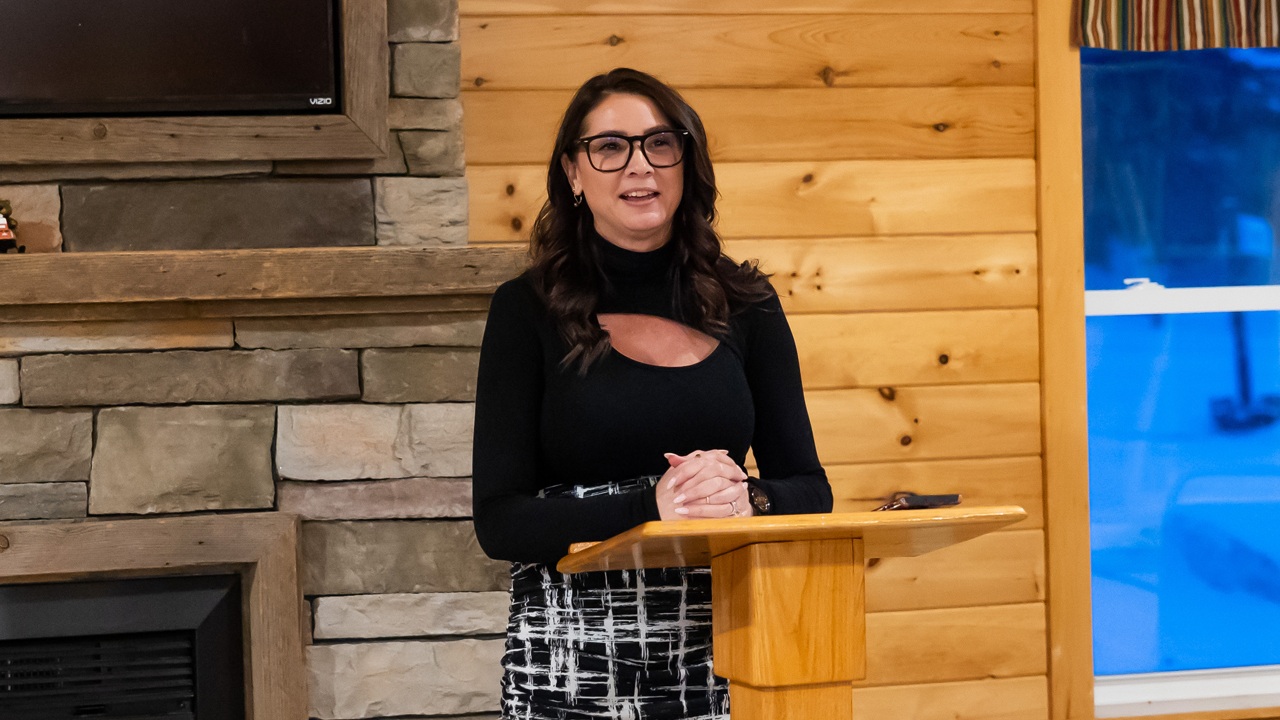
That reality has shaped Sandra Fournier’s approach to public service throughout her career. As town manager for the Tri-Towns of Mapleton, Castle Hill, and Chapman, Maine, Fournier oversees municipal operations across three communities while also managing relationships with school and county government. With more than 15 years of municipal leadership experience, she currently serves as president of the Maine Town, City and County Management Association and will begin serving as ICMA’s Northeast regional vice president this fall.
Despite her unique role, Fournier believes the most important lessons she’s learned are relevant to any local government professional serving a small community.
Leadership Without Distance
In larger cities, residents may never meet their city manager. In rural communities, that’s rarely the case. “If the plow doesn’t get down someone’s road, they’ll let me know about it the next time they see me at the gas station,” Fournier shares. Those everyday interactions create a level of accountability that extends far beyond the office.
“I can’t hide behind bureaucracy. Every budget line, every ordinance, every difficult decision has a human face behind it.”
Rather than viewing that visibility as a challenge, Fournier considers it a strength in her role. Knowing residents personally reinforces the importance of leading with integrity, communicating openly, and remaining accessible even when conversations are difficult.
It also provides constant perspective. One day may involve discussions about major infrastructure investments; the next may include hearing concerns about a noisy irrigation system or a neighborhood issue. While the scale differs, both conversations matter because both affect residents’ quality of life.
Seeing One Region Instead of Three Towns
Managing three municipalities might sound like an exercise in constantly dividing attention, but Fournier sees it differently. “I actually see it as serving one region made up of three distinct communities.”
That perspective has helped the Tri-Towns develop a collaborative model that allows each municipality to retain its own identity while sharing resources where it makes sense.
The communities work together on services ranging from highway operations and code enforcement to grant writing, recreation programming, assessing, and long-term capital planning. By sharing staff, equipment, expertise, and purchasing power, they are able to provide services that would be difficult for communities of their size to sustain independently.
“What surprises people is that sharing services doesn’t mean losing your identity,” Fournier explains. “Each community still has its own history, traditions, and priorities.” Instead, collaboration strengthens each municipality while creating efficiencies that benefit taxpayers across the region.
Building Trust Through Relationships
Whether working with one governing board or several, Fournier believes successful local government leadership begins with relationships. Every board has its own priorities shaped by the unique character and needs of its community. Her role is to understand those perspectives before recommending solutions. “My job isn’t to have all the answers. It’s to make sure everyone has the information they need to make good decisions.”
Conflicting priorities are inevitable, particularly during budget discussions or when determining how shared resources should be allocated. In those moments, Fournier has found that transparency is often the difference between disagreement and distrust. “When people understand the ‘why’ behind a recommendation, even if they don’t completely agree, they’re much more willing to work toward a solution.”
Listening first, communicating clearly, and maintaining strong relationships allow difficult conversations to remain productive, even when consensus isn’t immediate.
Wearing Many Hats
Fournier shares that one of the biggest misconceptions about managing a small community is that the work is somehow easier because budgets are smaller and organizations have fewer employees. In reality, the opposite is often true.
Small communities depend on leaders and staff who are comfortable wearing many hats. A single week may include economic development, personnel issues, grant writing, infrastructure planning, recreation programming, and helping organize a community event—all while responding to resident concerns.
“We don’t have departments for everything. We have people who care enough to figure it out together.”
That versatility has become one of the defining characteristics of successful small-community managers. It requires curiosity, adaptability, and a willingness to solve problems collaboratively rather than relying on specialized departments. It also reinforces the importance of building strong teams.
“No manager succeeds alone. My job is to remove obstacles, support my team, and make sure everyone has the tools they need to serve our residents.”
Finding a Professional Community
While small communities offer close relationships with residents, they can also present professional isolation. Managers may not have nearby colleagues facing similar challenges or serving as trusted sounding boards.
For Fournier, ICMA has helped bridge that gap. “When you’re managing small communities, you don’t necessarily have another manager down the hall to bounce ideas off of, but ICMA gives you thousands.”
Through conferences, mentoring, professional development, and relationships built over years of involvement, she has found both practical advice and lasting professional friendships. Those connections have shaped her leadership and reinforced an important lesson she now shares with emerging professionals: don’t wait until you need your network. “Build it before you need it,” she advises.
Some of her strongest professional relationships began with a simple introduction over coffee at an ICMA conference. Today, those colleagues are the people she turns to when facing new challenges—and the people she hopes feel comfortable calling her in return.
Keeping People at the Center
When asked what advice she would offer someone considering municipal management, Fournier doesn’t begin with budgets, infrastructure, or governance. She begins with people. “This profession is about people, not roads, budgets, or ordinances,” she says. “Those things are important, but at the end of the day you’re serving people.”
It’s a philosophy that reflects the realities of small-community leadership, where every decision has a visible impact and every conversation is an opportunity to build trust.
As communities across North America continue exploring regional partnerships, shared services, and innovative approaches to delivering public services, the experience of Maine’s Tri-Towns offers an important reminder. Effective local government isn’t measured solely by organizational charts or population size. It’s built through relationships, transparency, collaboration, and a commitment to serving the people behind every policy decision.
In small communities, leadership is personal. For Sandra Fournier, that’s exactly what makes the work so meaningful.
JESSI FINLEY is a marketing manager at ICMA.
Want to See More?
Watch the full Member Spotlight interview with Sandra Fournier, ICMA-CM, here.
Publish with ICMA!
We’re searching for interesting and insightful stories that can help others learn a memorable takeaway to serve their communities better.
