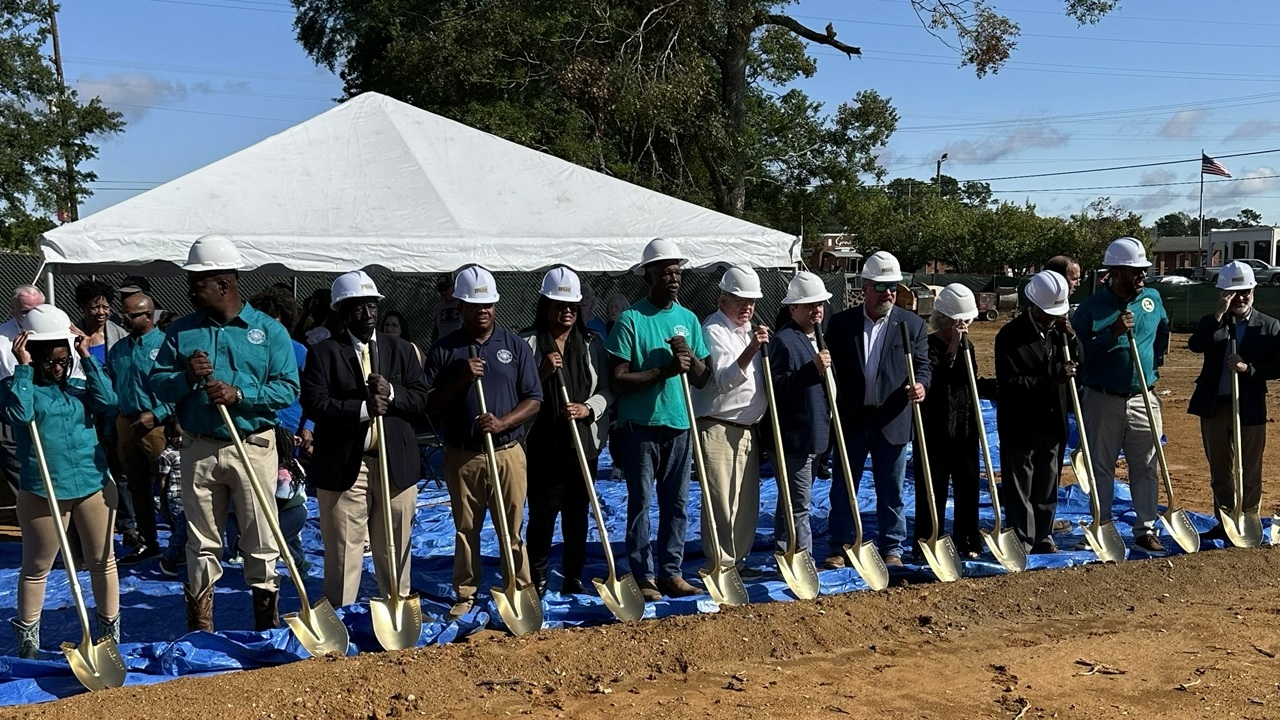
As the United States marks 250 years of democracy, local government leaders are working in an increasingly difficult environment. Polarization is high, trust in institutions is strained, and communities expect visible progress while many local governments contend with limited staff, constrained resources, and increasingly complex problems.
I have spent much of my career in places experiencing some version of this tension. Before joining the International Economic Development Council (IEDC), I spent nearly two decades in international development, much of it with communities recovering from conflict and economic disruption. In 2017, I returned home to rural western New York, where I encountered the same question I had wrestled with elsewhere: how do communities begin believing that change is possible?
What I found was remarkably simple. Small, visible changes mattered—a building reopening, a stalled project moving, organizations beginning to collaborate. Progress created momentum and pride of place. And almost always, someone had brought those pieces together. Over the past three years, the Economic Recovery Corps (ERC) has let us explore that idea at greater scale.
Through a $30 million cooperative agreement with the U.S. Economic Development Administration, IEDC and a coalition of national partners, including ICMA, embedded 65 experienced professionals in distressed communities nationwide. Many of these communities were not lacking ideas. They lacked the capacity to coordinate, build relationships, and move those ideas forward.
At ICMA’s Local Government Reimagined Conference in Philadelphia this May, I explored what we have learned with three ERC fellows and one host partner. Their communities could hardly be more different, but a common lesson emerged: rebuilding trust is not simply an engagement challenge. It is shaped by whether institutions have the capacity to listen, connect, and act. And that capacity comes down to people.
Look Under the Hood
We usually measure local government capacity in positions, departments, and budgets. My work on ERC caused me to think differently. Some people can see across a system: they notice relationships others miss, bring organizations together, and help turn conversation into action.
They are connectors, and they are not always economic development professionals. They may be planners, librarians, nonprofit leaders, public works staff, or the resident everyone calls when something needs to get done. Four ERC practitioners offer some clues about how to find and support them.
1. Connect the Pieces You Already Have.
ERC fellow Landdis Hollifield relocated from North Carolina to Highland County, Virginia—rural, mountainous, about 2,200 residents across 400 square miles—to help the Highland Economic Development Authority implement the county’s economic development plan.
Landdis encountered a challenge familiar to many small communities: limited resources. What surprised her was that even in a place that small, multiple organizations were sometimes doing similar work. She had seen the same thing in an earlier role, with nonprofits receiving public support for overlapping services. In Highland County, she connected them instead.
Organizations clarified what each did best. Resources could be pooled, duplication reduced, and opportunities pursued together that none could have pursued alone. Local governments often assume increasing capacity requires adding something new. Sometimes the greatest opportunity is making what already exists work better together. Coordination is capacity. And it’s easy to undervalue, because when it works, the connector can begin to look unnecessary.
For managers, that suggests a practical starting point: before creating something new, look across the system you already have. What isn’t connected? And who has the relationships to bring those pieces together?
2. Strengthen the Infrastructure That’s Already There.
If Landdis’s experience shows the value of connecting existing organizations, ERC fellow Deeneaus “Dee” Polk’s work in rural Louisiana goes one step further: sometimes the capacity a community needs is already embedded in institutions that have been there all along.
Hosted by St. Tammany Corporation, Dee’s project focuses on regional coordination in Washington and St. Helena parishes, neither of which had the staffed economic development infrastructure found in larger markets.
Dee connected early with economic development foundations already operating in both communities. They were locally rooted institutions made up largely of volunteers who had been quietly working on behalf of their communities for years, including people who had left, built careers elsewhere, and returned home wanting to contribute what they had learned. Rather than build a parallel structure, Dee leaned into what was already there.
That became increasingly important as St. Helena began navigating the prospect of more than $1 billion in clean energy investment. The local foundation had been involved from the beginning. Dee saw an institution others might have overlooked and helped strengthen its ability to play a larger role.
His experience shifts the question. Before asking, “What do we need to create?” ask what already exists that we could strengthen. Which institution has trust? Who consistently shows up? What network could play a larger role if local government removed barriers or connected it to resources? Communities often contain more infrastructure than we recognize because it does not resemble what we are accustomed to looking for.
3. Make Room for Unlikely Leaders
The same can be true of people. We can overlook leaders who do not come with the titles or credentials we expect. Few stories illustrate this better than LaVonya Goodwin, executive director of Omaha’s North 24th Street Business District Association, an ERC host partner, and now a member of the Omaha City Council. She did not begin the North 24th Street Streetscape project as an engineer, planner, or elected official. She entered almost by accident.
In 2020, she attended a ribbon cutting at her alma mater, Creighton University, marking streetscape improvements that stopped at Cuming Street—a boundary she describes as separating investment to the south from decades of disinvestment to the north. Afterward, Creighton’s president suggested the improvements should continue north and pointed her to the project’s consultants.
Within a month, she was discussing a project for which she had no funding and no technical background. They took a risk on her, as she put it, and she took a risk on work she knew nothing about.
That conversation eventually became a $50 million+ initiative to transform a 2.3-mile corridor rich in jazz and civil rights history. To move it forward, LaVonya navigated universities, consultants, public works departments, residents, and political leaders with very different perspectives. A planning director once told her he had never received a proposal from someone in her position. Yet she was the person moving the project forward.
One of her observations has stayed with me: sometimes people don’t speak your language, but that doesn’t mean you can’t communicate with them. It’s about finding the right currency, the thing that matters in a place.
LaVonya worked with leaders whose politics differed sharply from those of many residents she represented. Rather than requiring agreement as a precondition, she focused people on a tangible community need. Communities do not have to agree on everything before they can work together on something.
Her experience also raises an uncomfortable question. Government responsiveness toward her changed dramatically once she became a councilmember, though she was the same person with the same knowledge and relationships. Whose expertise are we overlooking because it does not come with the title we expect?
4. Turn Listening Into Action.
Recognizing who can lead is one part of the equation. ERC Fellow Servola Frazier’s experience in Fort Lauderdale shows what this kind of leadership can look like in practice.
Servola joined ERC to work inside the City of Fort Lauderdale on the historic Sistrunk Corridor, once a thriving center of Black business and culture before decades of disinvestment. Redevelopment has brought significant capital improvements, but her assignment focused on ensuring those investments benefit local businesses and residents.
Servola was warned that certain groups would not work together and that residents would not trust an outsider. She did not try to convince them otherwise. She listened. She spent time understanding residents’ concerns, then looked for alignment between what they told her and priorities already in the city’s plans. She brought meetings to residents rather than expecting residents to come to government and connected people to resources many did not know existed. Organizations that had operated in silos began convening. The approach can be summarized simply: listen, find alignment, act, close the loop.
None of that requires a new department, but it does require a different orientation toward engagement. Dee described communities frequently “engaged” because their economic indicators make them attractive candidates for grant-funded initiatives, yet rarely seeing those conversations translated into action.
When we ask people to participate, we create an expectation. If they provide input but cannot see what came of it, engagement becomes another source of frustration. Trust grows when residents can trace a line from voice to decision to action to result.
Cultivate Connector Capacity
Taken together, these stories are not really about a particular economic development strategy. They are about a way of working—and the people with the skills to work that way.
When communities designed their fellowship projects, we asked them to focus not on a backlog of things they wanted to get done, but on catalytic work that had stalled because no one had the time or capacity to move it forward. Fellows then adapted those projects with their hosts based on what they found on the ground.
City and county managers can act on this without an ERC Fellow. Look across your organization and community. Who can walk into a room of people who disagree and find enough common ground to move forward? Who listens before prescribing? Who can translate between community and government?
Those are not “soft skills.” They are implementation skills, and increasingly essential management capabilities. Recognizing them may also require us to rethink what this work looks like day to day. A connector doing the job well may be having coffee with a business owner, walking a neighborhood, introducing two people who should know each other, or sitting in a meeting outside their job description. That presence isn’t time away from the work. It is the work.
For managers, that means creating conditions in which these capabilities can flourish: permission to work across boundaries and recognition for relationship-building alongside more easily measured outputs.
Make Invisible Capacity Visible
That matters because much of this work remains difficult to see—and therefore difficult to value. A meeting isn’t a new building. A relationship isn’t a ribbon cutting. An introduction isn’t a grant award. But those activities are often the infrastructure behind the outcomes we measure, and they rarely appear in the metrics we use to justify investment—part of why this capacity tends to be the first thing cut and the last thing funded.
ERC let us invest in it deliberately across 65 communities and see what became possible when someone had the time, mandate, and support to do the work.
Not every community needs an ERC Fellow, and not every connector needs to be an economic developer. But we should become far more intentional about recognizing and investing in the human infrastructure that allows communities to get things done.
Democracy Happens in the Doing
At a time of extraordinary polarization, it is tempting to think rebuilding public trust requires solving the divisions confronting the country. These communities suggest a more immediate place to begin: a deteriorating Main Street, an infrastructure gap, a neighborhood that has spent years waiting for investment.
Local problems create opportunities for people with different perspectives to work together—not because their differences disappear, but because they can see what becomes possible when someone connects the right people and resources around a shared challenge.
Rebuilding trust may not require local governments to do more. It may require us to work differently: listen more carefully, connect what already exists, strengthen institutions communities already trust, recognize leadership wherever it emerges, and develop the people who can translate those pieces into action.
If democracy is experienced locally, its most important infrastructure may be the people who help communities see that they can still solve problems together.
NICOLE MANAPOL is vice president of emerging practices at the International Economic Development Council, where she leads the organization’s applied innovation and learning portfolio, including the Economic Recovery Corps.
Publish with ICMA!
We’re searching for interesting and insightful stories that can help others learn a memorable takeaway to serve their communities better.
