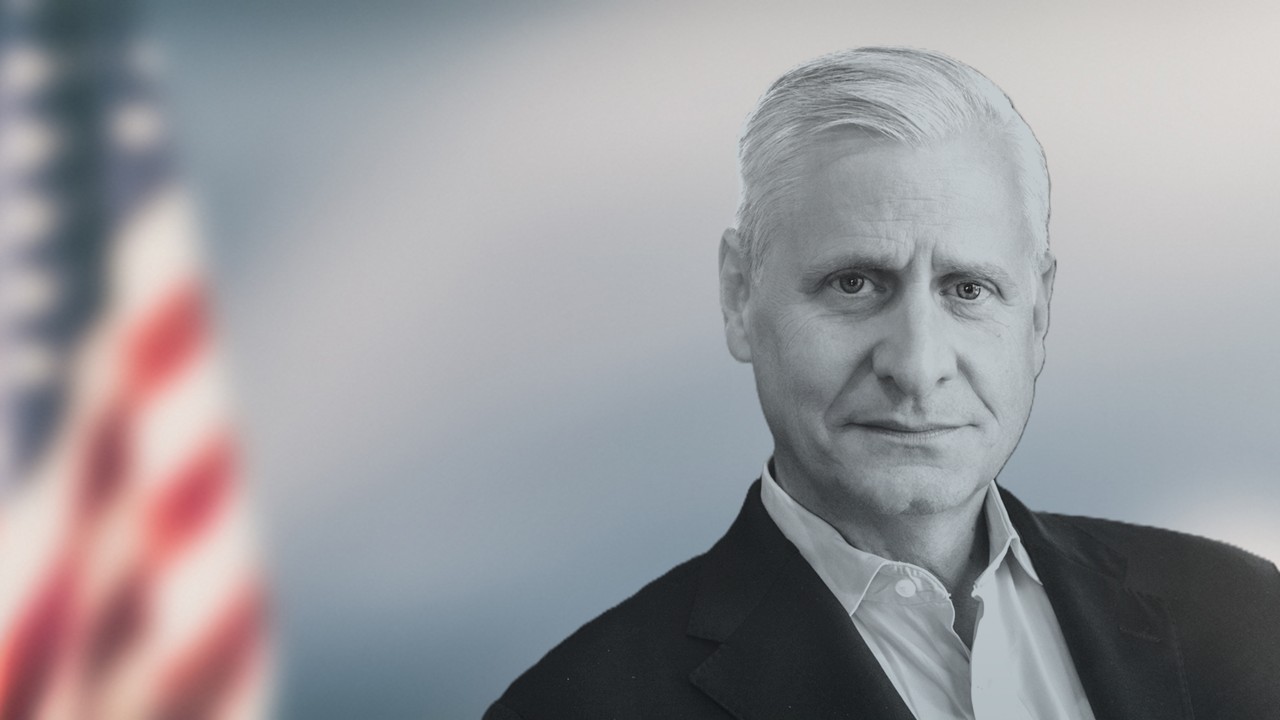
America’s past is a story of challenges overcome, crises resolved, and progress made. In his Monday keynote presentation at the ICMA Annual Conference, Jon Meacham will walk us through moments in history to offer guidance on how to endure and prevail in hard times.
PM Magazine was eager to chat with him before the conference to hear more about how his message will translate to local government professionals.
Your work often reminds us that America has endured periods of profound division and uncertainty before. What lessons from history do you think are most relevant to today’s city and county managers facing polarization and public skepticism?
The key lesson from history is that division is the rule, not the exception. The great task of leadership is to confront differences of opinion, however profound, and come to a result. It isn’t easy, but that’s the job.
Much of your writing focuses on leaders who succeeded not because they avoided crises, but because they navigated them with courage and patience. Looking across history, what leadership qualities do you believe are most essential for local government professionals today?
A sense of history—of what has worked, and what has not worked, in the past—is essential. So is curiosity, candor, and empathy. You have to want to know all you can about the issues at hand and about why people feel so strongly about these issues. Then acknowledge their views—and their passions about those views—honestly while seeing things from their vantage point. No one is going to compromise if they don’t think you appreciate their perspective. They still may not compromise, but the conversation won’t even get started without their knowing that they are being heard.
Local government is where democracy becomes tangible for most people. How does history shape your understanding of the important role that local leaders play in sustaining democracy itself?
You’re exactly right. And history tells us that people tend to be more flexible on local matters than on national ones. When leaders can frame questions not as grand ideological issues but as problems to be solved, they stand the best chance of getting something done.
City and county managers are often expected to solve complex problems while remaining nonpartisan and focused on serving the entire community. Have you encountered historical figures whose ability to lead above political divisions offers lessons for today’s local government leaders?
I think there’s much local leaders can learn from successful national leaders in terms of general lessons. FDR’s insistence on what he called “bold, persistent experimentation.” Reagan’s belief that 60% of what you want is better than 0%. And George H.W. Bush’s emphasis on “sound governance” over performative politics are just three examples.
Many of your books explore how trust is earned and how easily it can be lost. In an era when confidence in institutions is under pressure, what advice would you offer local government leaders working every day to build public trust within their communities?
Show, don’t tell. Have examples of past projects that were once controversial but are now accepted as part of the fabric of a community in your repertoire. Always be a storyteller. People respond best to narrative, so find examples of what you want to replicate and tell those stories.
Your keynote is titled Hope Through History. Hope can sometimes seem like an abstract idea, especially for leaders facing budget constraints, workforce shortages, natural disasters, or contentious public meetings. How can history help public servants maintain optimism without ignoring reality?
Hope is the opposite of fear. It’s not an elusive dream but the animating force for public servants. Why else be in the arena? And hope is grounded in history. It’s important to remember that there was never an Edenic moment of total cooperation but that every era faces its own challenges and crises. Study the past well, and you’ll see that it was the hopeful leaders—not the divisive ones—who carried the day.
Many ICMA members entered public service because they wanted to improve people’s daily lives. From your perspective as a historian, what distinguishes leadership that leaves a lasting legacy from leadership that merely manages the moment?
Well, legacies are made up of moments, so I think that’s kind of a false dichotomy. If you do the small things well, the big things tend to get done, too. The real question is how the leader sees his or her own mission—define success and manage to that.
Throughout your career, you’ve demonstrated the importance of understanding historical context before judging current events. How can local government leaders apply that same mindset when responding to community conflict or making difficult policy decisions?
Precedents matter less in their details—no analogy is perfect—and more in their capacity to show us that progress is possible even when things look bleak. Run case studies with your team and you’ll see that what seems simple in retrospect was far from straightforward in real time. And there’s inspiration in that realization.
As our members prepare to join you in Long Beach this October, what do you hope they will take away from your keynote?
That what they do is vital, and rarely more so than in a time when so many distrust and disbelieve. They are on the front lines, and their success is essential.
You’ve spent your career studying some of America’s most consequential leaders. If you could invite one historical figure to spend a day shadowing a modern city or county manager, who would it be and what do you think would surprise them most about local government today?
I think any of the founders—Jefferson, Madison, Hamilton—would be stunned at the sheer complexity of twenty-first century life. But they were also excellent students of human nature, which doesn’t change much. They knew America would be hard but worth the effort. And that’s what we should believe, too.

Hear more from Jon Meacham in his keynote presentation, “Hope Through History: How to Survive Turbulent Times,” at the 2026 ICMA Annual Conference.
Publish with ICMA!
We’re searching for interesting and insightful stories that can help others learn a memorable takeaway to serve their communities better.
