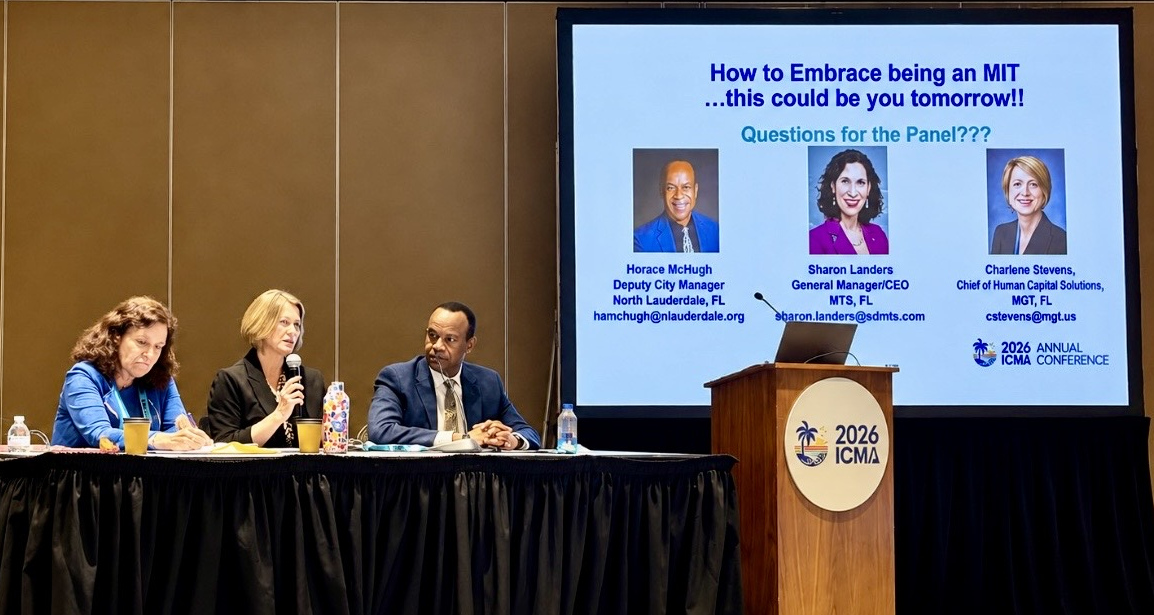
An unexpected departure from a local government leadership role can leave even the most experienced professional wondering what comes next. The impact often reaches beyond the job, affecting confidence, family life and a sense of identity built through years of public service.
For many public administrators, this is when they become a Member in Transition (MIT). At ICMA’s Annual Conference session “How to Embrace Being a Manager in Transition,” Horace McHugh, Sharon Landers and Charlene Stevens shared lessons from their experiences with professional uncertainty. Their advice centered on maintaining perspective, drawing on trusted relationships, and making thoughtful decisions about the road ahead.
Beyond the Departure
A departure does not always reflect someone’s performance or ability. Changes in elected leadership, organizational direction, or governing body dynamics can quickly reshape expectations. Understanding those realities can help professionals separate the circumstances surrounding an exit from the value of their work and experience. That moment can also create space for honest reflection on what they learned, how they led, and what they want to carry into their next role.
McHugh reminded attendees that they may hold a position for a time, but the institution and its work continue. That reality makes how someone leaves just as important as how they served. Thank the people who shared in the work, protect the relationships built along the way, and hold onto the professional and ethical standards that guided your service.
Landers encouraged leaders to understand their employment agreements, including separation provisions and benefits, so they can navigate an unexpected departure with fewer surprises. Preparation should go beyond the practical details. Planning how to communicate an exit can help leaders shape the story and approach what comes next with greater clarity.
Those conversations should not stop at the workplace. Families need time to prepare for change, too. Talking openly about finances, relocation, and the possibility of a longer job search can help everyone understand the options and plan for different outcomes. A career change rarely affects just one person, and preparing together can bring greater stability to an otherwise uncertain period.
Finding the Right Next Chapter
The pressure to secure another position can make almost any opportunity seem promising.
Drawing on her local government and executive recruitment experience, Stevens offered a useful gut check: Would this position still be appealing if the candidate were already employed?
That question can help separate genuine fit from a decision driven by urgency. The right opportunity involves more than title or compensation. Candidates should consider organizational culture, governing body relationships, the character of the community, and the impact on their families. Establishing priorities early makes it easier to recognize a role worth pursuing and walk away from one that is not.
Candidates should also prepare for a direct question: Why did you leave?
The panel recommended answering briefly and sticking to the facts. A departure is part of the story, but it does not have to define it. Candidates can acknowledge what happened, point to what they accomplished, and shift the conversation toward the value they can bring to a new role. Practicing with a trusted colleague can help make the response feel honest and forward-looking rather than defensive.
Moving Forward with Intention
Trusted colleagues and mentors can provide perspective when the path ahead feels unclear. Executive recruiters, state associations, and ICMA’s MIT resources can also offer practical guidance. The presenters encouraged professionals to build those connections throughout their careers rather than waiting until they need support.
The next move does not have to be another permanent position. Interim assignments, consulting, or project work can keep professionals connected to the field while opening doors they may not have considered. Time as an MIT can also provide a chance to reassess career goals, pursue personal interests, or focus on family before deciding what comes next.
An unexpected departure can be difficult, but it can also create something valuable: room to take stock, recognize the depth of experience already gained, and think differently about the future. Most importantly, it can provide something that is often difficult to find in a demanding career: the space to make the next choice with intention.
A position may end. The career built through years of service, relationships and experience continues.
What do experienced managers wish they had known earlier in their careers?
On November 18, ICMA’s What I Wish I Knew As a Younger Manager webinar brings together seasoned city and county managers to share hard-won lessons from their careers, including navigating pivotal decisions, building relationships, learning from missteps, and strengthening professional resilience. The conversation offers useful perspective whether you are moving into a new role, navigating a transition, or thinking about what comes next. Learn more and register
Publish with ICMA!
We’re searching for interesting and insightful stories that can help others learn a memorable takeaway to serve their communities better.
