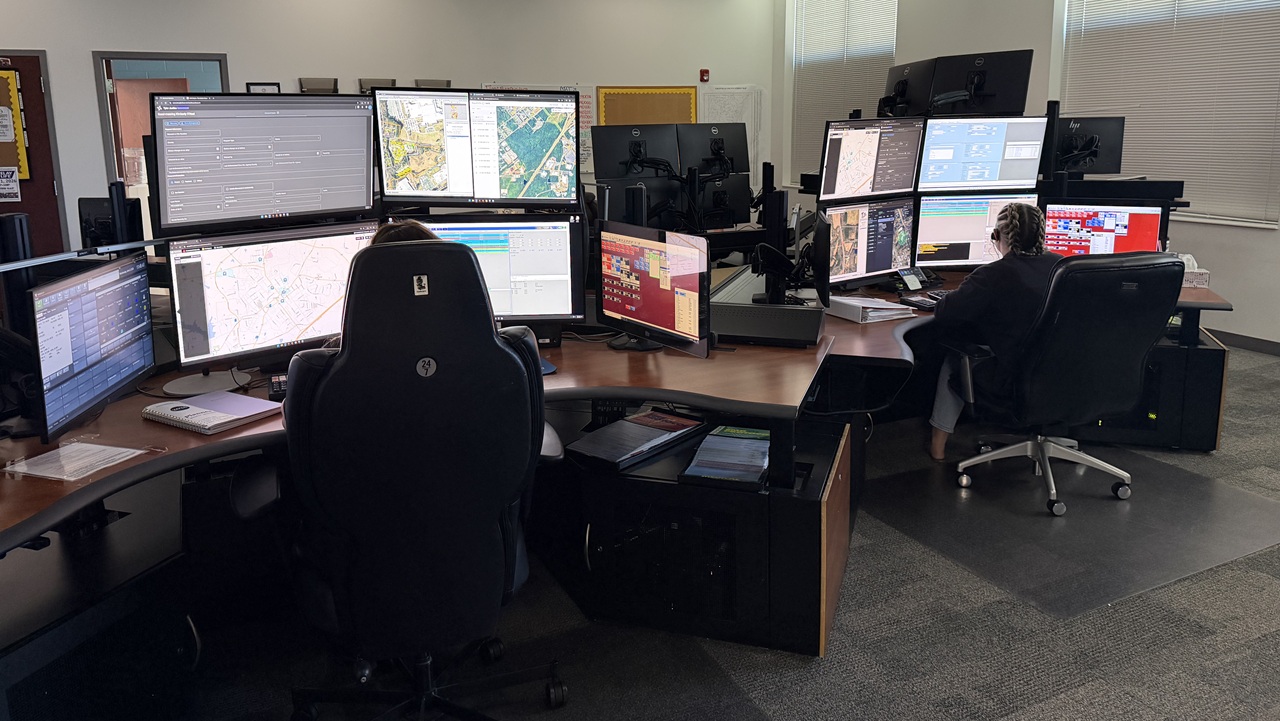
At 2:14 a.m., the lights were on in the 911 center in Granville County, North Carolina, but the system was not whole. A storm had triggered our backup power systems. The generator engaged. Consoles illuminated. From the outside, the facility appeared fully operational. Yet several critical integrations lagged during restoration.
Redundancy existed, but resilience required more than power. For local government executives, that distinction matters.
Emergency communications is often categorized as a service department. In reality, it functions as infrastructure, workforce strategy, enterprise risk management, and public trust rolled into one. When it is treated as anything less, vulnerabilities remain invisible until stress exposes them.
Infrastructure Without Visibility
Every community maintains infrastructure it can see. Roads deteriorate. Water systems require replacement. Fleet vehicles follow scheduled lifecycles. Emergency communications is different. When it works, it is largely invisible. When it falters, the consequences unfold in real time.
Modern 911 centers operate through a layered ecosystem:
- Call handling platforms.
- Computer-aided dispatch systems.
- Geographic information systems.
- Radio console networks.
- Quality assurance and compliance tools.
- Cybersecurity safeguards.
- Redundant power and connectivity pathways.
Each system has a lifecycle. Each depends on vendor support. Each integrates with external agencies. Each creates a potential single point of failure if not planned deliberately.
When one layer lags, downstream agencies feel it immediately. A mapping delay affects dispatch accuracy. A radio console disruption slows coordination. A compliance lapse increases liability exposure. These failures rarely occur in isolation.
In many jurisdictions, capital planning for visible infrastructure includes structured forecasting and replacement cycles. Emergency communications, however, often remains reactive. Equipment is replaced when it becomes unreliable rather than when lifecycle indicators suggest vulnerability.
In our 911 center, aging consoles and dispatch workstations were approaching end-of-life status. Rather than waiting for degradation to force emergency procurement, we implemented a lifecycle-based replacement model. An internal strategic matrix now aligns capital forecasting with technology depreciation timelines. This approach stabilized operational reliability and reduced unplanned procurement under pressure.
When emergency communications is excluded from long-term capital planning, the risk is not eliminated. It is deferred. Deferred risk accumulates quietly. Systems age beyond vendor support. Integrations become fragile. Replacement costs increase under urgency. Infrastructure that appears stable in routine conditions may reveal weakness only during peak demand.
For executives responsible for enterprise risk, emergency communications deserves the same disciplined planning applied to utilities, fleet, and information technology.
Fiscal Stewardship as Risk Management
The financial exposure within a 911 center is not always obvious. Compliance requirements, quality assurance standards, continuing education mandates, and software upgrades create recurring obligations. These costs are not optional. They are structural.
Yet because emergency communications budgets often appear relatively stable year to year, modernization may be delayed in favor of more visible needs. The danger is that delayed investment concentrates risk.
In evaluating our own compliance framework, we identified that outsourcing quality assurance review functions would cost approximately $30,000 annually. Rather than shifting that cost directly to local taxpayers, we leveraged Emergency Telephone System Fund eligibility and secured $30,000 in state funding to modernize our quality assurance systems. The result strengthened compliance oversight while preserving fiscal stability.
Fiscal stewardship in emergency communications is not about spending less. It is about investing before vulnerability becomes visible. For managers and administrators, understanding the specialized funding ecosystem that supports 911 operations is essential. State funds, statutory fee structures, and eligibility requirements create opportunities for modernization when approached strategically. Ignoring those mechanisms often leads to avoidable local budget strain. Emergency communications funding is not simply an operational expense. It is a component of governance and accountability.
Workforce Stability as Organizational Resilience
Technology does not answer 911 calls. People do. Emergency telecommunicators operate in a high-consequence environment. They maintain certifications, manage complex call triage, coordinate multiple agencies, and absorb significant emotional strain. Recruitment pipelines are narrow. Training periods are lengthy. Full competency requires months of structured development.
Vacancy inside a 911 center is often treated as a staffing inconvenience. In reality, it is an operational liability. When vacancies persist, overtime increases. Fatigue follows, which increases error risk, which then increases liability and erodes public trust. The strain does not remain confined within the communications center. It affects first responders who depend on accurate dispatch information and residents who expect timely coordination.
Stabilizing workforce capacity requires more than filling positions. It requires professionalization. In our center, we intentionally reframed the role of emergency telecommunicator as a critical public safety profession rather than clerical support. Training opportunities expanded. Advancement conversations shifted toward skill and certification development. Recognition increased. Wellness became a leadership priority rather than an afterthought. As a result, vacancy rates stabilized at the strongest full-time staffing levels in recent years.
Workforce investment inside emergency communications is not a morale initiative. It is operational resilience. For executives, this means evaluating workforce metrics beyond vacancy rate. Overtime trends, training pipeline duration, attrition during onboarding, and supervisory capacity all serve as indicators of systemic health.
If emergency communications staffing remains fragile, organizational resilience remains fragile.
The Connective Tissue of Public Safety
Emergency communications is often the first node in crisis response and the connective tissue between agencies. It influences response times, messaging consistency, and cross-agency coordination. It shapes how information flows during disasters. It often becomes the central hub through which public safety data, requests, and directives move.
For many residents, calling 911 is their most direct interaction with local government during a moment of vulnerability. The voice that answers represents the competence of the entire system.
Clarity, confidence, and coordination during that moment reinforce public trust. Instability or inconsistency undermines it. City/county managers who view the 911 center as a strategic asset rather than a transactional service strengthen not only operational performance but institutional legitimacy.
Executive Attention as Preventive Leadership
Strengthening emergency communications does not require dramatic restructuring. It requires intentional leadership. Executives can begin with several strategic actions:
- Conduct a dependency review of systems and integrations. Understand where single points of failure exist and how redundancy is tested.
- Align capital planning with technology lifecycle timelines rather than failure events.
- Evaluate workforce stability indicators beyond headcount, including overtime reliance and training pipeline resilience.
- Review compliance structures to ensure statutory and quality assurance obligations are met proactively rather than reactively.
- Integrate emergency communications leadership into broader resilience, continuity of operations, and crisis planning discussions.
These actions are not technical adjustments. They are governance decisions.
Emergency communications does not seek visibility. It seeks reliability, which is engineered through disciplined capital planning, workforce stability, fiscal strategy, and executive attention. It is built before crisis tests it.
The question for local government leaders is not whether the 911 center is functioning today. The question is whether it will be resilient under stress tomorrow. When a resident dials three numbers in their most vulnerable moment, they are not calling a department. They are calling their government. Government either answers with strength, or it answers with strain.

STACY HICKS, ENP, is director of emergency communications for Granville County, North Carolina.
Publish with ICMA!
We’re searching for interesting and insightful stories that can help others learn a memorable takeaway to serve their communities better.
